


Forex is banking on the Fed
November 13, 2026 @ 17:40 +03:00
by /  Add FxPro.News on Google
Add FxPro.News as your preferred source to see more of our posts on Google.
- The acceleration of the Fed’s rate-hiking cycle is pressuring the yen and the Australian dollar.
- Strong UK economic data is not helping the pound.
The US dollar hit a 19-month high, trading near 103 on the DXY from late Thursday and attempting to climb further around midday on Friday. Comments from FOMC officials have not prompted futures markets to significantly raise the probability that the Fed will tighten monetary policy by 50 basis points in December. According to CME FedWatch, the chance of such an outcome rose to 12% as of 12:35 GMT. Meanwhile, the probability of three rate hikes within the next 12 months has risen to 78% following Donald Trump’s statement that the US does not need a deal with Iran.
The protracted conflict in the Middle East heightens the risk that high energy prices will feed into core inflation and is forcing the Fed to raise rates. Mary Daly, President of the Federal Reserve Bank of San Francisco, said on Thursday that she sees price rises not only in sectors affected by tariffs or linked to oil. In her view, inflationary pressures are present across the entire economy.
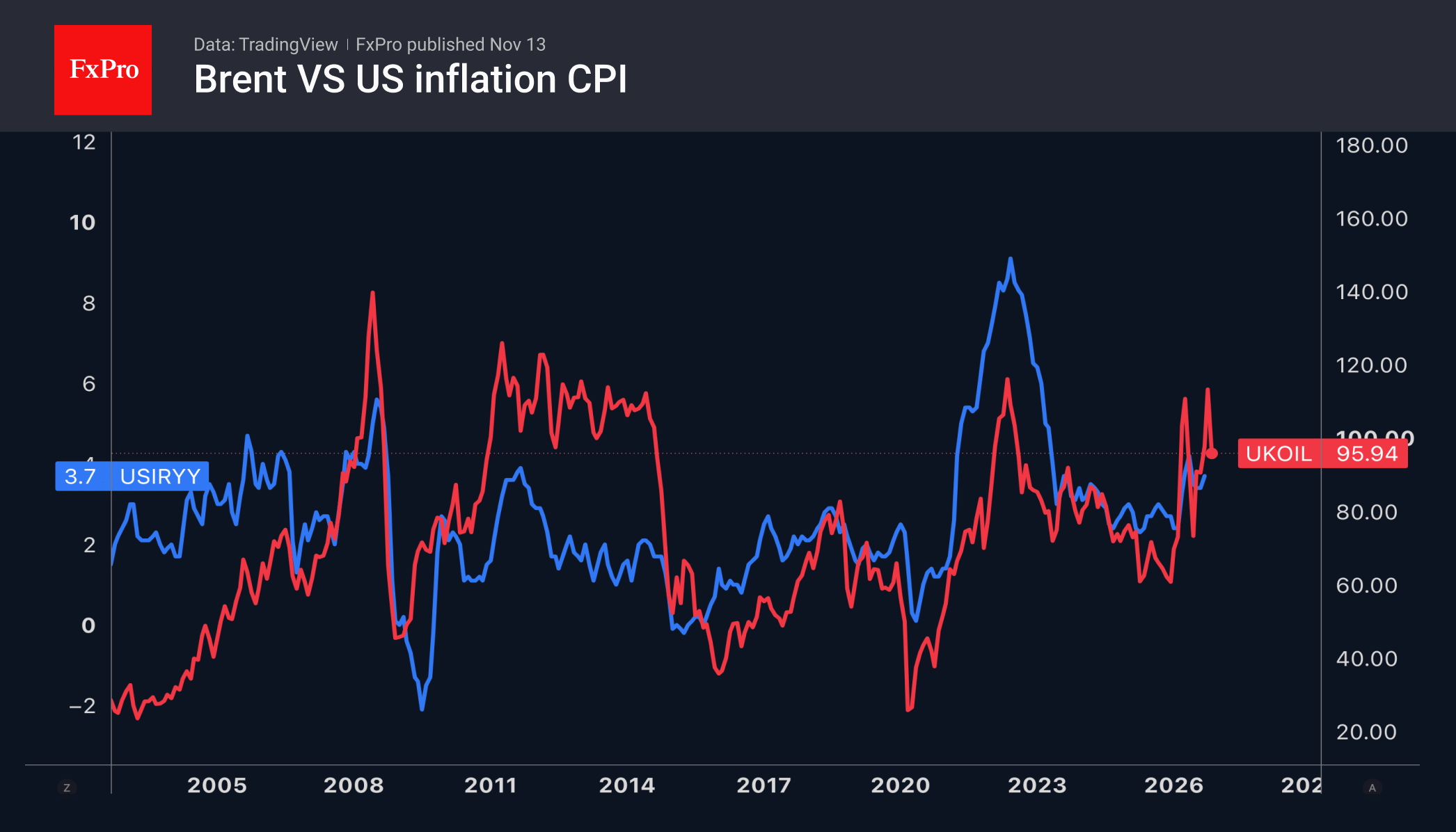
Source: TradingView, as of 13 November 2026.
If the Fed tightens monetary policy more rapidly, this will keep the yield spread between US and Japanese bonds wide. Expectations of such an outcome drove USDJPY to test the psychologically significant round level of 160, which triggered a series of verbal interventions. Japan’s Finance Minister Satsuki Katayama noted that currency movements in the Forex market had become one-sided; her ministry is closely monitoring the situation and is ready to take action, including in coordination with Washington.
Trading in USDJPY is turning into a tug-of-war between speculators and the government, particularly as officials have clearly signalled their red line. Speculators are prepared to buy the pair on fundamentals but fear currency intervention. In September, these fears led to a significant strengthening of the yen even without intervention from Tokyo.
In the third quarter, the UK economy grew by 0.7% q/q, its best performance in 2.5 years, but the strong GDP figures failed to trigger a rally in the pound, as they were in line with forecasts and had already been priced into GBPUSD.

The Australian dollar fell to a nine-month low against the US dollar, with AUDUSD near 0.6792, due to divergence in monetary policy. The spread between Australian and US 10-year bond yields has narrowed to almost zero (0.003%). Signs of an economic slowdown are leading investors to believe that the Reserve Bank of Australia’s cycle of rate rises has come to an end. At the same time, according to CME FedWatch, markets expect at least three rate hikes from the Fed in 2026–2027.
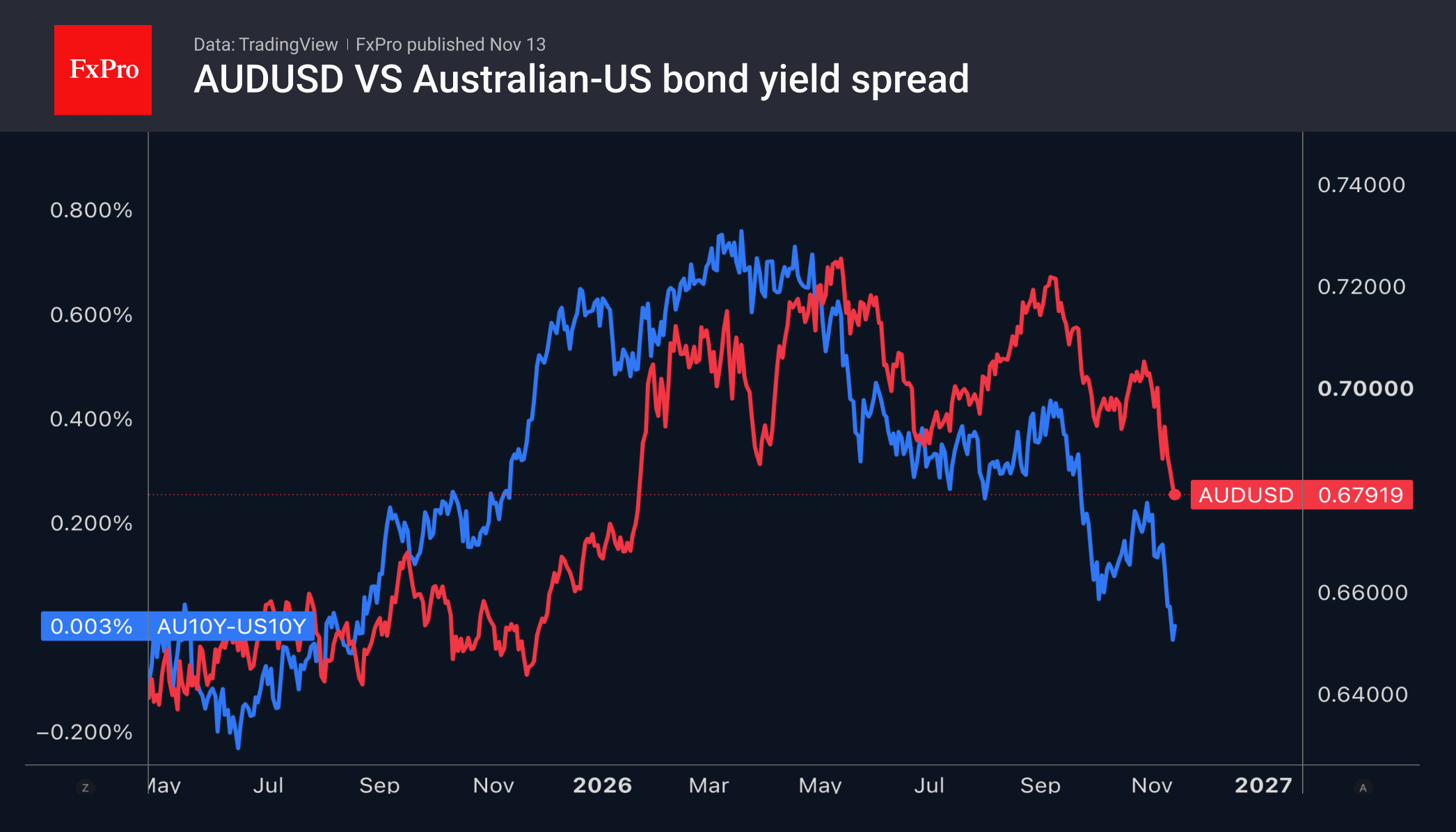
Source: TradingView, as of 13 November 2026.
What to watch
Base case: in our view, as long as markets expect the Fed to accelerate its tightening cycle, the dollar remains supported against the yen and the Australian dollar.
Risk: intervention by Japan, including in coordination with Washington, if USDJPY consolidates above 160.
Upcoming: next week, the focus will be on US retail sales on Tuesday, 17 November; the FOMC minutes, UK inflation and a speech by the Bank of England Governor on Wednesday, 18 November; and Australian employment data on Friday, 20 November. Check the economic calendar for more events.
The FxPro Analyst Team