


Forex is driven by yields
October 16, 2026 @ 16:20 +03:00
- Falling Treasury yields are weakening the US dollar.
- The Australian dollar has plummeted amid cracks in the labour market.
The US dollar suffered a painful decline on Thursday and is falling even faster against some of its rivals on Friday. The sharpest daily drop in over a month was driven by a fall in Treasury bond yields. Positive macroeconomic data have ceased to support the greenback. Retail sales rose by 0.8% month-on-month in September, twice as fast as forecast. The Producer Price Index jumped by 1.3% in September, the fastest rate in four years. Its annual growth rate of 6.3% was the highest since December 2022.
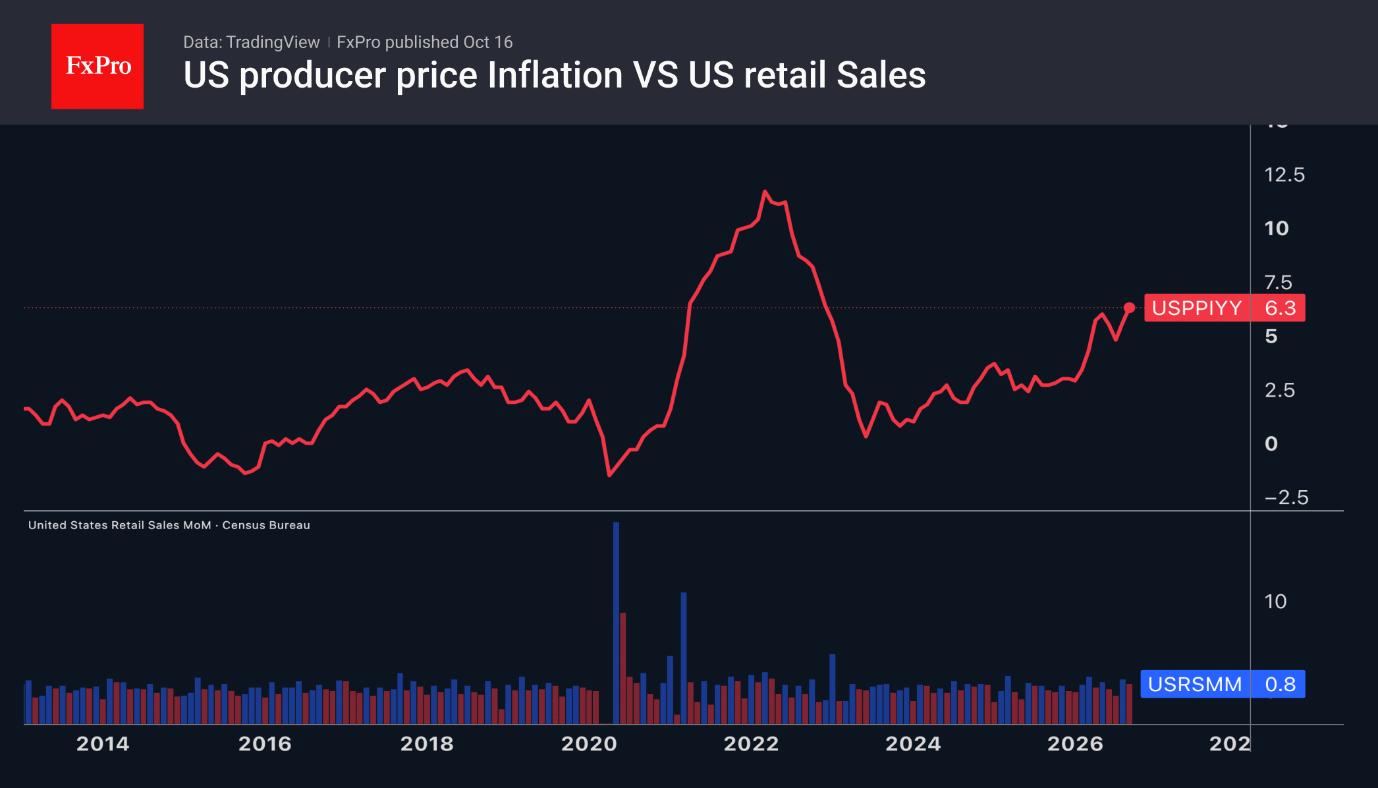
At first glance, this combination of indicators would suggest the Fed needs to accelerate its tightening cycle. However, at the IMF meeting in Bangkok, Kevin Warsh declined to discuss the outlook or give any signals regarding interest rates. As a result, the futures market slightly raised the probability of a rate hike at the October FOMC meeting to 28%.
The main reason for the US dollar’s weakness was the decline in Treasury bond yields. Investors have no doubts about the strength of the US economy, but would like to see a return on their investments in artificial intelligence. The sell-off in technology shares boosted demand for Treasuries as a safe-haven asset. At the same time, money began to flow from the corporate bond market into the government bond market.
The pullback in the Nasdaq-100 ahead of the third-quarter earnings season, accompanied by positive corporate profit forecasts, presented an excellent opportunity to buy the dip. As a result, the stock index rebounded from its lows, which helped stabilise Treasury bond yields and the US dollar.
This halted the bears’ attack on USDJPY. According to the US Treasury, Japan is no longer in deflation, which should have a positive impact on the yen. Nevertheless, these statements provided less support than the fall in Treasury yields.

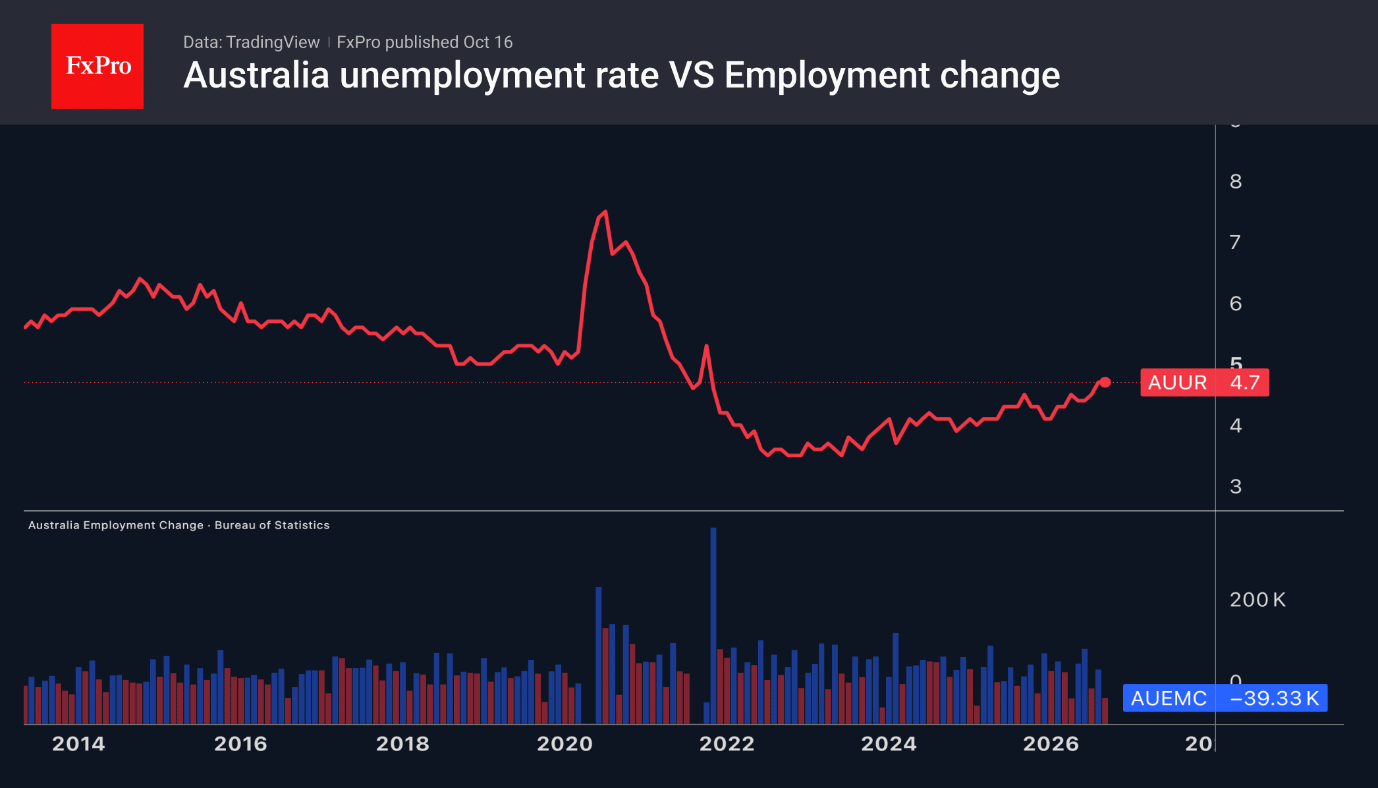
An unexpected loss of 40K jobs in Australia in September, coupled with a rise in unemployment from 4.6% to 4.7%, indicated that the RBA’s 100-basis-point hike in the key interest rate to 4.6% since the start of 2026 is beginning to cool the economy. The probability of a further policy tightening in November has halved, from 34% to 17%, while for December it has fallen from 60% to 40%. This led to a sharp fall in the AUDUSD to three-month lows on Thursday. Friday’s weakening of the US dollar allowed the pair to return to its previous trading range and even post a slight gain compared to the start of the month.
The FxPro Analyst Team