


EURUSD depends on the stock market
November 02, 2026 @ 14:50 +03:00
by /  Add FxPro.News on Google
Add FxPro.News as your preferred source to see more of our posts on Google.
- Fundamentals point to a fall in the euro against the USD.
- The upcoming midterm elections have emboldened the EURUSD bulls.
The US dollar failed to capitalise on Fitch’s downgrade of France’s credit rating outlook from ‘stable’ to ‘negative’, the mass protests across Europe, or the unexpected slowdown in inflation in Germany. The US currency fell victim to disappointment over earnings reports from tech giants, expectations surrounding the US midterm elections, and a more than 3% drop in oil prices on Monday. As a result, EURUSD is attempting to rise back above 1.1200.
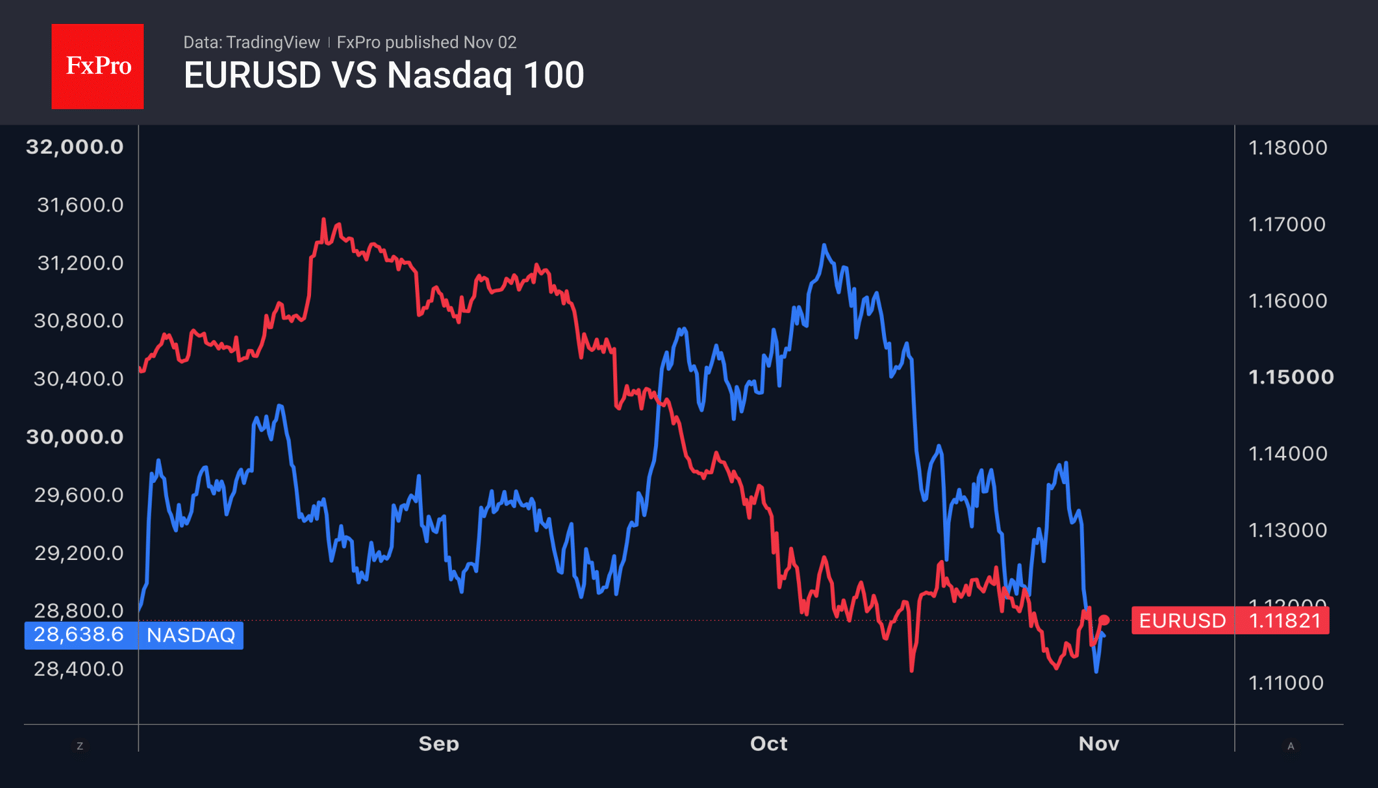
Polymarket and Kalshi put the probability at 70% that the Democrats will control both houses of Congress. This still leaves room for doubt and unease but remains the base-case scenario. There is a high risk that the Democrats will tighten regulation of the artificial intelligence sector. This will provide yet another argument in favour of a sell-off in tech shares and will deal a blow to American exceptionalism and the US dollar.
At the same time, a Republican defeat will allow Donald Trump to shift his focus from domestic to foreign policy, where the president has greater scope to operate outside the system of checks and balances. Investors prefer to steer clear of the dollar, fearing a new wave of uncertainty over key issues ranging from the conflict in the Middle East and the resurgence of trade wars to the battle over the debt ceiling and a government shutdown.
That said, Morgan Stanley recommends buying shares regardless of the midterm election results. Should the Nasdaq-100 rebound, renewed interest in artificial intelligence will strengthen the bears’ position on EURUSD, which is trading close to its 18-month lows. A fall below 1.11 would be sufficient to prolong the downtrend, as a whole range of factors weighing on the exchange rate remains in place.
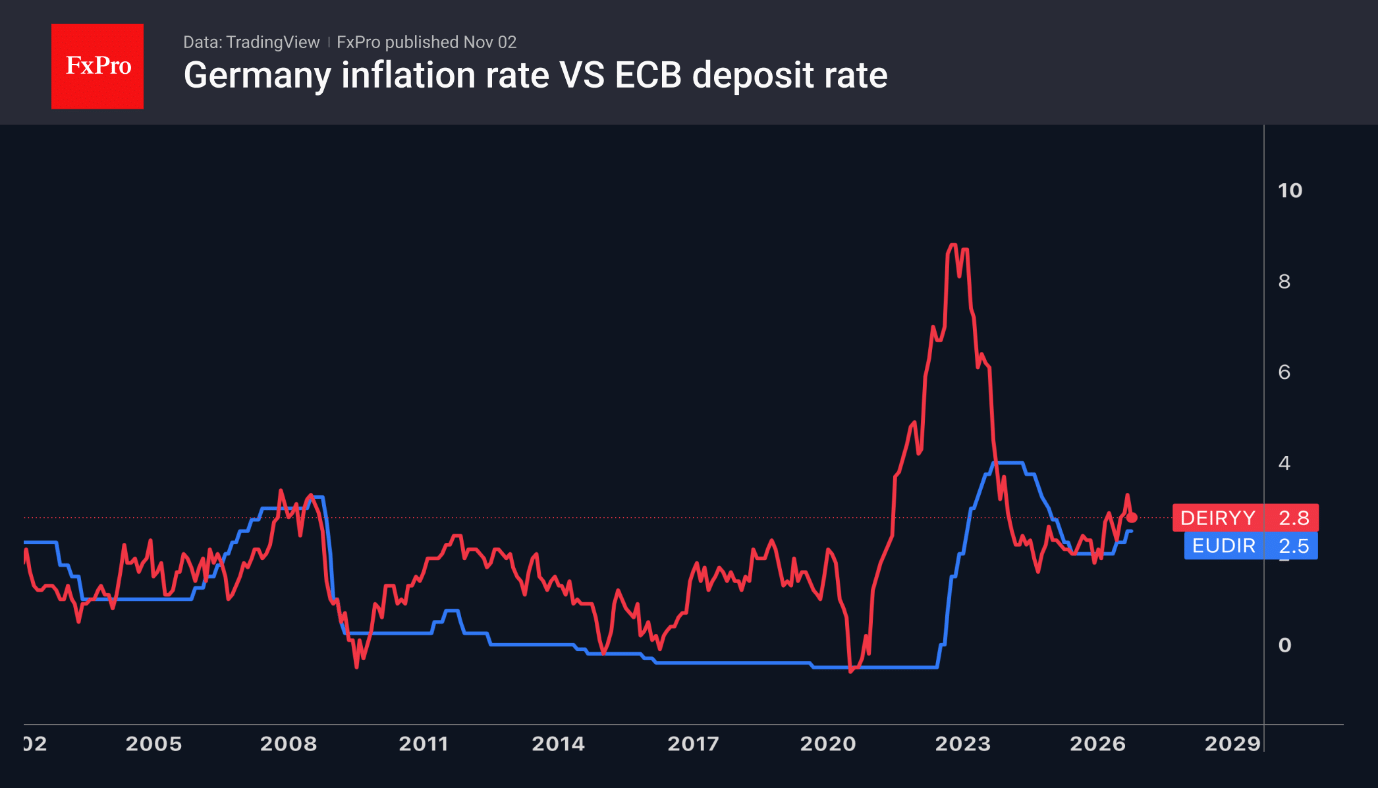
For example, the slowdown in the eurozone’s GDP growth from 2.6% to 1.7% y/y in the third quarter means that the economy is growing at about half the rate of the US. The slowdown in Germany’s inflation from 3.3% to 2.8% in October suggests the ECB may not be in a hurry to tighten monetary policy. In the US, by contrast, the presidents of the Federal Reserve Banks of St. Louis, Richmond and Dallas are insisting on interest rate rises in the near future.

Thus, the fate of EURUSD will be decided by the equity markets. For the downtrend to resume, a rebound in equities is needed after the midterm elections.
The FxPro Analyst Team