


Weekly round-up: dollar retreats from its high, S&P 500 and gold try to find a bottom, money flees Bitcoin
November 26, 2026 @ 17:47 +03:00
by /  Add FxPro.News on Google
Add FxPro.News as your preferred source to see more of our posts on Google.
- The dollar has retreated from its high, while the Fed is caught between strong data and tighter financial conditions.
- The Nasdaq-100 came close to a bear market before recouping most of its losses.
- Bitcoin is heading for its worst month since 2022, while gold has bounced off 15-month lows.
Dollar
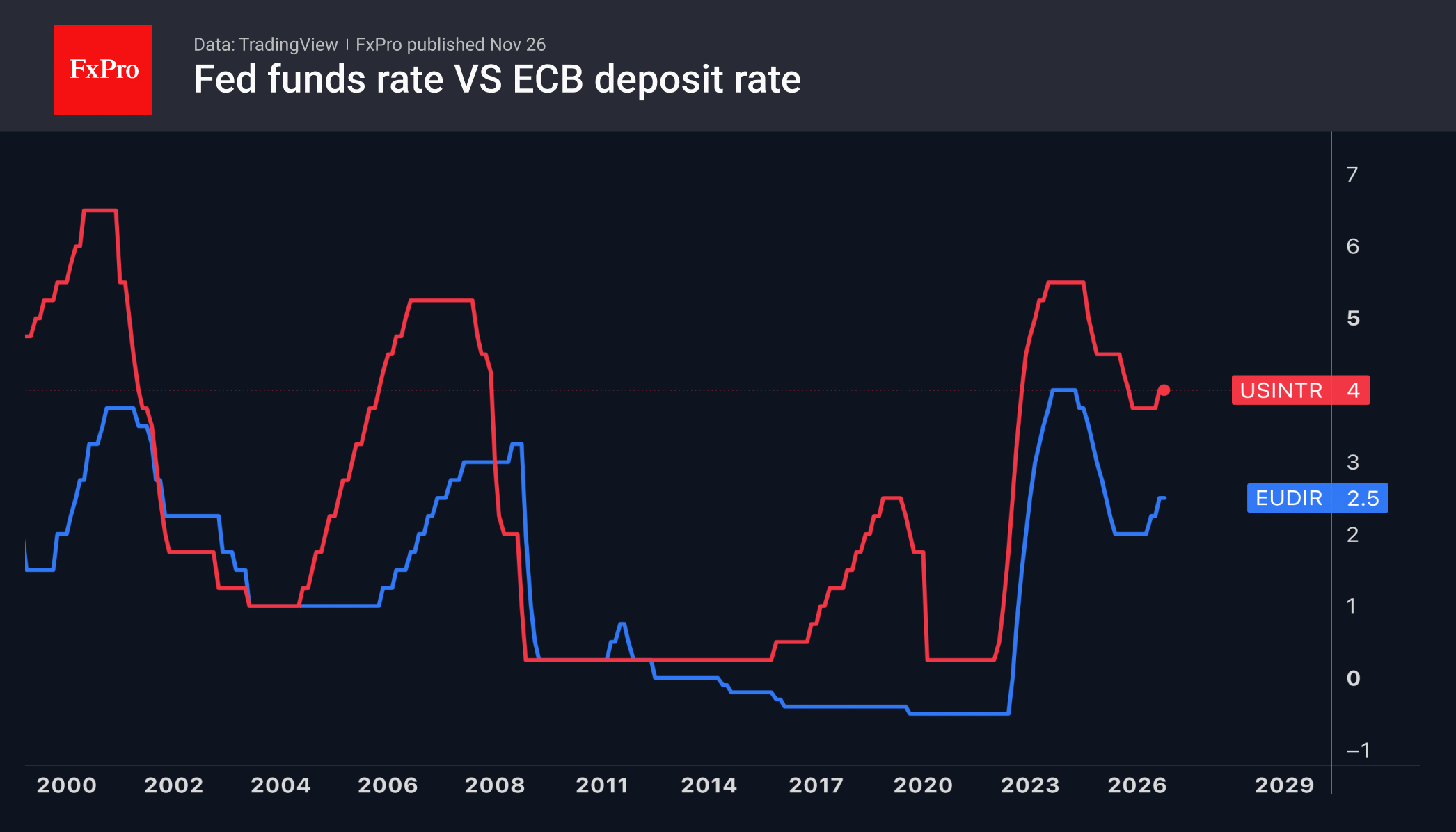
The US dollar is moving in different directions against its main rivals. The euro, the pound and the yen are marking time, the Aussie is falling, and the loonie is firmly on the rise. Investors are focusing on where central banks stand, while the Fed is caught between strong economic data and tighter financial conditions caused by the stock market rout.
Leading indicators point to a two-speed eurozone economy. While Germany is likely to pick up speed in the fourth quarter, the political crisis will slow not only French GDP but also the ECB’s tightening cycle.
Source: TradingView, as of 26 November 2026.
Indices
Restoring order at Nvidia’s helm has only eased concerns about artificial intelligence, not solved its problems. Investors have stopped buying shares simply because of the vast sums being poured into the industry. What they want now is a return on that investment.
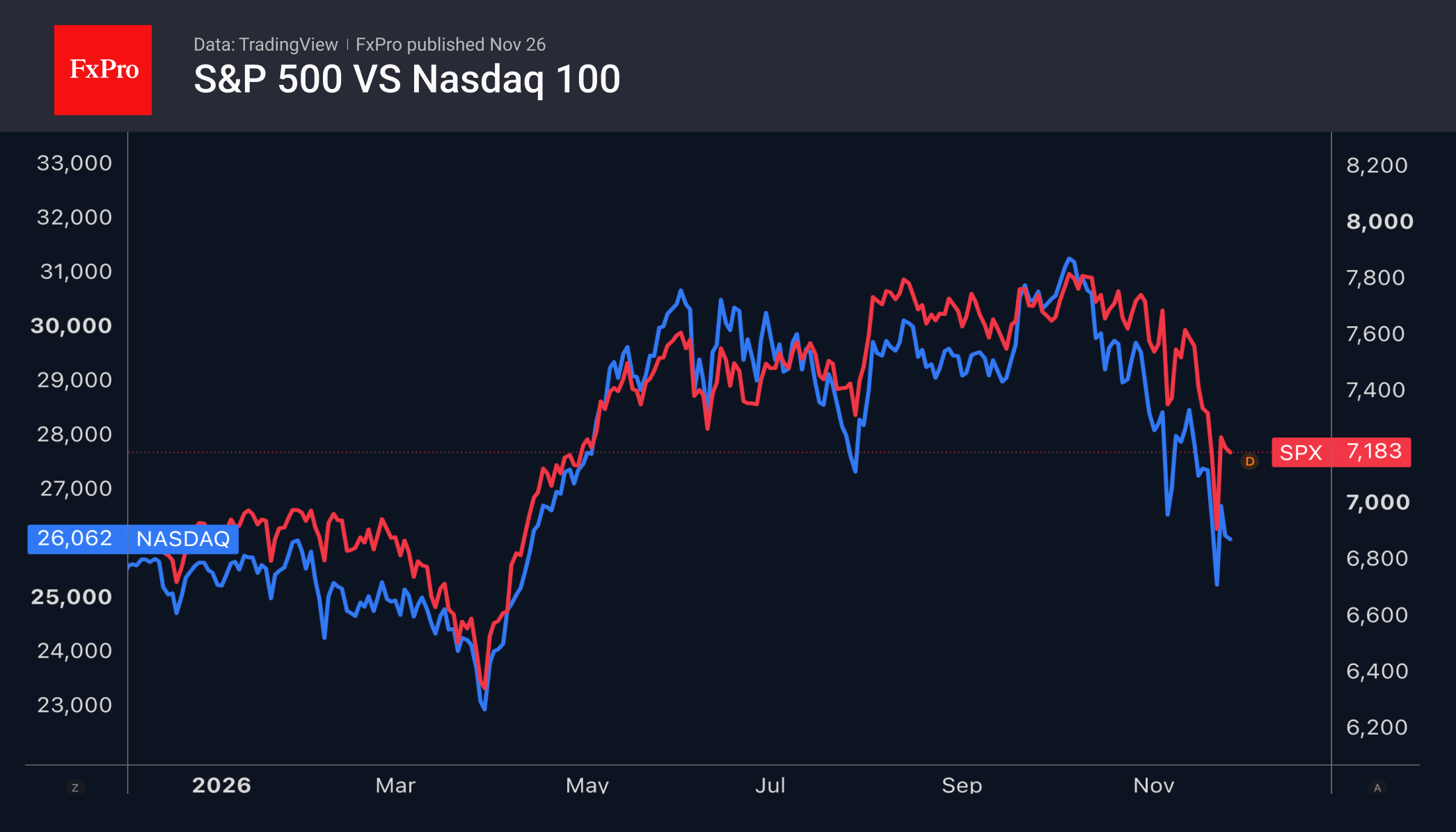
The views of the major banks differ. Goldman Sachs maintains that the S&P 500 has not yet bottomed out, while Deutsche Bank forecasts 9,000 by the end of 2027, above the Wall Street consensus estimate. Meanwhile, the Fear & Greed index has been in extreme fear territory since 19 November, despite Monday’s rally. Furthermore, in the run-up to Thanksgiving, the Nasdaq-100 came close to bear market territory before recouping most of its losses. This teetering on the brink of a bear market has been the defining feature of the week. Statistics suggest that once a bear market begins, the average decline from peak to trough is nearly 40%. The only exception is the pre-Christmas slump of 2018, when the decline stood at 23.4%.
Source: TradingView, as of 26 November 2026.
Gold
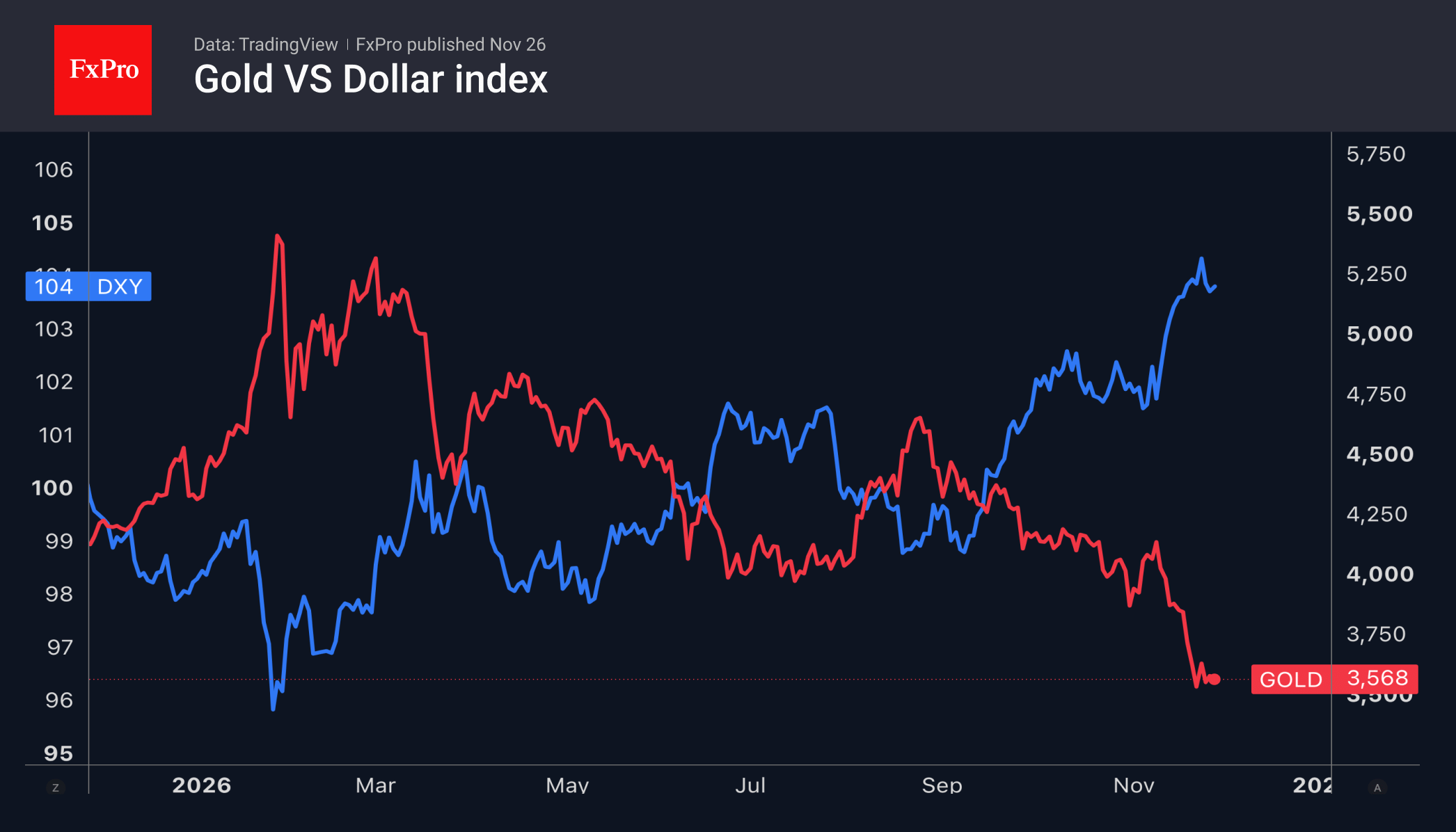
Gold has bounced off 15-month lows as the US dollar retreated and Treasury yields continued to fall. Such a backdrop is usually seen as favourable for gold, but 10-year Treasury yields that remain high by recent standards and expectations of Fed tightening in December limit its upside.

Source: TradingView, as of 26 November 2026.
Gold is also under pressure from selling to meet margin calls on slumping equities, as well as from ETF outflows. Holdings in the largest such fund, SPDR Gold Shares, have fallen by 21.4 tonnes, or $2.4 billion, since a local peak on 17 November, and by 43 tonnes since the start of the year.
Crypto
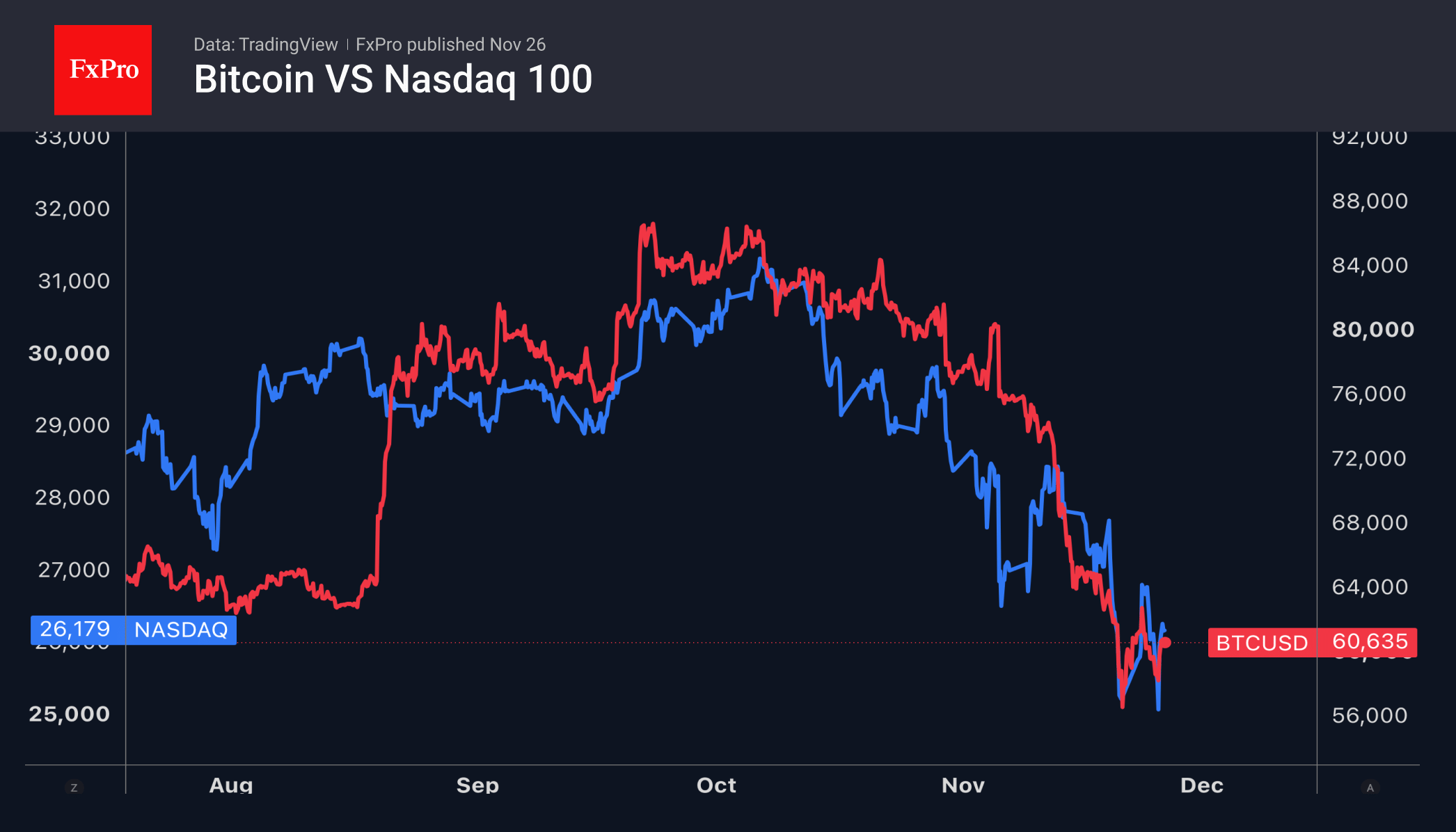
Bitcoin is heading for its worst month since a string of corporate failures sent the crypto market into a rout in 2022. BTCUSD has lost about a quarter of its value in November amid the Democrats’ victory in the midterm elections, a sell-off in tech stocks driven by waning interest in AI, capital flowing out towards the Anthropic IPO and expectations of tighter Fed policy.
Source: TradingView, as of 26 November 2026.
According to Bloomberg, investors pulled almost $5 billion out of spot Bitcoin ETFs in November. For BlackRock’s iShares Bitcoin Trust, the largest such fund, a monthly outflow of $4 billion would be the worst on record.
What’s next?
The key events on the economic calendar in the first week of winter will be the ISM business activity surveys and US labour market data. Steady job growth and low unemployment are prerequisites for the Fed to keep raising rates. If the figures disappoint, the US dollar will take a hit.
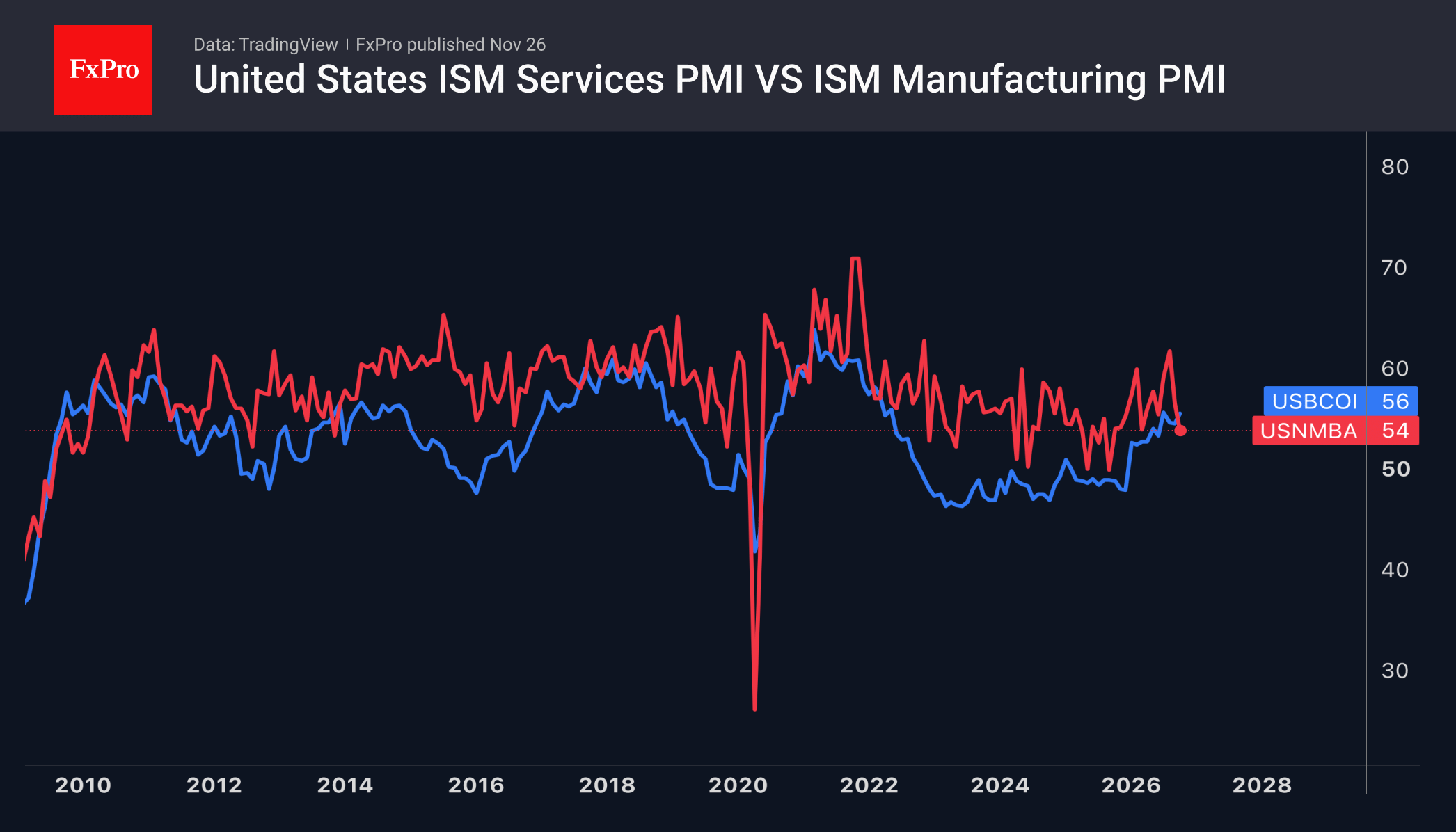
Source: TradingView, as of 26 November 2026.
Canada’s labour market figures will be a litmus test for USDCAD. Investors will also be watching Australian GDP data closely to gauge how much the economy is cooling under the Reserve Bank of Australia’s aggressive tightening in 2026.
The FxPro Analyst Team