


The S&P 500 is on a dangerous path
October 19, 2026 @ 17:48 +03:00
• History shows that stock market bubbles burst.
• Overly optimistic expectations regarding corporate earnings could lead to a slump in the S&P 500.
The S&P 500’s worst weekly fall since June, and the Nasdaq-100’s since April 2025, were the result of fear returning to the stock market. The VIX came close to hitting the key 20 mark against a backdrop of surging inflation in the US. Rising consumer prices risk pushing up bond yields and increasing technology companies’ costs for artificial intelligence infrastructure. As a result, the risk of low returns on investment has increased, and markets have been reminded of past bubbles.
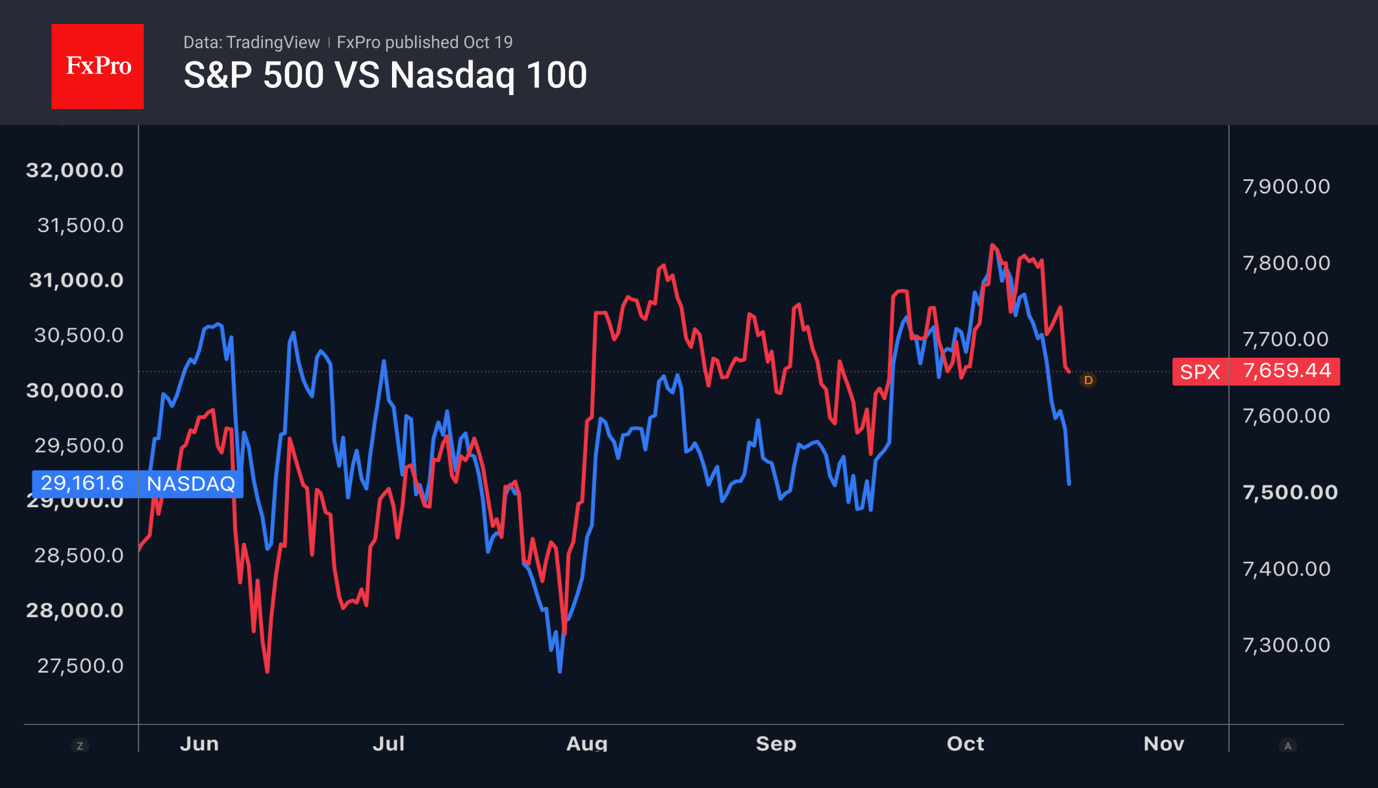
Of course, things could turn out differently, but the history of the railway, radio, television and internet booms points to the same pattern of events. First, capital expenditure rises sharply, allowing companies in the sector to reap super-profits. Then the momentum behind both investment and profits fades, whilst inflated expectations remain. The market’s inability to meet these expectations leads to crashes in stock indices.
It is therefore unwise to be misled by the fall in the P/E ratio and claim that fundamental valuations have become attractive. For example, Nvidia’s P/E ratio has fallen from 23 to 15, despite a 15% rise in its share price. Earnings expectations are rising even faster. And this is a worrying sign. According to calculations by Minack Advisors, the earnings of the 18 largest AI-related companies are projected to rise by $700 billion in 2026. For the remaining 482 S&P 500 constituents, the increase is $500 billion. Such market concentration is yet another sign of a bubble inflating.

So, the bad news is that previous episodes of new-technology booms have led to crashes in stock indices. The good news is that they have contributed far more to the economy, and the S&P 500 has eventually recovered. It is therefore crucial for investors to identify the point at which temporary windfall profits end and give way to smaller but more stable earnings. Fears that this could happen at any moment are prompting investors to offload their shares.
This process is particularly relevant at the start of the third-quarter earnings season. Provided there are no disappointments in financial results, lower Treasury bond yields and Brent’s failure to hold the key $110-per-barrel level will lend a helping hand to the S&P 500 and the Nasdaq-100.
The FxPro Analyst Team