


The plummeting euro
October 05, 2026 @ 14:56 +03:00
- The French crisis has sent the euro to a 17-month low.
- The ECB’s hands are tied when it comes to raising interest rates.
The US dollar has strengthened despite disappointing US employment figures. Last month, a modest 29K new jobs were created, against a forecast of 84K. The figures for July–August were revised downwards by 60K, while unemployment rose from 4.1% to 4.2%. These figures reduced the probability of a federal funds rate hike in October to 18%, down from 71% a week earlier. In response to the data, the dollar index retreated, but the bears’ celebrations were short-lived.
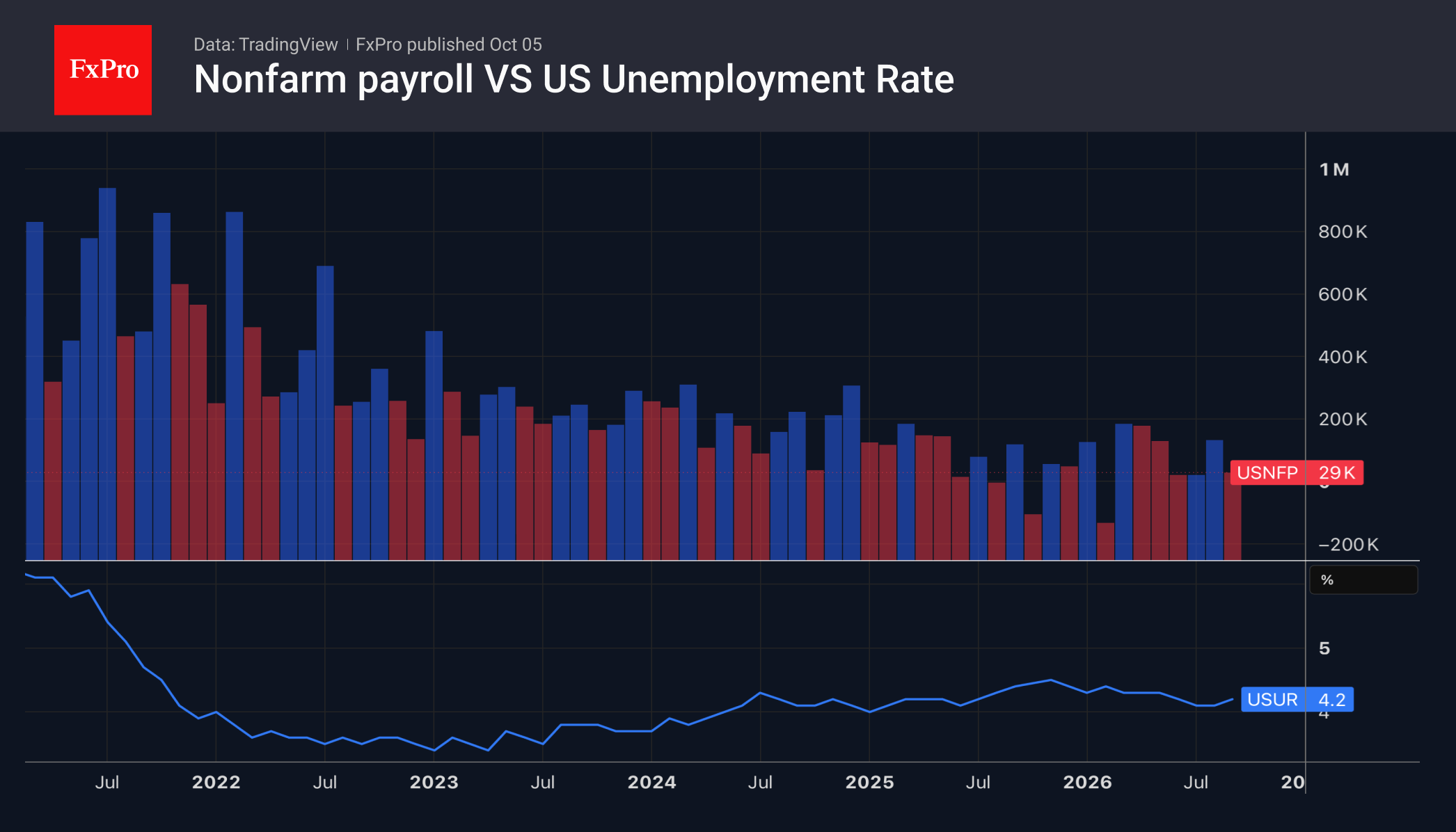
Despite a disappointing September, the US labour market appears stable. Due to an ageing population and restrictions on immigration, the labour force is shrinking, meaning that employment can no longer grow as quickly as before. That said, the increase in the labour force participation rate from 61.6% to 61.8% is an encouraging sign. Over the next few months, the Fed may be able to afford to raise rates, while other key central banks have little scope to tighten policy due to economic risks.
This applies, first and foremost, to the ECB and the Bank of England, which are forced to take fiscal risks into account. The UK is preparing to present its autumn budget. France has presented its draft budget with a 5% of GDP deficit, while the fragmentation of the National Assembly reduces the chances of its swift adoption.
Investors are fleeing France, as evidenced by the CAC 40’s more than 10% decline from its peak over the past two months, while the yield spread between French and German bonds has widened to around 150 basis points, threatening further credit-rating downgrades. This risks triggering a further sell-off in bonds, creating a vicious cycle in the bond market and causing the EURUSD pair to fall further.
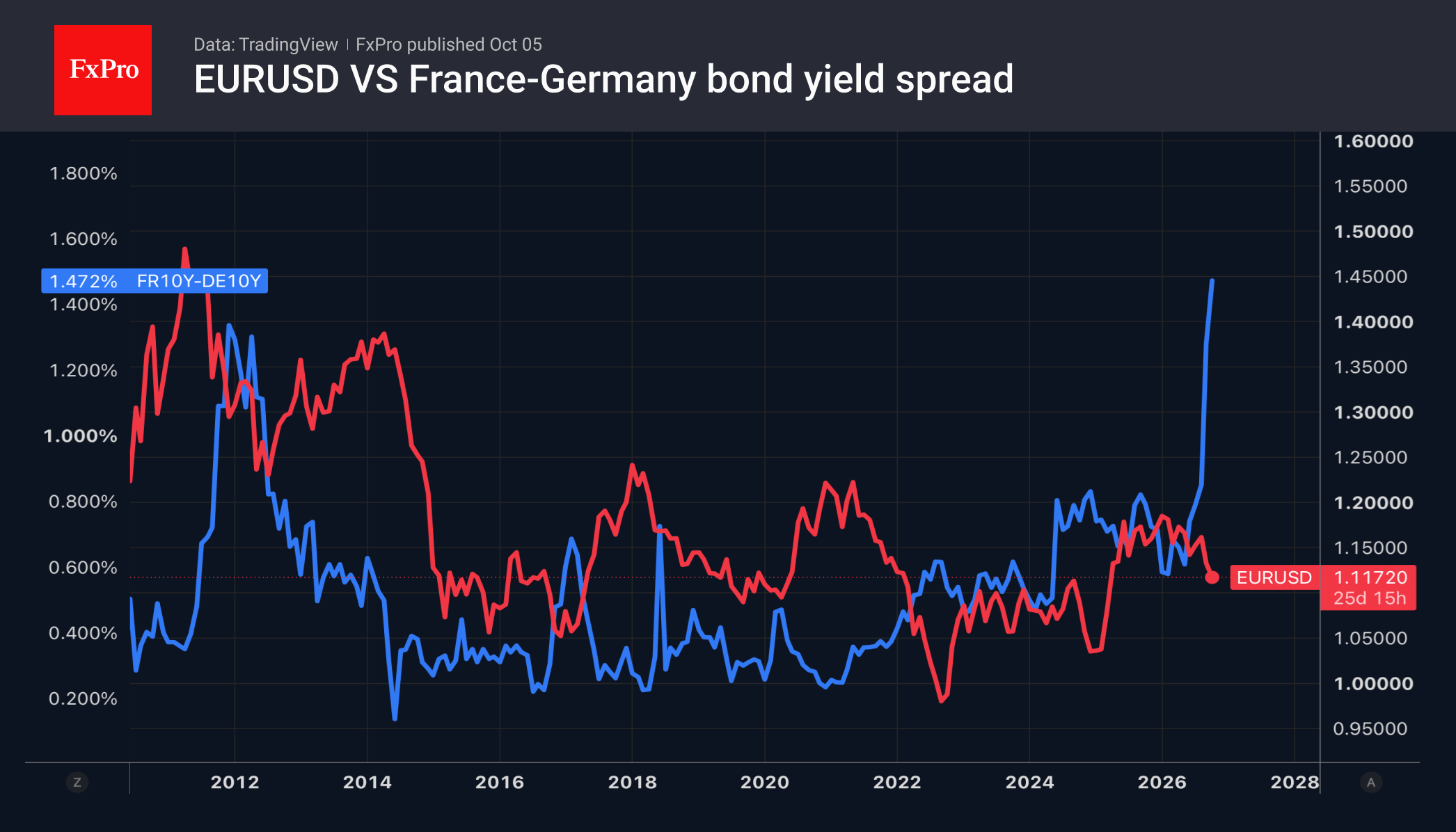
If, under such conditions, the ECB continues its cycle of monetary tightening, bond yields will rise even further, as will the cost of servicing debt. In such circumstances, the popularity of populist parties tends to rise, thereby threatening the integrity of the currency bloc.

Unsurprisingly, the probability of a deposit rate hike in October fell from 39% to 8% over the course of the week. Not even the acceleration of inflation in the eurozone to a three-year high of 3.8% in September, up from 3.2% the previous month, was enough to change this.
The rise of the dollar is also weighing on the yen, which is once again not being helped by the government’s verbal interventions. Hedge funds have returned to net short positions in the yen after a two-week hiatus, increasing the chances of a resumption of the USDJPY growth.
The FxPro Analyst Team