


The euro: interest rates won’t do the trick alone
July 09, 2026 @ 16:23 +03:00
- Investors are once again anticipating an ECB rate rise.
- TACO has been the main driver behind the EURUSD growth.
The US dollar failed to capitalise on Brent crude’s rise to two-week highs and the Fed’s concerns about high prices becoming entrenched in the US economy. Investors believe that Donald Trump’s announcement of the termination of the Iran deal is, in fact, part of a negotiating strategy, or TACO (Trump Always Chickens Out), and it has returned to the financial markets. Meanwhile, confidence in a swift de-escalation of the conflict is pushing the DXY down.
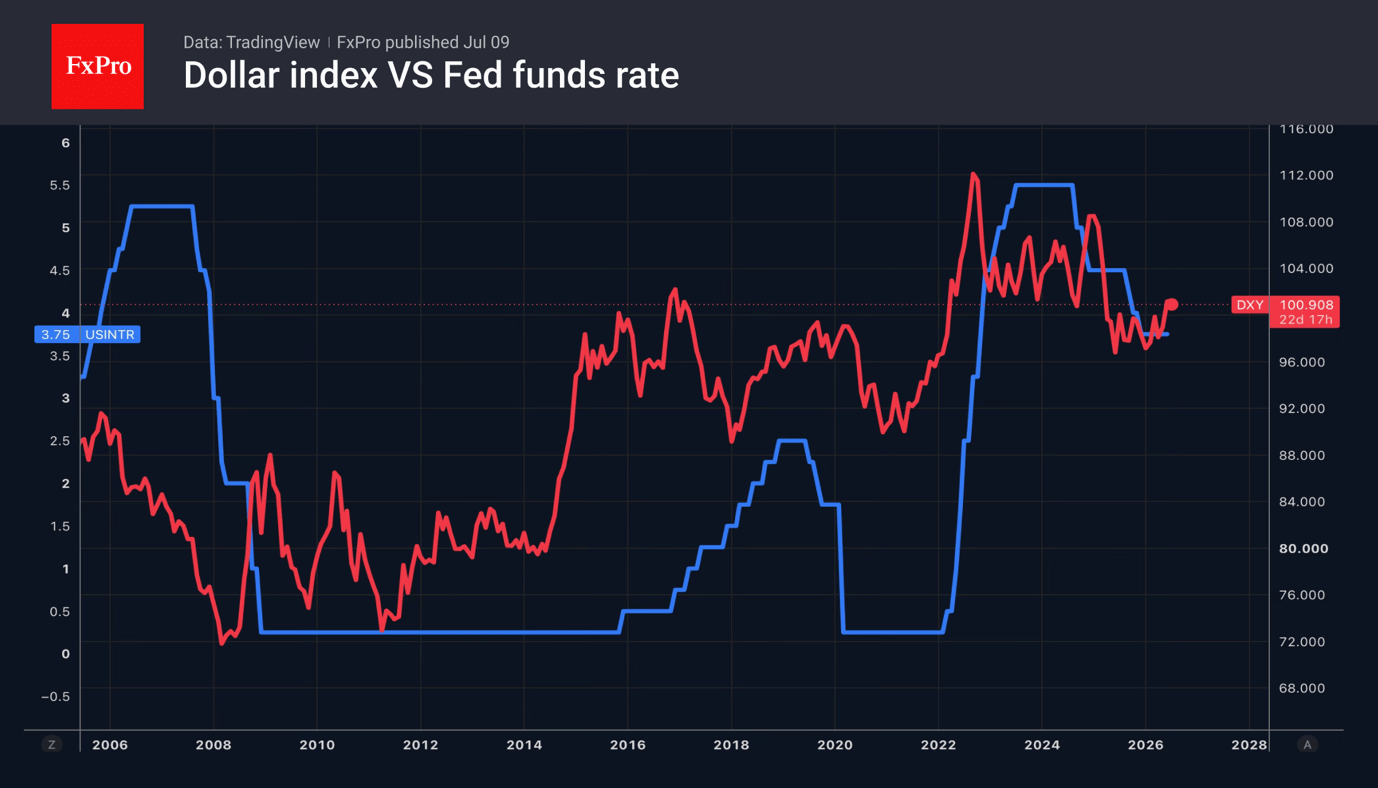
The minutes of the June FOMC meeting revealed officials’ concern that the PCE has remained above the 2% target for too long. Although the labour market is not the main source of inflationary pressure, the Fed is concerned about how it will react to tariffs, the oil shock and, finally, the boom in investment in artificial intelligence technologies. Officials have set out their outlook for the future, and there seem to be few rifts within the Committee, as the mixed forecasts on interest rates might have suggested.
As a result, the market interpreted the FOMC minutes as moderately hawkish, raising the probability of a rate hike in 2026 to 84%. The likelihood of two hikes rose to 45%. However, this did not help the US dollar, nor did the increased demand for hedging against the EURUSD risk. The risk of a reversal in the euro has fallen significantly against the backdrop of the escalating armed conflict in the Middle East. However, the bears’ joy was short-lived.
The rally in Brent crude is likely to negatively impact the eurozone economy, which is dependent on energy imports. The IMF has lowered its GDP forecast for the currency bloc for 2026 from 1.1% to 0.9%, citing higher oil prices compared with last year. On the other hand, the surge in North Sea crude is fuelling inflation and reviving the notion that the ECB will raise rates more aggressively than the Fed. This has been reflected in German bond yields outpacing those of their US counterparts.
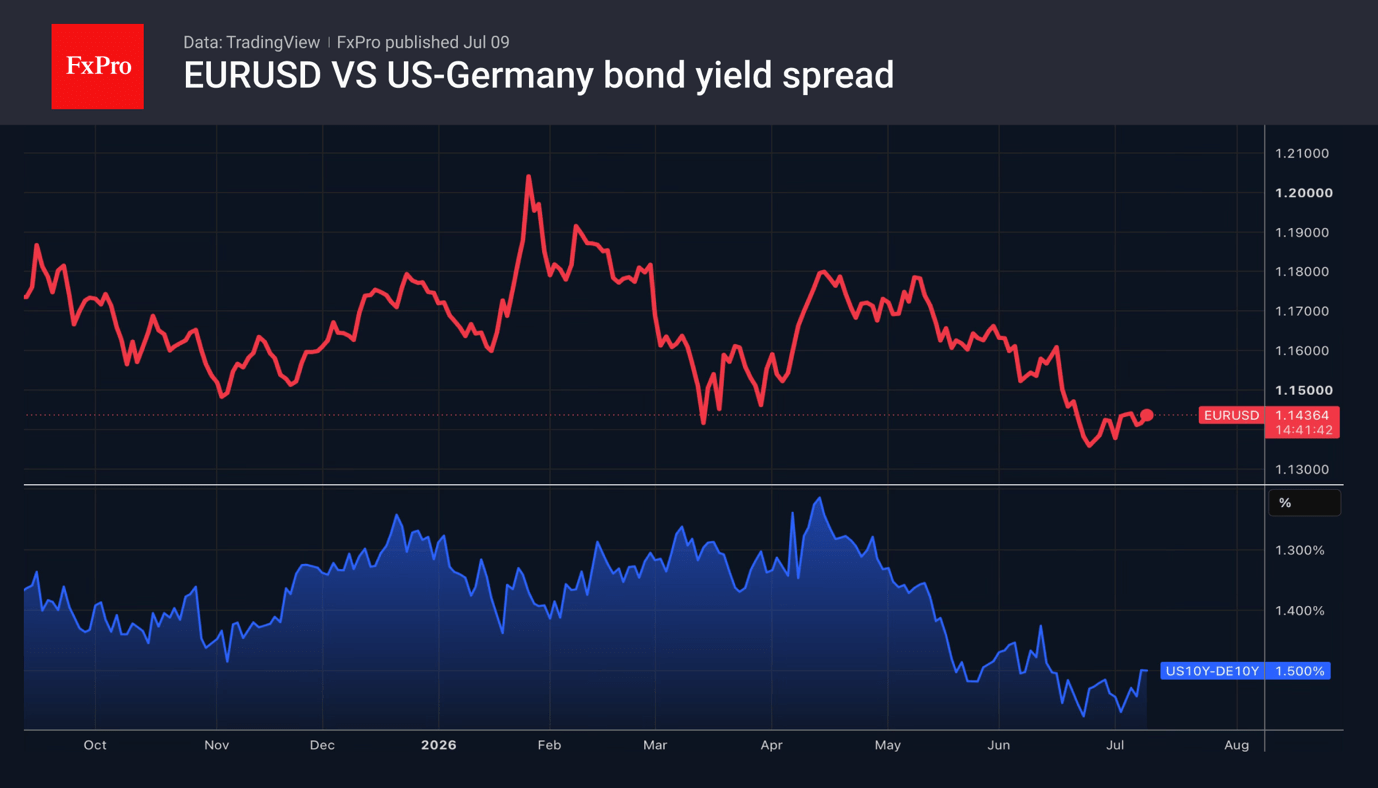
The main drivers behind the rapid recovery of EURUSD were TACO and investors’ belief in a swift de-escalation of the conflict in the Middle East. This was particularly the case as oil prices retreated following reports that traffic through the Strait of Hormuz remained unchanged. According to Kpler, 36 tankers passed through the strait on July 6th and 41 on July 7th, broadly in line with the past week’s daily average of 40.

The FxPro Analyst Team