


The Euro: After the Sunset Comes the Dawn
June 25, 2026 @ 16:27 +03:00
- Monetary policy divergence is weighing on EURUSD.
- Europe has always recovered from crises.
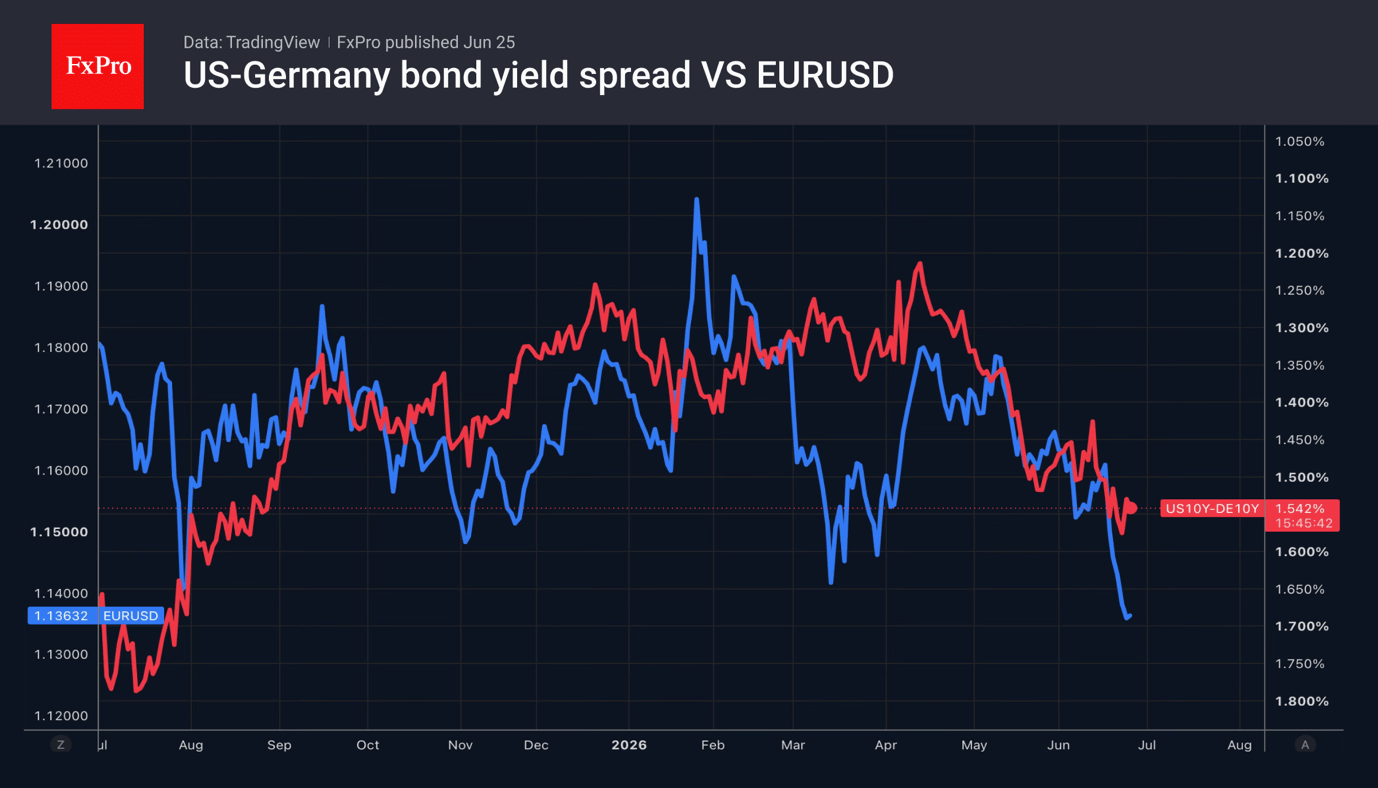
The US dollar is on track to close the month with its biggest gain since July last year, thanks to the Fed’s hawkish shift, gloomy European PMI figures and Christine Lagarde’s dovish comments. As a result, the yield spread between US and German bonds is widening, triggering capital outflows and contributing to the fall in EURUSD over 5 of the last 6 trading days.
In recent years, Europe has been in a state of constant upheaval. COVID-19, the armed conflict in Ukraine, the energy crisis, the political crisis in France, Donald Trump’s tariffs, and, finally, the conflict in the Middle East have all weighed on European households’ sentiment, reinforcing their tendency to save. In 2025, they were saving 15 per cent of their disposable income, compared with 12.5 per cent before the pandemic. In contrast, in the US, the figure has fallen over this period from close to 7% at the start of 2020 to 2.6%, according to the latest April data. Since 2019, US consumption has risen by 18%, whilst that of Europeans has risen by only 5.5%. This is precisely what explains the persistent lag in eurozone GDP growth.
To boost Europe’s GDP growth, domestic demand needs to be stimulated; however, this is being hampered by a never-ending series of shocks. Due to the conflict in the Middle East, the currency bloc’s economy is teetering on the brink of contraction and may well slip into negative territory in the second quarter. Consequently, investors were sceptical that the ECB could raise rates aggressively. Now that oil prices are falling, there is no need to do so. Christine Lagarde’s cautious tone on further hikes is understandable.
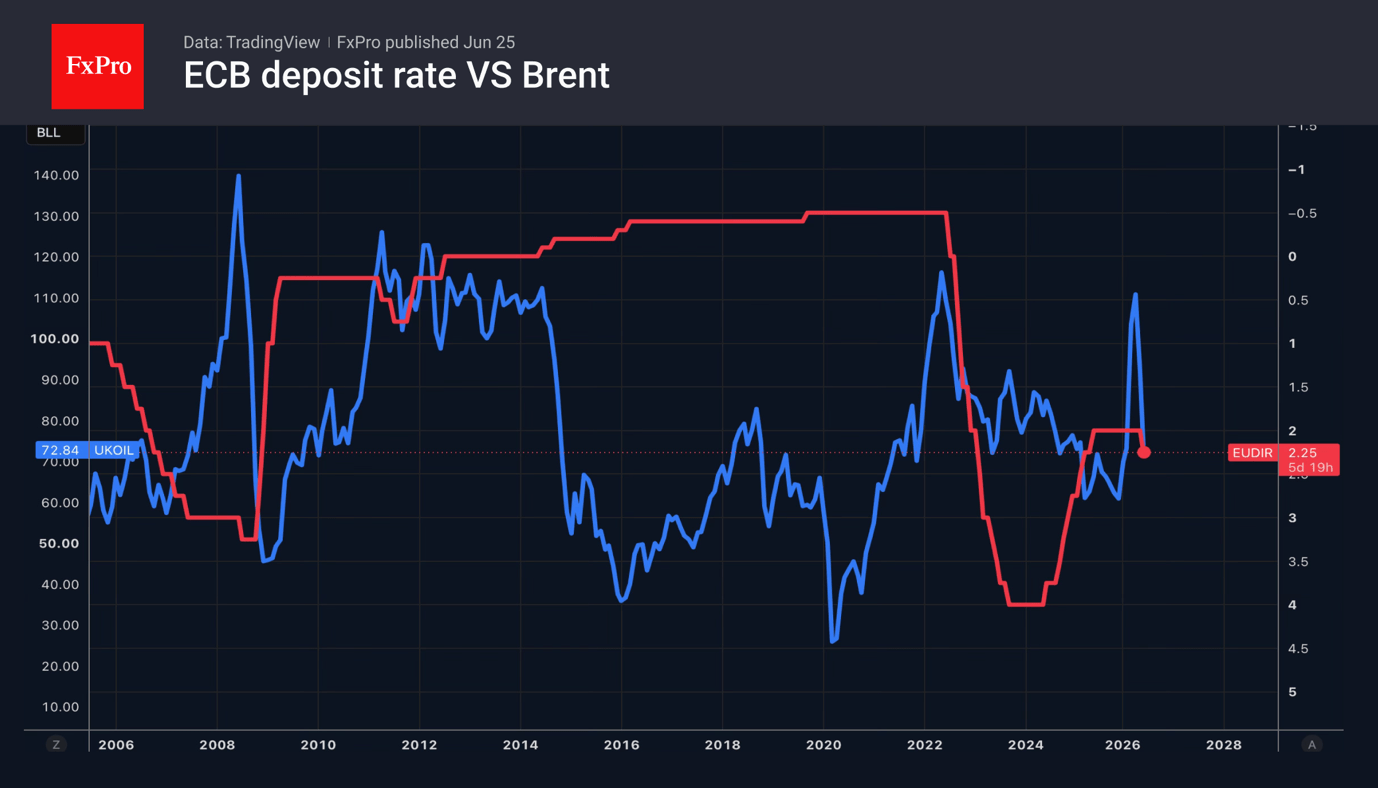
However, every sunset is followed by a sunrise. Eurozone GDP has rebounded strongly since the pandemic, and the region’s economy has proved far more resilient to US tariffs than anticipated. Friedrich Merz’s fiscal stimulus measures have raised hopes of rapid growth. Each time, the EURUSD pair has rallied. The end of the conflict in the Middle East and the associated fall in oil prices are creating a springboard for a new surge.
For now, the euro is being dragged down by a ‘hawkish’ surprise from Kevin Warsh. The futures market is pricing in a 65% probability of a Fed rate hike in September and estimates a 47% probability of two rounds of monetary tightening in 2026. However, if the surge in US inflation proves temporary, the figures will fall, and the EURUSD pair will find its footing. The first signal may come from the PCE.

The FxPro Analyst Team