


The dollar: things are heading towards de-escalation
July 10, 2026 @ 13:42 +03:00
- Rumours of talks between the US and Iran are dragging down the USD index.
- The ECB intends to act decisively on raising interest rates.
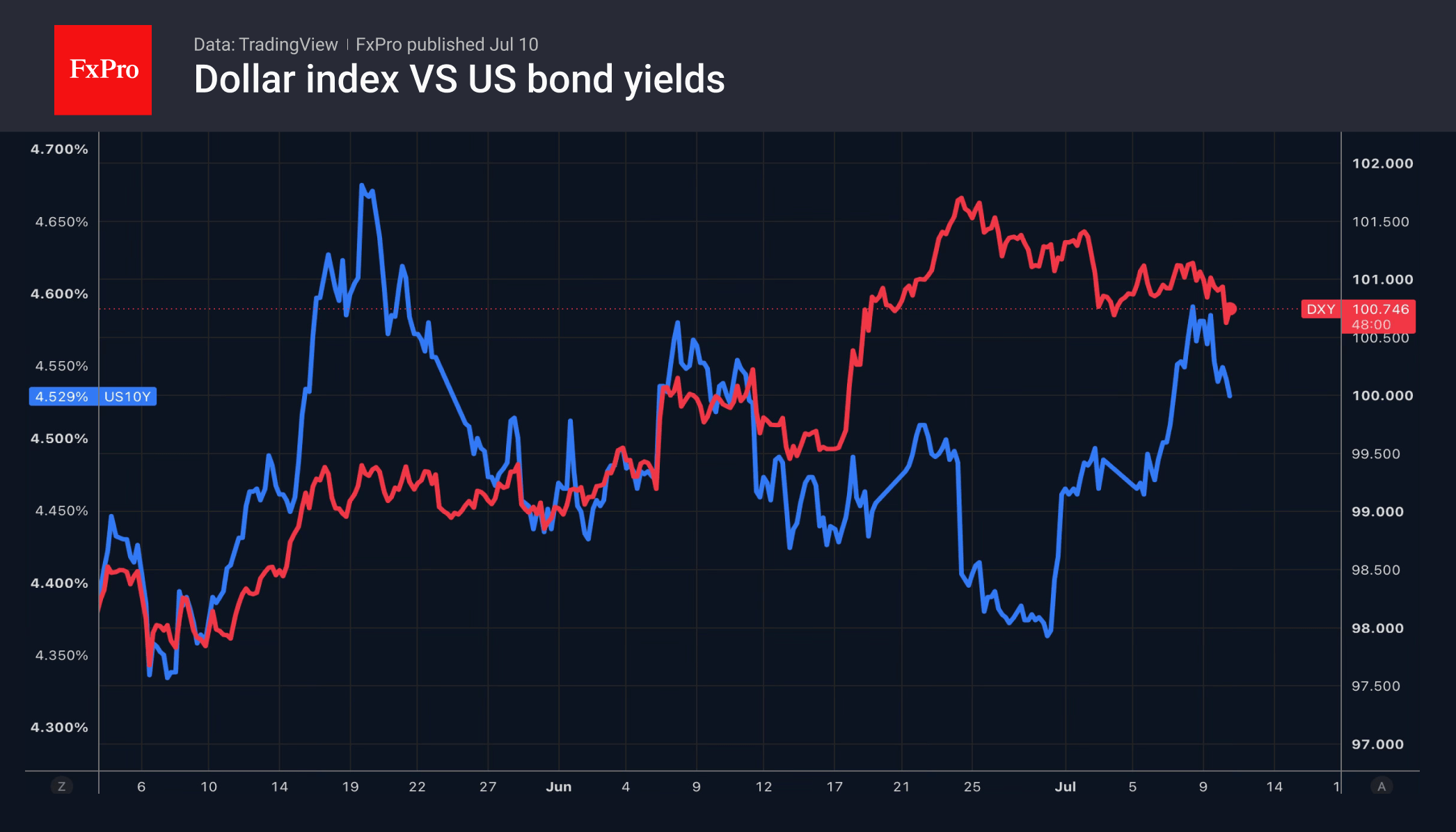
The US dollar continued to retreat following Donald Trump’s statement that Iran is seeking a deal. Investors have encountered such rhetoric from the US president many times since April, and each time, escalation has been followed by de-escalation. A rise in the S&P 500 and Brent crude pulling back from local highs, coupled with falling Treasury bond yields, is creating headwinds for the USD index.
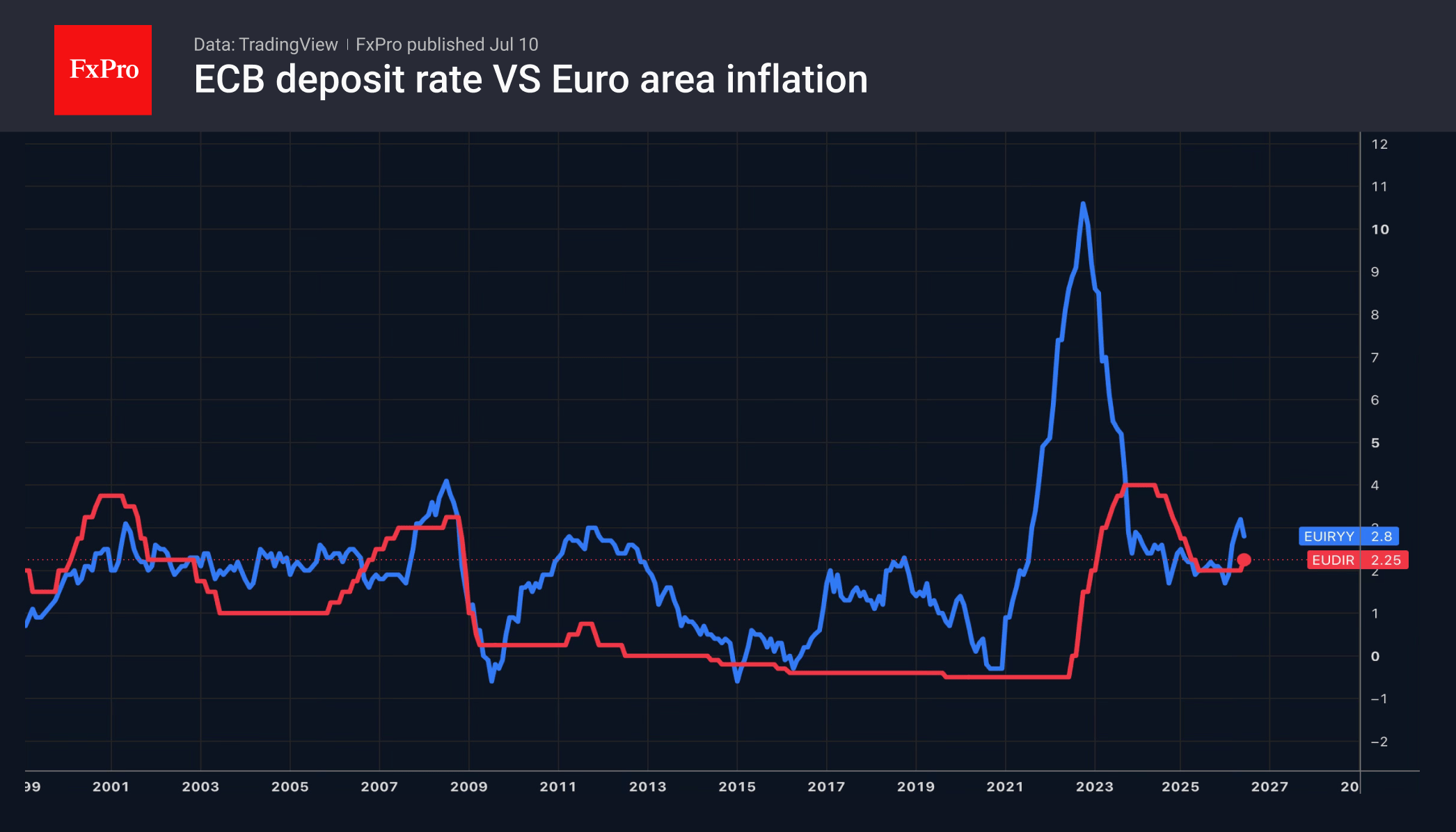
The oil rally has revived the prospect of monetary tightening in European countries. The futures market assesses the probability of two rounds of monetary tightening by the ECB and the Bank of England in 2026 as 50%. It puts the probability at 90% that the European Central Bank will raise its deposit rate in September. The minutes of its June meeting noted that inflation would remain above the 2% target in the first half of 2027, even if monetary policy were tightened three times by that point.
The ECB came under heavy criticism for being slow to raise interest rates in 2022 amid soaring consumer prices. It does not want to make the same mistake again, although the situation is now different from four years ago, with the eurozone economy weaker, and borrowing costs higher. Nevertheless, fears that rising energy prices will become embedded in core inflation and that inflationary expectations are pushing the European Central Bank to take decisive action.
The futures market is pricing in only a 40% probability of two Fed rate hikes, which is lower than for the ECB, and playing into the hands of the bulls on EURUSD.
In fact, the markets are focusing on TACO rather than the actions of central banks. Brent has stabilised above $76 per barrel. Although traffic in the Strait of Hormuz has ground to a halt and the number of tankers passing through has fallen to 25 from 30–50 in recent days, hopes for talks between the US and Iran are preventing oil prices from rising further.

The weakness of the US dollar has allowed the bears on USDJPY to mount a counterattack. Satsuki Katayama further fuelled the pullback. The Finance Minister’s call for pension funds, including the GPIF, to increase their investments in Japanese assets proved more effective than verbal interventions.
The FxPro Analyst Team