


It’s time to weigh up the risks for the S&P 500
July 27, 2026 @ 14:58 +03:00
- The US stock market is not factoring in the existing risks.
- Investors are increasingly focusing on the cash flows of S&P 500 companies.
US stock indices have closed in the red the last two weeks, something that hasn’t happened since March. The stock market has weathered both the armed conflict in the Middle East and rising expectations of a tighter Fed policy, along with the associated rise in Treasury bond yields. Despite these headwinds, the S&P 500 is just 3% under its record high. However, investors are increasingly asking themselves: Is there a limit to how long this resilience can last?
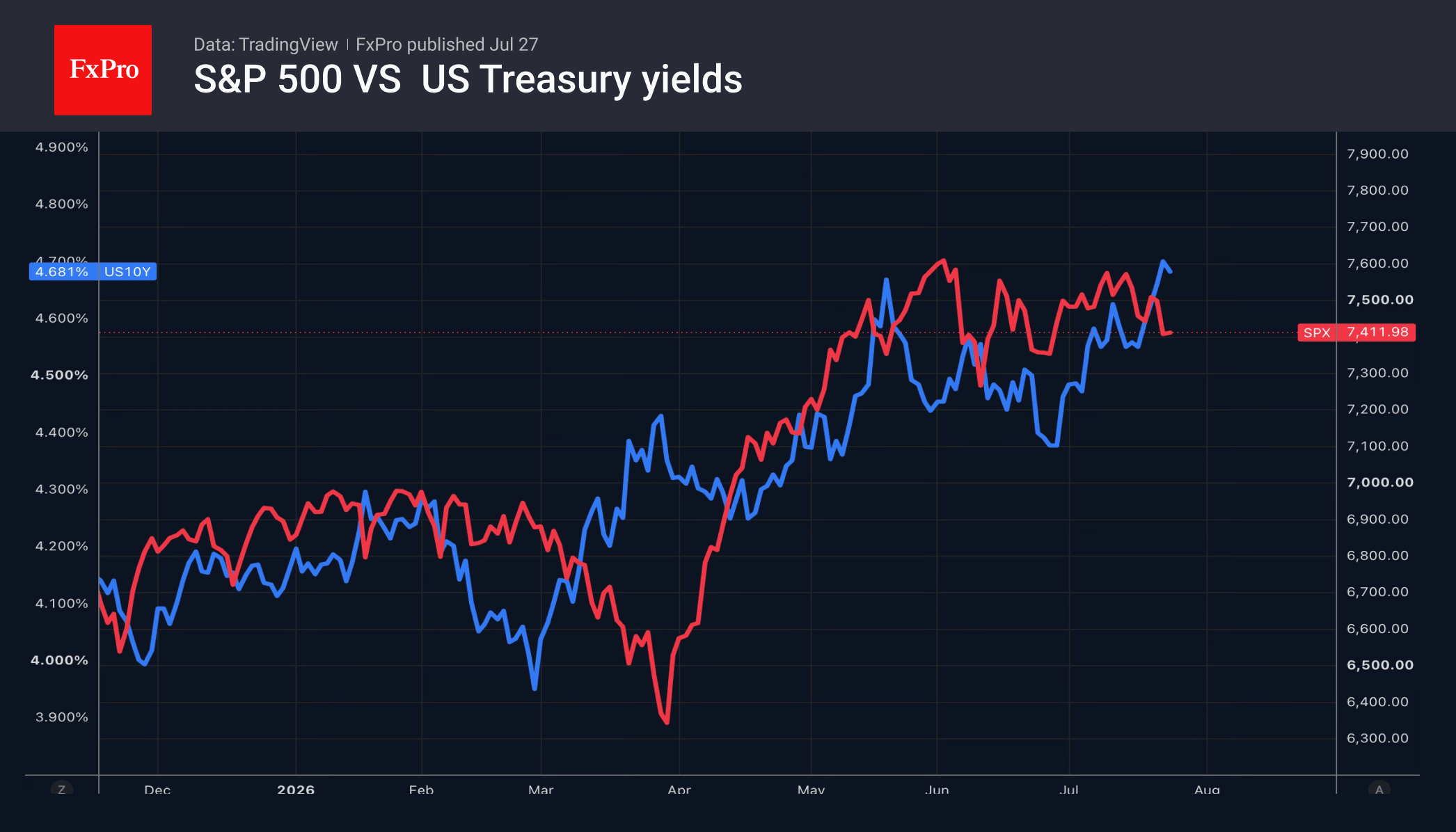
According to Bank of America, the markets are operating on the assumption that everything is going well and are failing to factor in existing risks. Investor expectations regarding profit margins, five-year forward earnings growth and other indicators are at record levels, whilst risk premiums have slipped to 20-year lows. There is a complete lack of fear in the equity market, and this could lead to a 7–8% fall in the S&P 500 if negative events materialise.
Adverse factors include the conflict in the Middle East and everything associated with it, including the rally in oil prices, Treasury yields and the increased likelihood of a Fed rate rise. Furthermore, Bank of America notes the low return on investment in AI and the high costs incurred by companies in funding research in this area. This combination is forcing investors to focus on cash flow rather than profit. Alphabet’s negative cash flow sent the entire market tumbling.
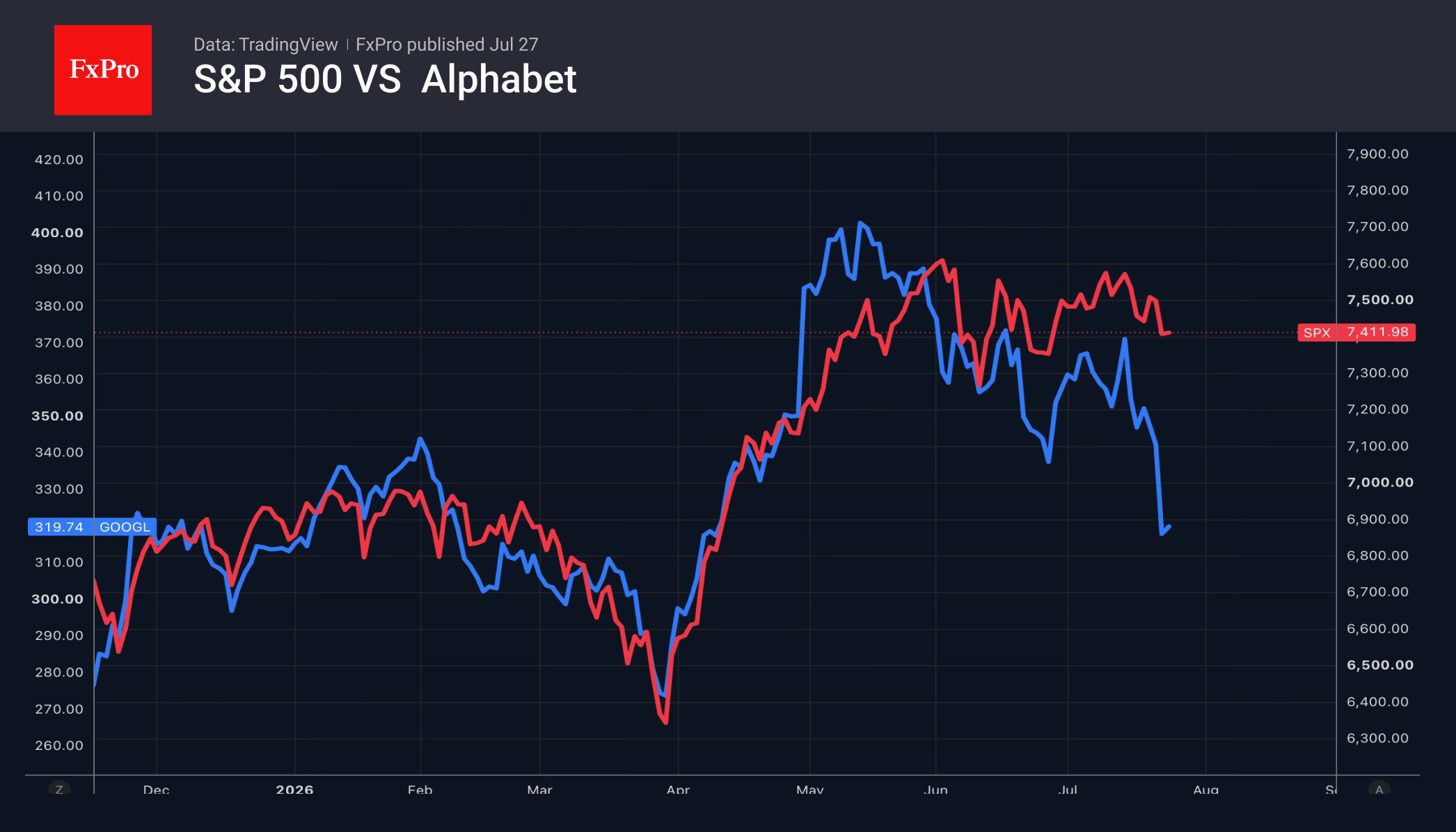
In the final week of July, more than a third of S&P 500 companies by market capitalisation will be reporting their results. If cash flow issues emerge at Microsoft, Meta Platforms, Amazon and Apple, the correction in the broad stock index risks continuing.
On the other hand, the stock market may breathe a sigh of relief. The ceasefire in the Middle East, coupled with the de-escalation, falling oil prices and a decline in Treasury bond yields, is reducing the geopolitical risk premium. At the same time, the Fed may be able to afford to be less ‘hawkish’ than investors expect. A ‘TACO’ rebound, coupled with the federal funds rate being held steady, could breathe new life into the S&P 500. The key is that the tech giants’ earnings reports do not disappoint.

The FxPro Analyst Team