


Central banks are in no hurry
October 26, 2026 @ 14:27 +03:00
by /  Add FxPro.News on Google
Add FxPro.News as your preferred source to see more of our posts on Google.
- The Fed, the ECB and the Bank of Japan are most likely to keep interest rates unchanged.
- EURUSD is stabilising, helped by Moody’s reluctance to downgrade France’s credit rating.
The US dollar has stabilised near recent highs as investors close out positions ahead of central bank meetings. The Fed, the ECB, and the Bank of Japan are expected to keep interest rates unchanged but send hawkish signals. At the same time, all three have grounds to extend the pause in their monetary tightening cycles until the end of the year.
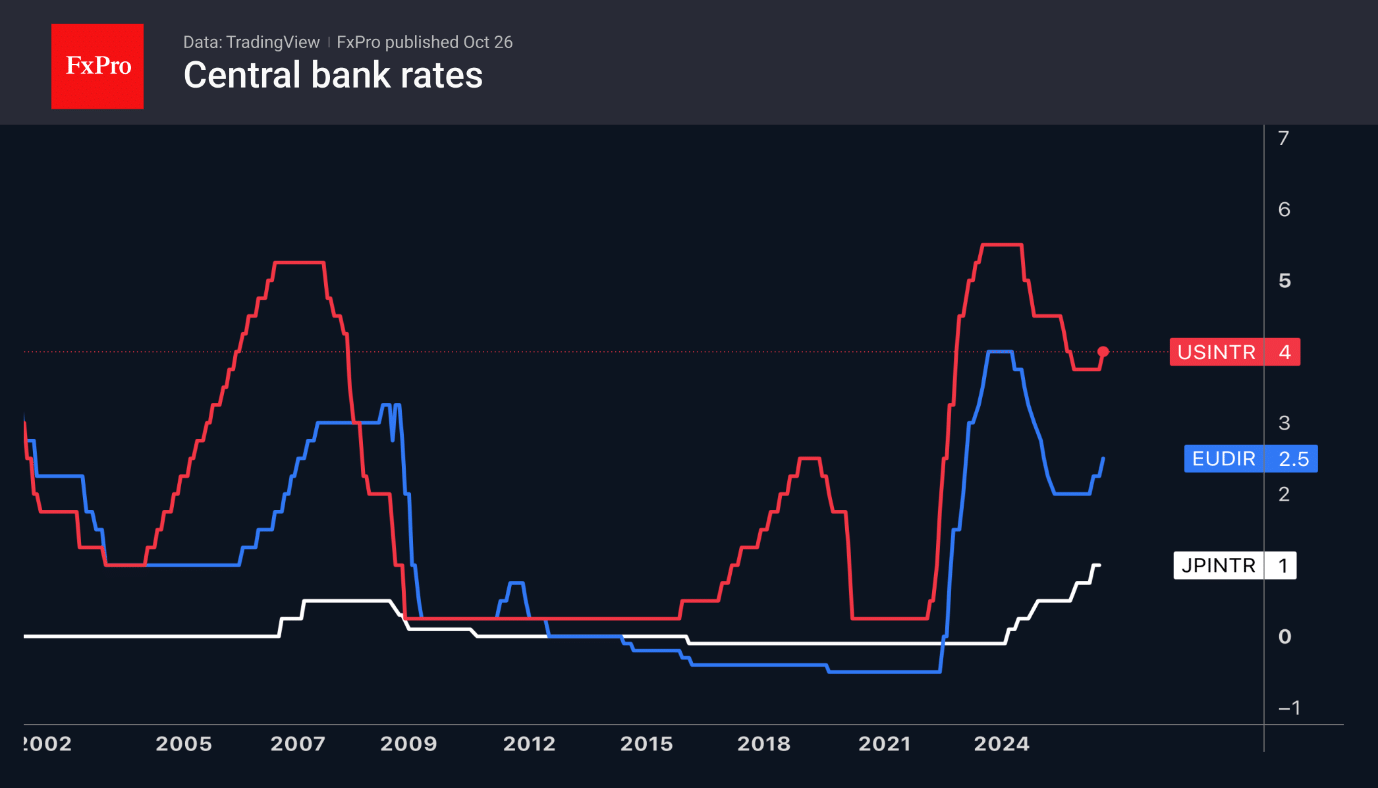
Fed Chair Kevin Warsh would prefer the markets to do some of the Fed’s work for it. High yields on medium-term bonds can keep inflation in check even without an immediate rise in the key interest rate. They are weighing on the economy and acting as a strong headwind for the equity market, amid growing talk that the artificial intelligence bubble is already deflating.
For the ECB, French politics is a constraining factor. The yield spread between French and German bonds widened by 29 basis points over the week, peaking at 170. This is twice as wide as it was in May. Paris faces a precarious future, given its heavy debt burden, sluggish economy and public discontent. It is hardly surprising that investors are fleeing Europe, while hedge funds’ net short positions on the euro have reached their highest level since March 2020.
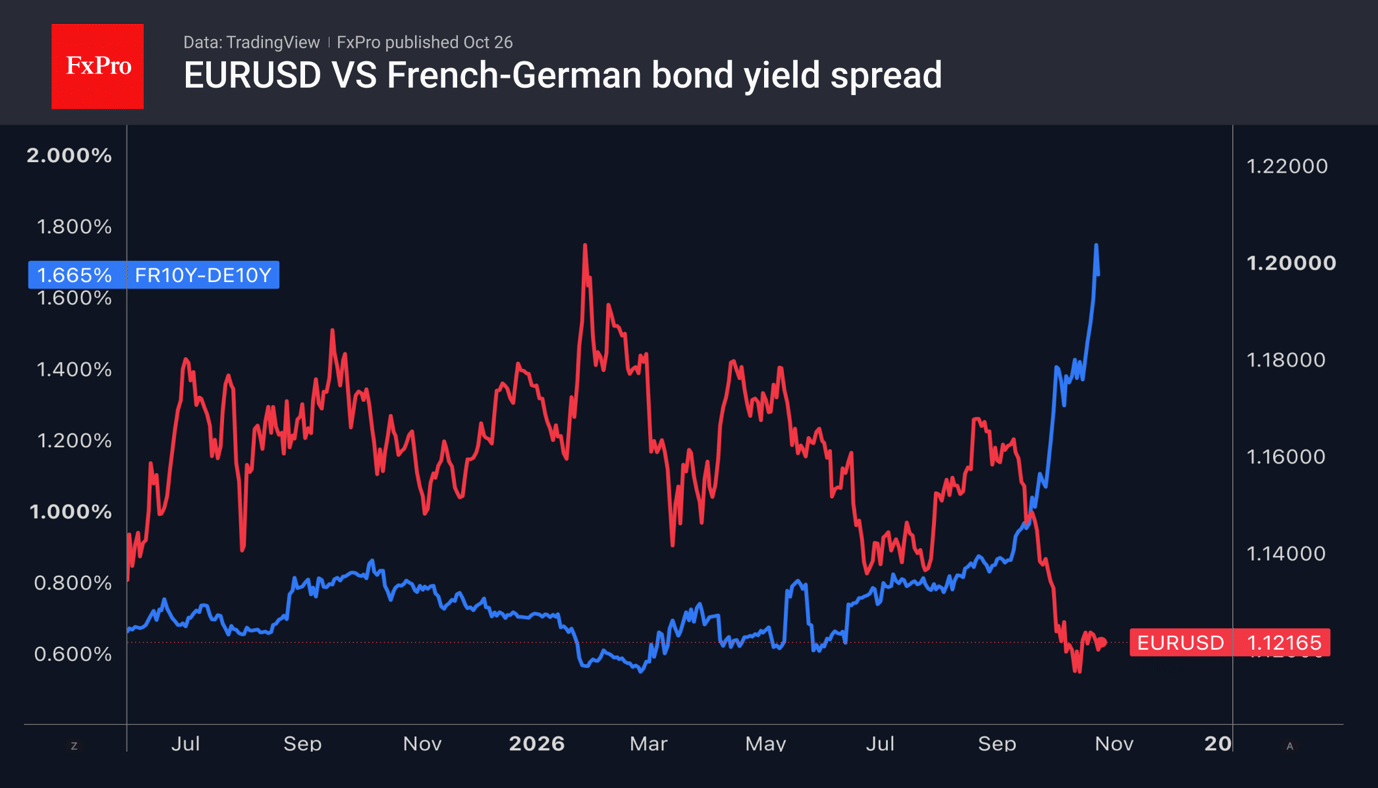
Political factors have prevented business activity in France from consolidating its growth momentum, as preliminary PMI estimates have returned to levels below 50, the threshold separating growth from contraction, following September’s upturn. This trend signals an economic slowdown and is putting pressure on the euro, which is quite sensitive to this indicator. For the time being, however, the pair is being stabilised by news that Moody’s has maintained France’s rating at its current level, contrary to expectations of a downgrade by one or two notches.
The Bank of Japan risks going too far by raising the overnight rate once again before the end of the year. Monetary policy is already tightening at its fastest pace since 1990. This acceleration will weigh on the economy and fuel discontent with the current government’s policies. Prime Minister Sanae Takaichi’s approval ratings have already fallen due to scandal-hit resignations within the government.

The FxPro Analyst Team