


UK House prices lag CPI
October 07, 2025 @ 12:22 +03:00
House prices fell by 0.3% in September after rising by the same amount in August, Halifax reported in its monthly market report. Since the beginning of the year, prices for typical homes have risen by 0.3%, while the annual growth rate has slowed to 1.3%. Compare this with the 2.7% rise in the overall consumer price index since the start of the year and 3.8% year-on-year, and there is little doubt that the UK housing market is not in the best shape. The housing market is often a barometer of consumer demand, and its current state allows the Bank of England to continue easing policy, as the economy is far from overheating.
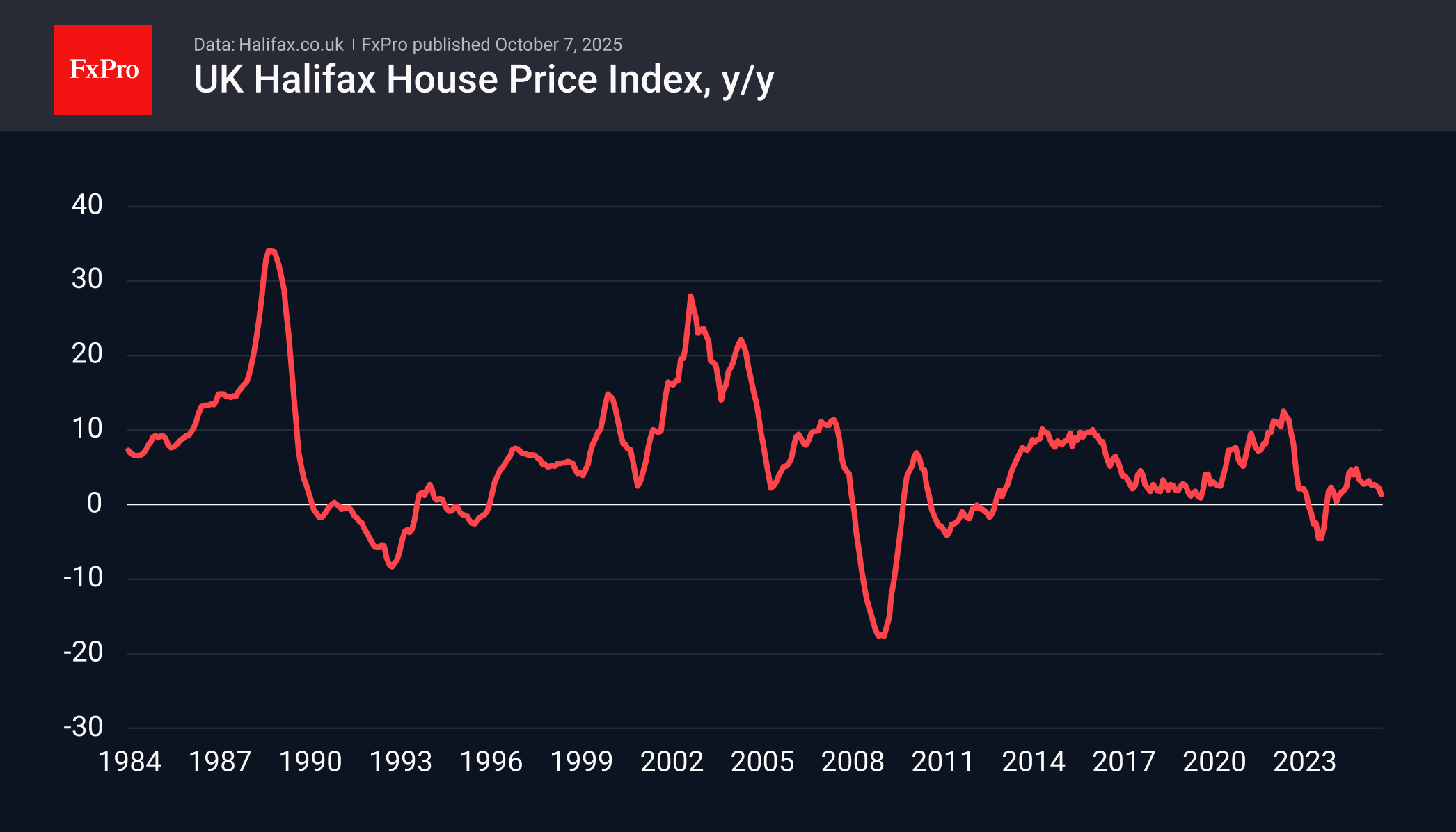
Against the backdrop of such news, it is not surprising that the pound has weakened, accelerating its decline against the dollar at the start of the day and giving up some of its Monday gains against the euro. Politics has been playing an unusually strong role in currency market dynamics recently. The UK has its own budgetary difficulties, which are deterring investors from capital markets, but so far, they are not as acute as in the US or the eurozone.
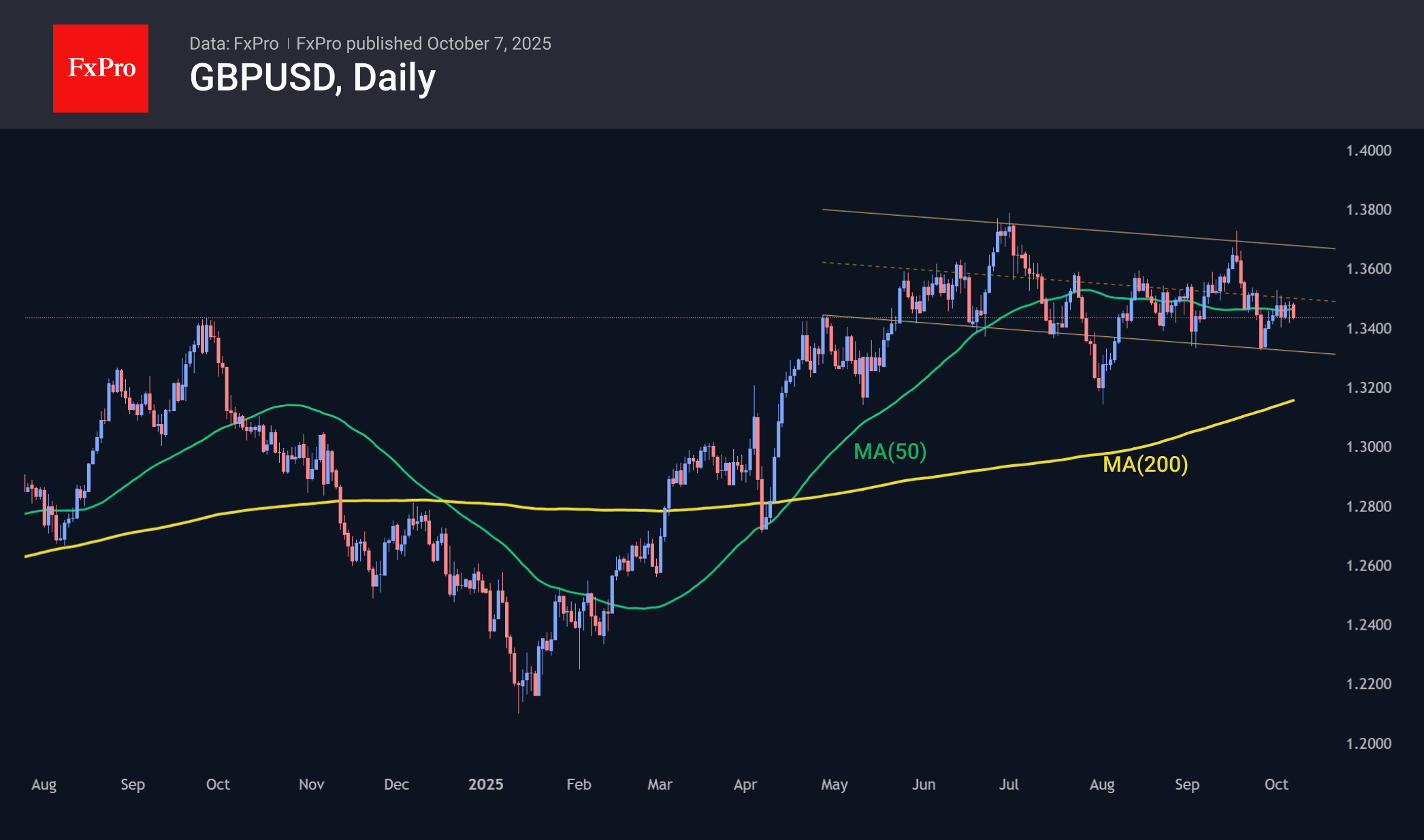
GBPUSD is currently at 1.3440, trading in the middle of the range where the pair has been since May, but the upward trend began a gradual reversal in July. The current dynamics resemble consolidation with a wait for the next move, which could be very significant given how long the pair has been moving without a trend. In such conditions, there is a slightly higher chance of a downward reversal. The targets for a deep correction may again be the 1.32 area, where 61.8% of the rally since the beginning of the year and the 200-day moving average coincide. However, in the event of a full-fledged dollar offensive, the pair may roll back to 1.27 by the end of the year, targeting 1.20 by mid-2026.
The FxPro Analyst Team
