


The yen is recovering
May 04, 2026 @ 13:21 +03:00
- Japan has spent $34 billion on market interventions.
- The futures market has revised its outlook on Fed interest rates.
At the end of last week, the US dollar retreated to early March levels of 97.60, having rebounded to 98.10 at the time of writing. The catalyst for the USD index’s plunge at the end of last week was the markets’ reassessment of the Fed’s rate outlook and Donald Trump’s announcement that the US would begin withdrawing commercial vessels from the Strait of Hormuz. Nevertheless, investors’ doubts that the world’s main oil artery would be restored allowed the greenback to recover.
Before the April FOMC meeting, the futures market had priced in a low probability of a rate cut. The emergence of three dissenting voices on the committee increased the chances of monetary tightening and ruled out easing. However, the rhetoric of Fed members is once again shifting the situation.
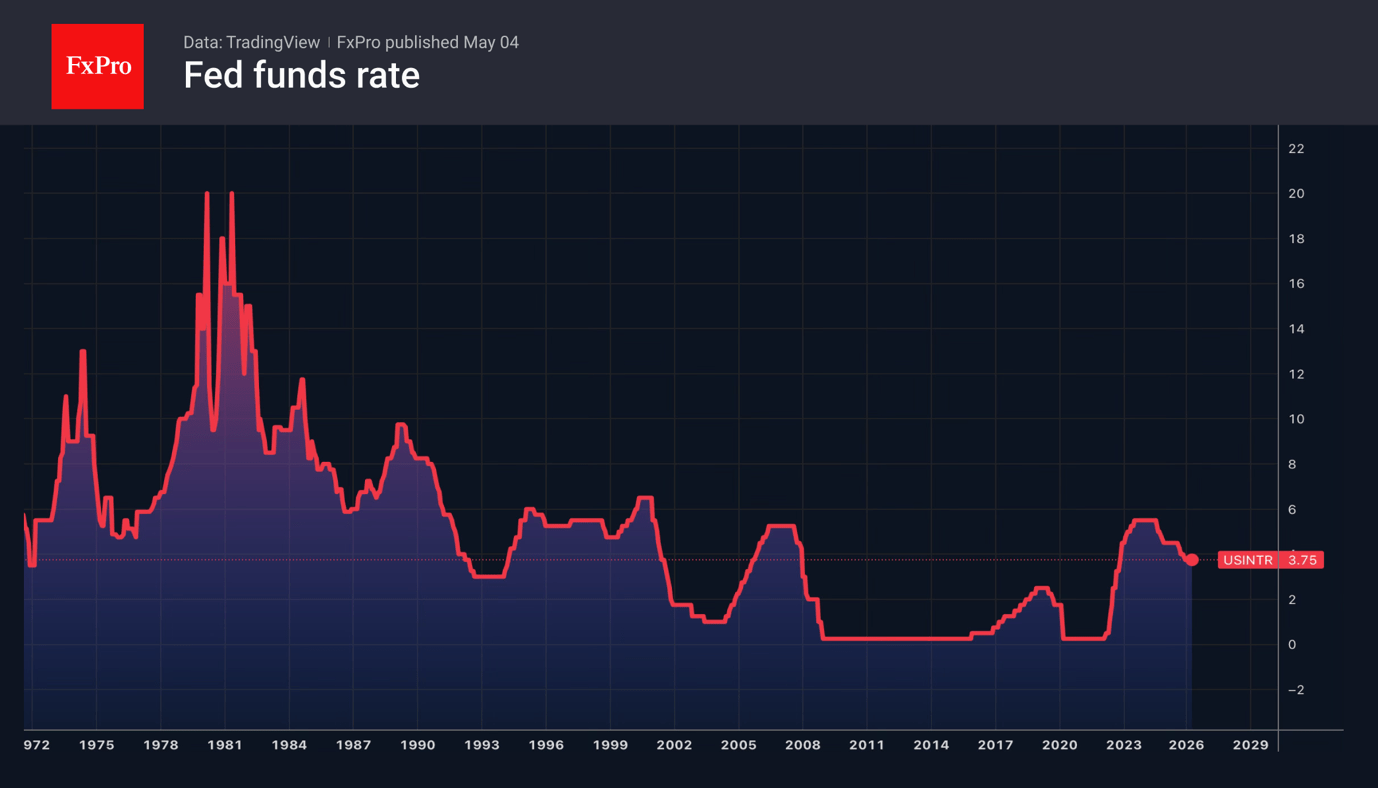
Neel Kashkari of Minneapolis believes that the next move could be either a hike or a cut. Beth Hammack of Cleveland argues that rising uncertainty makes monetary policy itself more uncertain. Lori Logan of Dallas is concerned that it will take a long time for inflation to return to target. As a result, the futures market paints a balanced picture, with an 11.5% probability of both a cut and a hike in the federal funds rate in 2026, and a 77% chance of it remaining at the current level. This reassessment has deprived the dollar of significant support.
Investors are not yet giving much thought to the economic outlook. According to ECB Executive Board member Yannis Stournaras, concerns about a recession in the eurozone are real and justified. Conversely, the number of media mentions of a US economic downturn is declining.
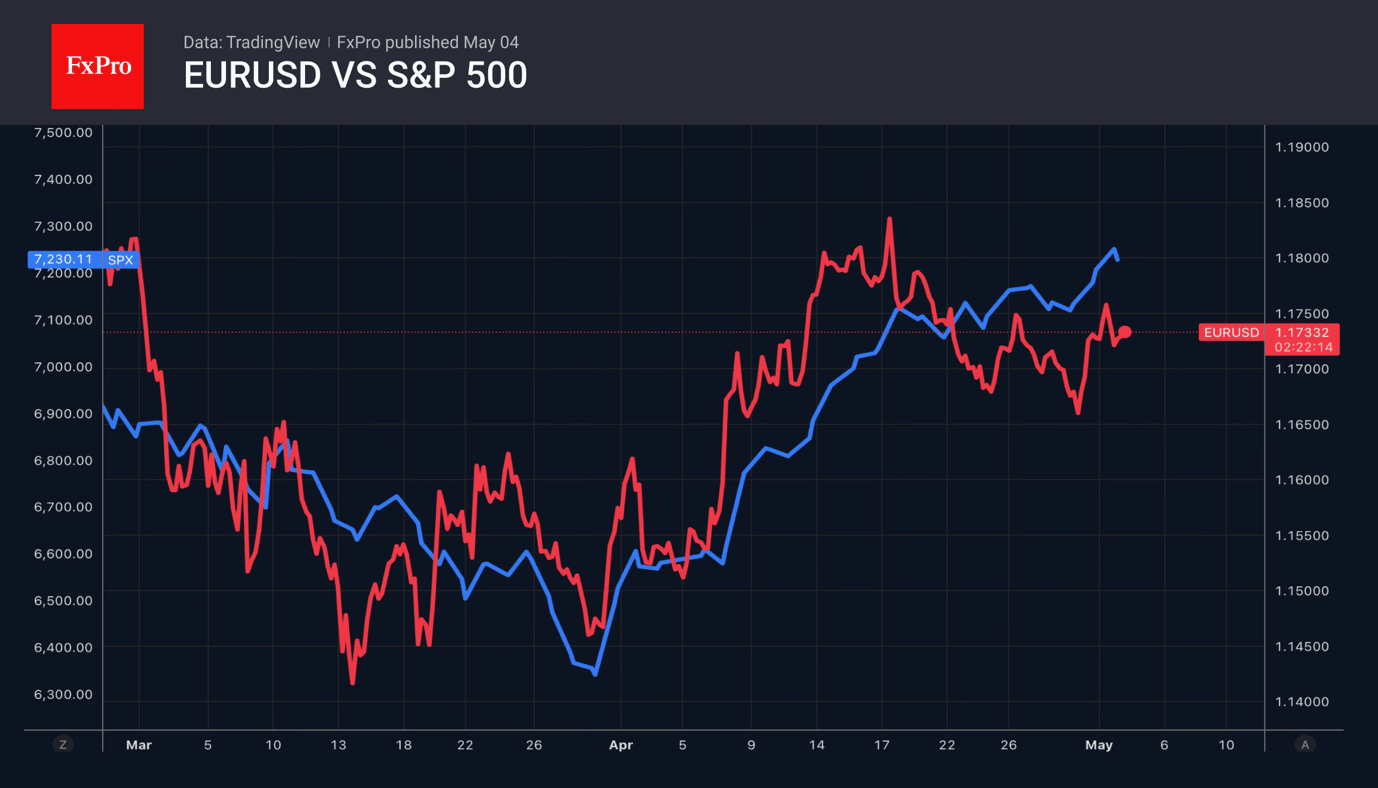
The resumption of the trade war could add fuel to the fire of diverging economic growth. Donald Trump has announced a 25% tariff on European cars, citing the EU’s alleged failure to meet the terms of the agreement. A symmetrical response risks causing more harm to the eurozone than to the US.

Meanwhile, USDJPY bulls are trying to recover after Japanese authorities intervened in the forex market. Bloomberg estimated the cost of these interventions at 5.4 trillion yen ($34 billion). In 2024, Tokyo intervened in the market four times, with an average volume of around 3.8 trillion yen. On the intraday charts for Friday and Monday, resistance is clearly visible at 157.3 for USDJPY and 184.5 for EURJPY. This looks like a continuation of interventions aimed at establishing a trend of lower local highs and convincing the market of the sustainability of this reversal so that it becomes self-sustaining.
The FxPro Analyst Team