


The S&P 500 defies uncertainty
September 14, 2026 @ 17:02 +03:00
- Higher chances for a Fed rate hike have worked in the stock market’s favour.
- ETFs’ capital outflows signal a loss of interest in the S&P 500.
After four consecutive days of losses, the S&P 500 posted gains despite an unfavourable backdrop. The acceleration in core inflation has pushed up Treasury bond yields and increased the likelihood that the Fed will tighten monetary policy in September. Under such conditions, risky assets usually come under pressure.
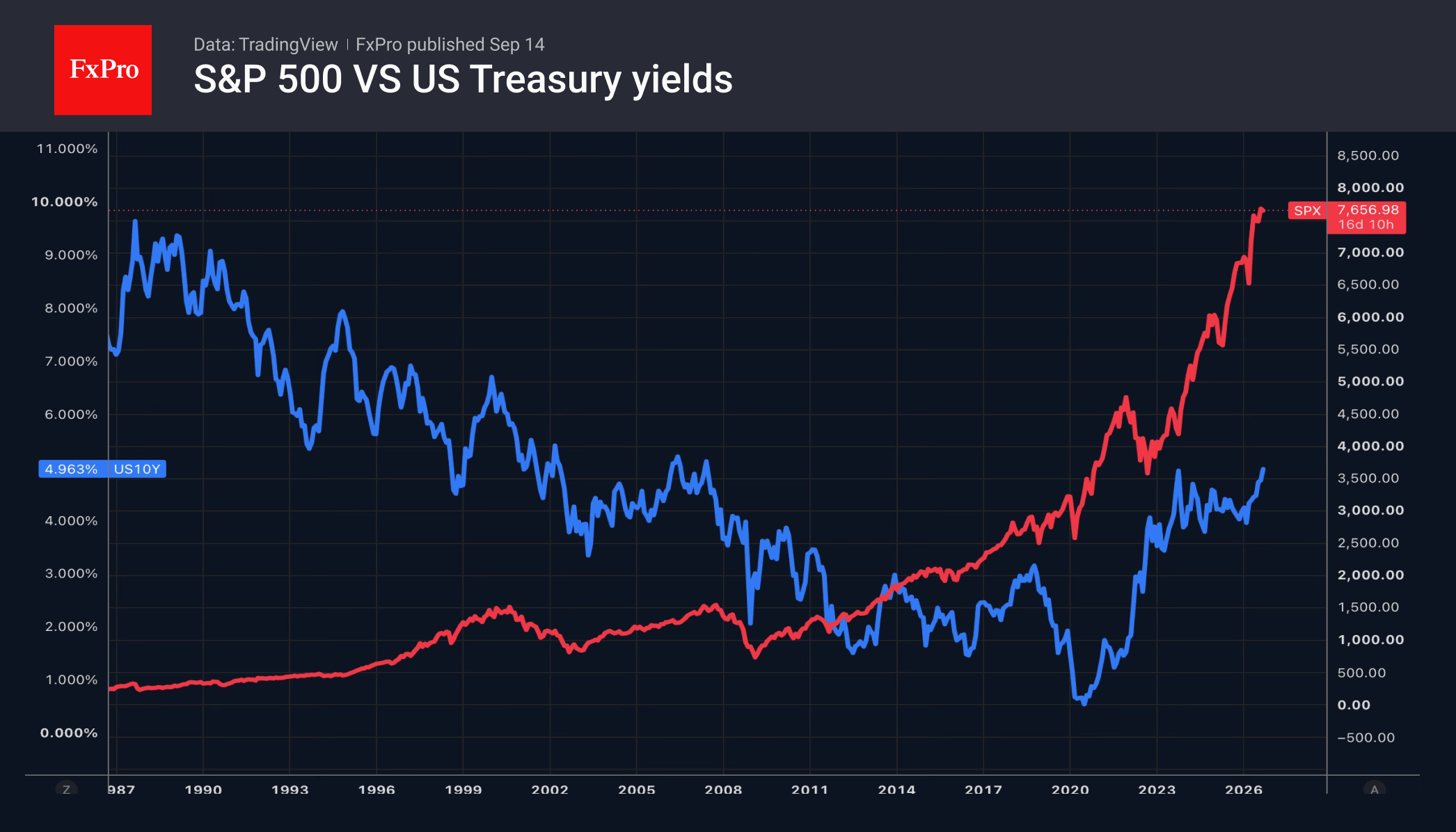
It is not so much the rise in the federal funds rate that is worrying, but the uncertainty associated with it. The S&P 500 rose as clarity emerged in the market: an increase in short-term rates would become a fundamental factor weighing on long-term rates. The market has priced in the upcoming rate rise, shed its fears and can now move on. The main thing is that the central bank does not prove more ‘hawkish’ than expected.
Wall Street has a rule about how ‘bull’ stock markets end. Either the economy enters a recession, or the Fed tightens monetary policy until something breaks. Neither has happened yet, but rumours of a repeat of the dot-com crash are circulating in the market with increasing frequency. In the run-up to those events, there was also a sharp rally in Treasury yields and talk of a rise in the federal funds rate.
Bank of America is urging caution as investor interest in US shares wanes. Exchange-traded funds focused on these shares have lost $14.2 billion over the last three weeks, marking the largest outflow since January. Global funds are attracting an average of $7 billion per week, significantly less than the $52 billion seen in July.
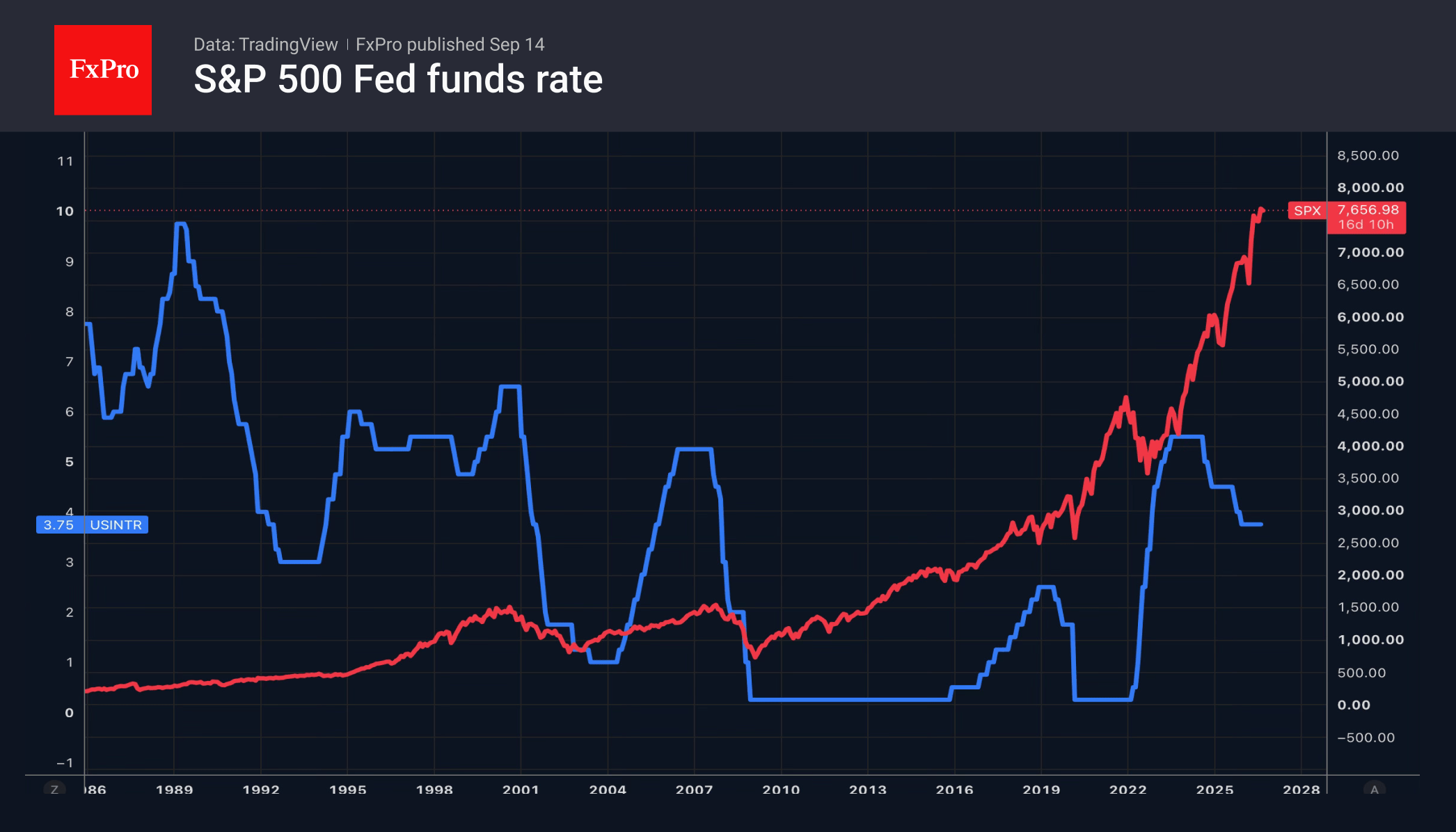
Meanwhile, optimists point out that the S&P 500 is calmly weathering headwinds such as the conflict in the Middle East and the associated rise in oil prices, the increased likelihood that the Fed will begin a cycle of monetary tightening, and the rally in Treasury yields. Stock indices reflect the state of the economy, and if they are performing well, then the US economy is in good shape.

Will the Fed’s rate rises prove to be a headwind for the S&P 500? Or has this factor already been reflected in market prices?
The FxPro Analyst Team