


The Middle East is changing the game in Forex
March 02, 2026 @ 14:23 +03:00
- The US dollar may receive support from rising oil prices.
- Geopolitics is driving up inflation in Japan.
The US dollar gained about 0.8% at the start of the week, which may seem like a relatively restrained reaction to events in the Middle East. Investors are wondering how long the confrontation will last. Will Donald Trump end military action soon, or will he prolong it, risking pushing Brent above $100 per barrel and accelerating US inflation? The second option would be a blow to the oil-import-oriented eurozone and the euro.
Investors are waiting for signals from the Fed, whose meeting will take place in just over two weeks, about its priorities in terms of risks: whether to focus on inflation risks, financial market disruptions, or labour market stabilisation and actual inflation.
The market narrative before the weekend was that stabilisation of the labour market amid slowing inflation allowed the Fed to resume rate cuts around June. This made the medium-term outlook for the US dollar bearish.
The reduction in the average tariff rate following the Supreme Court’s ruling on duties will further slow down prices. To reduce fees, companies are underpricing goods, overpricing transportation and insurance services, or shipping products through Mexico. These actions explain why US inflation is not rising as fast as expected.
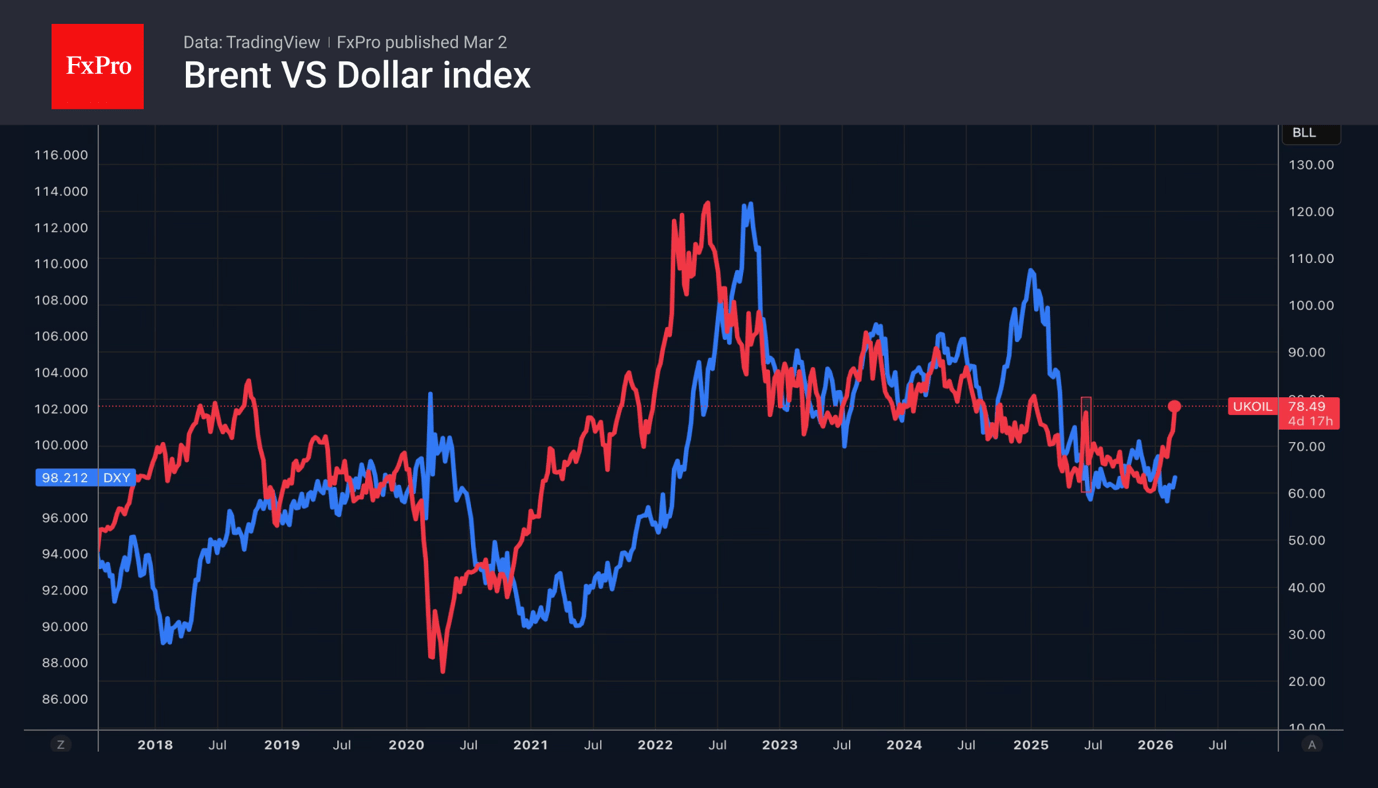
Right now, the narrative driving the markets is that rising oil prices could lead to a prolonged pause in the Fed’s rate cuts. This works in favour of dollar bulls. It also works against the EURUSD and some other European currencies, as they are closer to the conflict and are forced to buy energy resources that have skyrocketed in price.

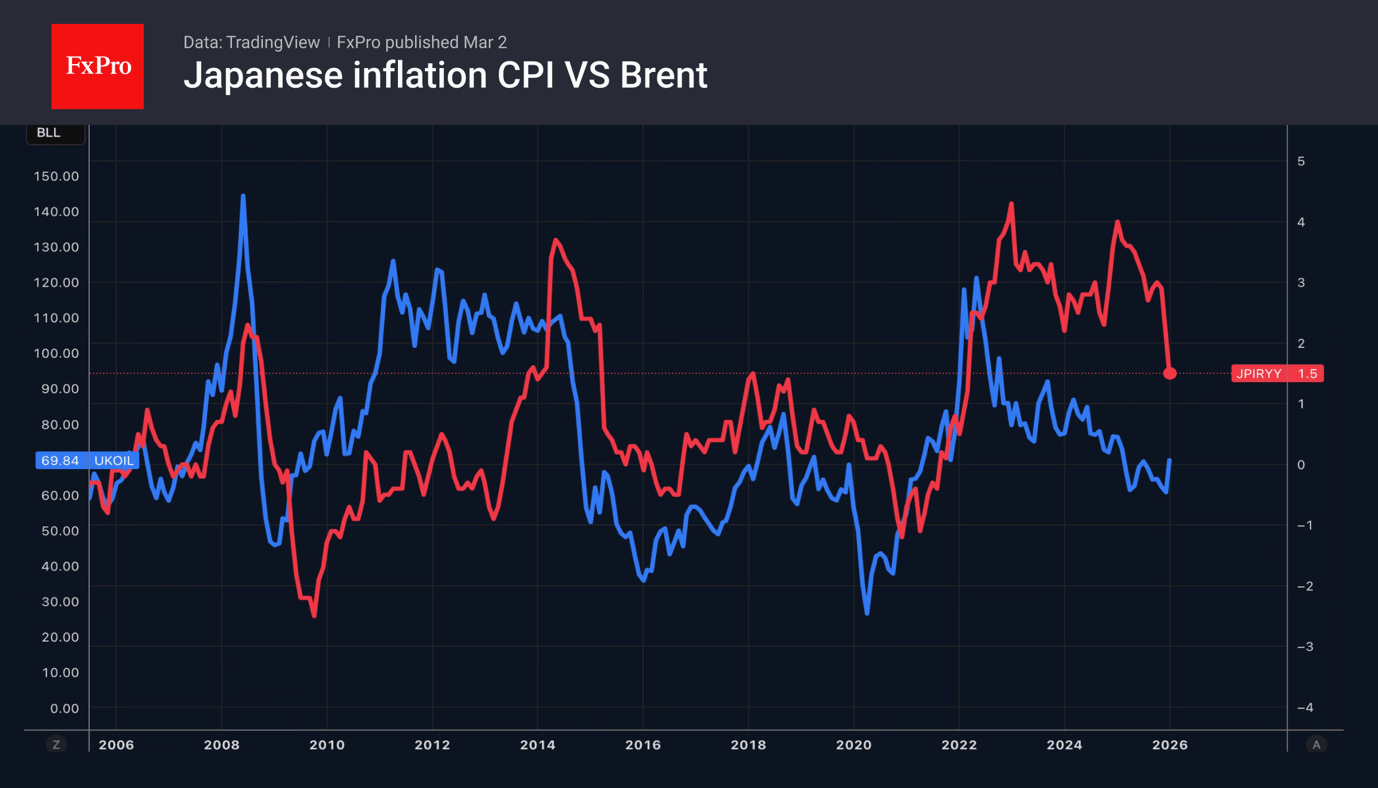
According to Monex Group, a rise in Brent to $100-120 per barrel would be equivalent to a supply shock in Japan and would derail Sanae Takaichi’s efforts to stimulate the economy. In this scenario, inflation will accelerate by 0.5 percentage points. Its slowdown in January-February seemed to have given the prime minister a free hand. However, events in the Middle East risk changing everything, which will affect the USDJPY exchange rate.
Gold appears to be a major beneficiary of the US and Israeli military strikes on Iran. Its price exceeded $5,400 per ounce, where it had briefly peaked in January. The precious metal recorded its seventh consecutive monthly gain in February, its longest winning streak since 1973. The kidnapping of the Venezuelan president, tariff threats against Europe over Greenland and, finally, the conflict in the Middle East create the perfect geopolitical backdrop for a flight to gold as a safe haven.
Investors are responding more to risk premium dynamics than to fundamental factors. In such conditions, gold feels right at home.
The FxPro Analyst Team