


The euro sees no obstacles to growth
April 15, 2026 @ 14:00 +03:00
- Global risk appetite and monetary policy divergence are driving gains in EURUSD.
- The Bank of Japan gave no signal of a rate hike in April.
The US dollar continues to retreat amid falling demand for safe-haven assets, as the de-escalation of the Middle East conflict has raised global risk appetite. Investors are confident that US-Iran peace talks will resume shortly. This is aided by the White House’s shift from a military strategy to economic leverage through a blockade of the Strait of Hormuz.
A prolonged blockade could lead to the IMF’s adverse scenario. Under this scenario, oil prices would remain above $100 per barrel for an extended period, global GDP would slow to 2.6%, and inflation would rise to 5.4%. In the baseline scenario, economic growth in 2026 will be 3.1%, 0.2 percentage points lower than the previous forecast. The International Monetary Fund believes that the eurozone will suffer more than the US. The shared currency bloc is dependent on energy imports.
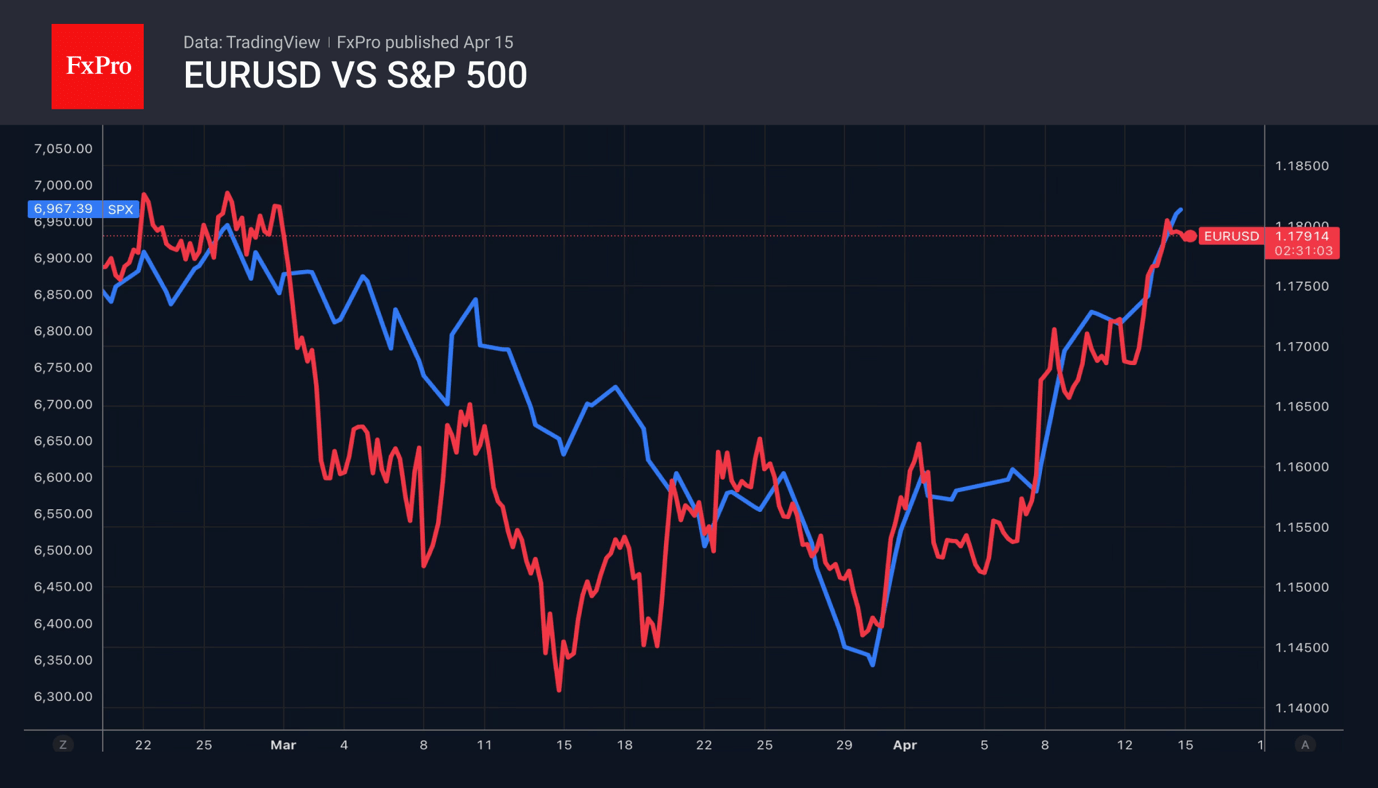
However, the euro has a positive correlation with risk appetite, and its bulls have capitalised on the strong rally in US indices, pushing them towards record highs. At the same time, the rising correlation between the VIX volatility index and the US dollar is putting pressure on the greenback.
MUFG Research notes that the 40% rally in Brent since the start of the war in the Middle East should have led to a 3% fall in EURUSD. The firm attributes the euro’s return to pre-war levels to rising global risk appetite and divergence in monetary policy. The futures market is pricing in a 35% probability of a Fed rate cut in 2026. Investors are confident of two ECB rate hikes and a 30% chance of a third.
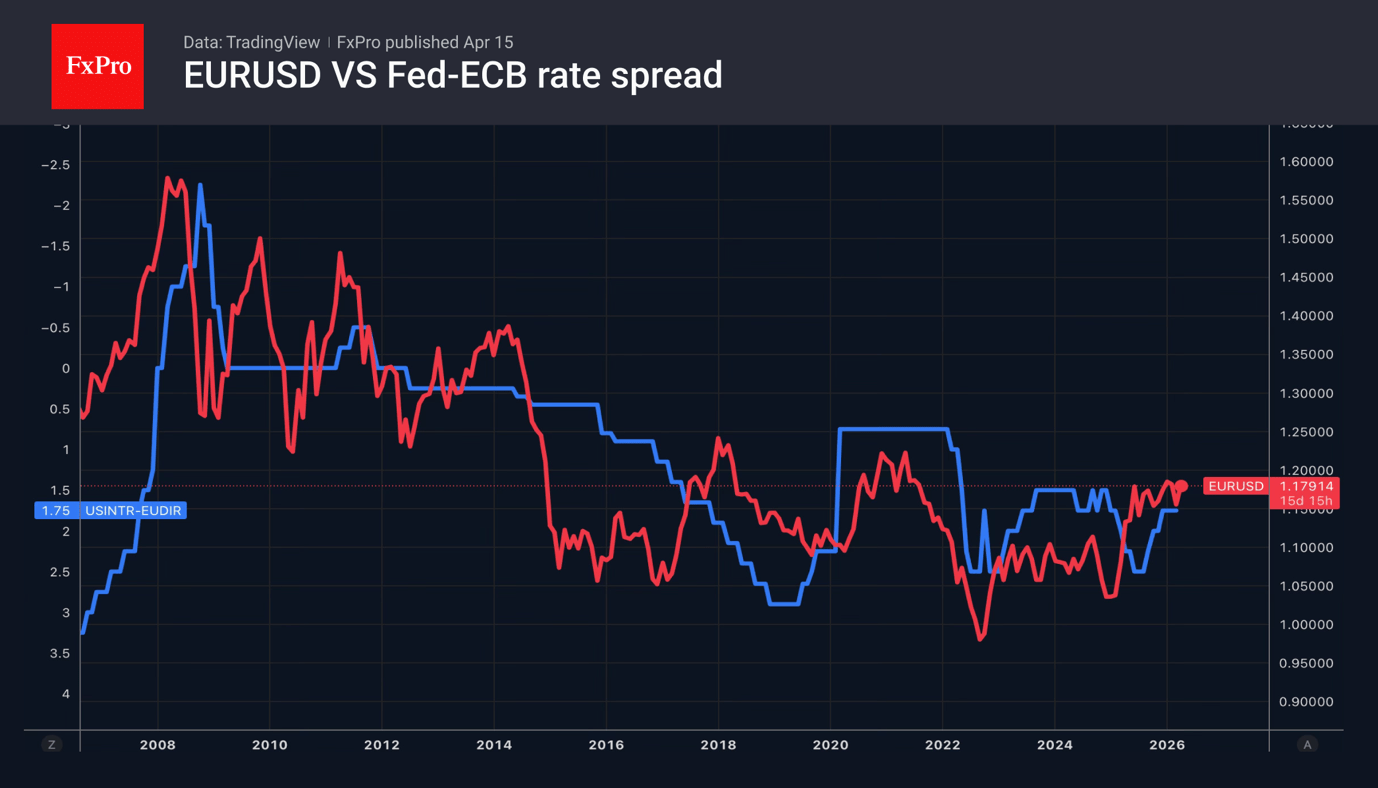
Other global currencies have benefited from the US dollar’s weakness. However, the yen is in no hurry to rise as Kazuo Ueda’s comments unsettled USDJPY bears. The BoJ Governor stated the Bank would continue to monitor developments in the Middle East and gave no signals of a tightening of monetary policy. This is a dovish tone, as he has given such signals before. As a result, the futures market has reduced the probability of monetary tightening in April from 55% to 32%.

The FxPro Analyst Team