


The euro is finding its footing
September 21, 2026 @ 13:50 +03:00
- The Fed is not outpacing the ECB’s pace of rate hikes.
- The return to the yen as the funding currency for carry trades is helping the euro.
The US dollar hit a new local high on Friday but retreated towards the end of the week as the market reassessed the prospects for a Fed rate rise. Other central banks, including the ECB, have already begun or are set to begin their own cycles of monetary tightening, which is holding back the greenback’s advance.
According to JP Morgan, the US dollar was undervalued by approximately 2–4% before the FOMC meeting, based on various factors, including the interest rate differential. At the same time, the start of the rate-hiking cycle gives the green light to so-called catch-up trading. Speculators, who have been reducing their long positions in the greenback over the past seven weeks, may now switch to the opposite strategy, creating the conditions for the USD index rally to continue.
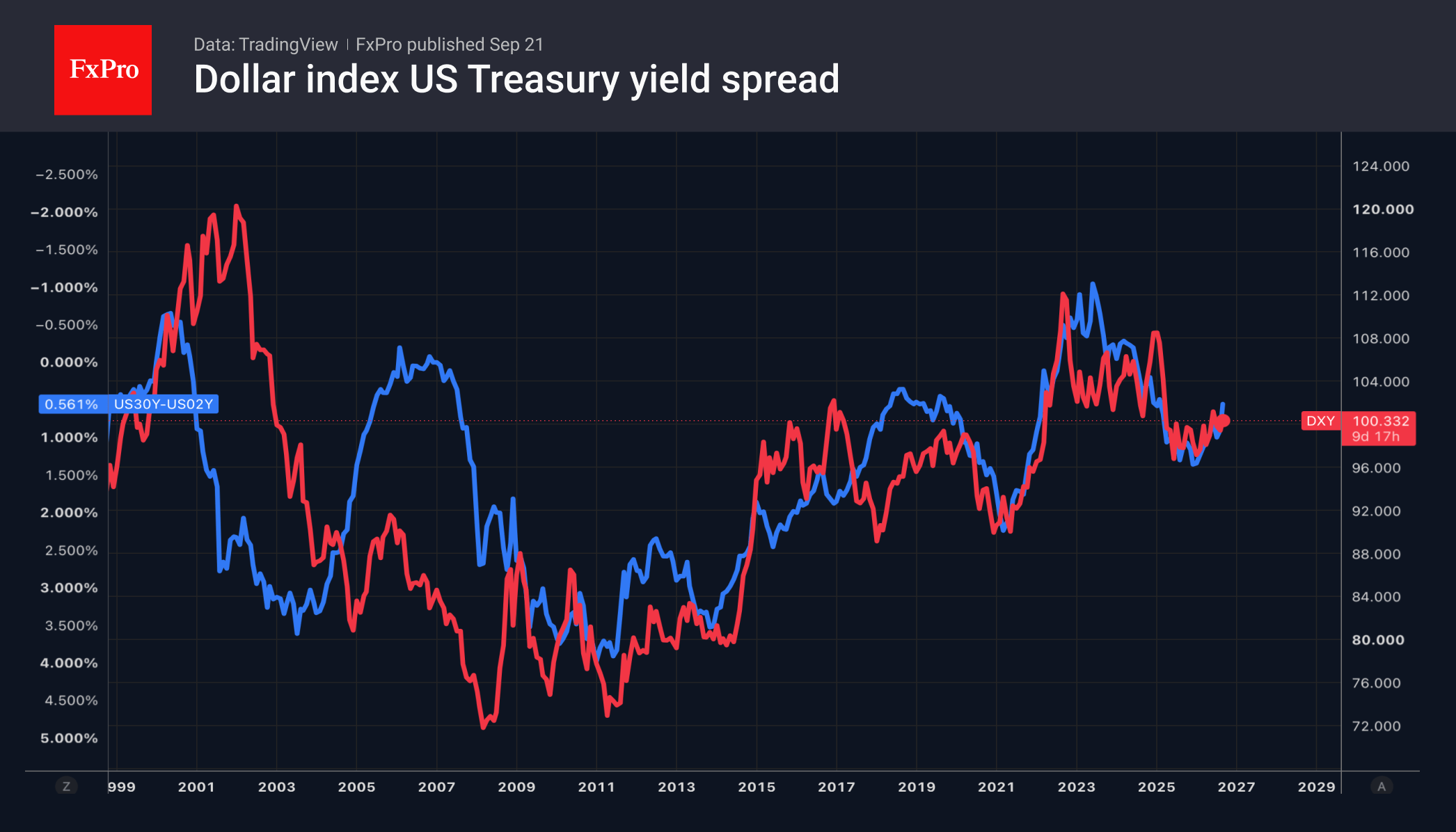
The dollar is also supported by the narrowing of the yield spread between 30-year and 2-year Treasury bonds, which indirectly signals market confidence that the Fed will effectively combat inflation by raising interest rates. Historically, a narrowing spread has supported the DXY. In fact, this time, it is more a result of buying longer-term bonds as short-term yields rise with rate hikes.
According to Oxford Economics, over the next five years, interest rates in the United States will rise faster than in Europe due to greater adoption of artificial intelligence technologies. This leads to increased productivity, higher tax revenues and faster GDP growth.
The return of the theme of American exceptionalism could support the greenback, with US business activity outpacing that of Europe and Asia.

The market had expected too much from the Bank of Japan’s hawkish shift ahead of the September meeting of the Policy Board. Consequently, the rise in the overnight rate, followed by signals from Kazuo Ueda that the cycle would continue, failed to strengthen the yen. On the contrary, the presence of two dissenting votes on the rate decision led to a rally in USDJPY.
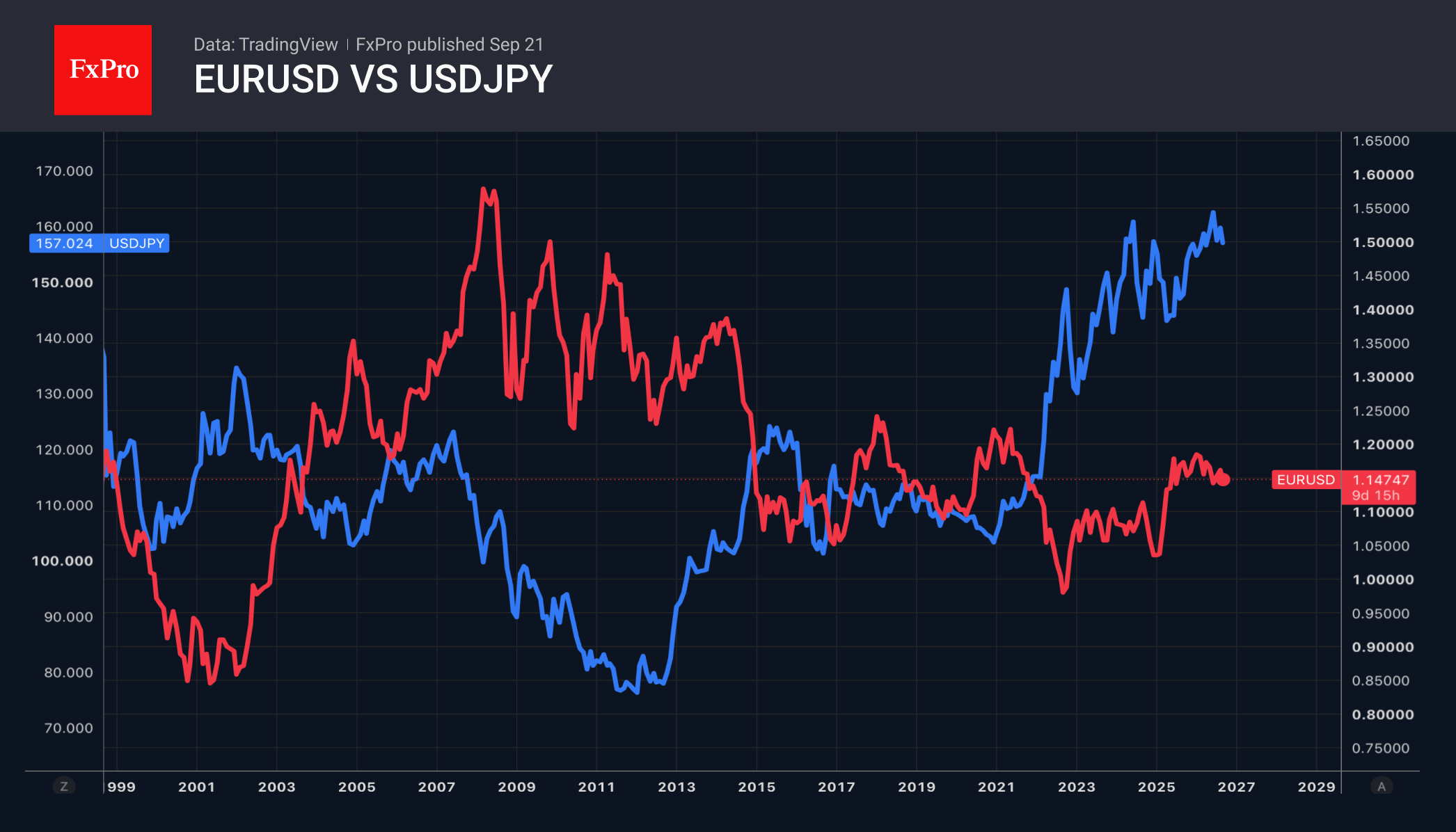
The yen is once again being used as a funding currency in carry trades. This is helping the EURUSD find its footing, as the risk of intervention to break the upward trend in USDJPY had previously forced traders to steer clear of the Japanese currency, using the euro to fund their trades.
The FxPro Analyst Team