


The economy is bolstering the dollar
May 15, 2026 @ 16:09 +03:00
- Markets are pricing in a Fed rate hike in 2026.
- The pound is falling amid the threat of a change of prime minister.
With no de-escalation between Iran and the US, no breakthroughs at the US-China summit, and strong retail sales supporting it, the US dollar has gained fresh momentum. The indicator has risen for 10 of the last 11 months. In April, the increase was 0.5%. This outpaces inflation and suggests that consumers continue to contribute to economic growth. As a result, the chances of a Fed rate hike in 2026 have risen to 50%, pushing the USD index to a three-week high.
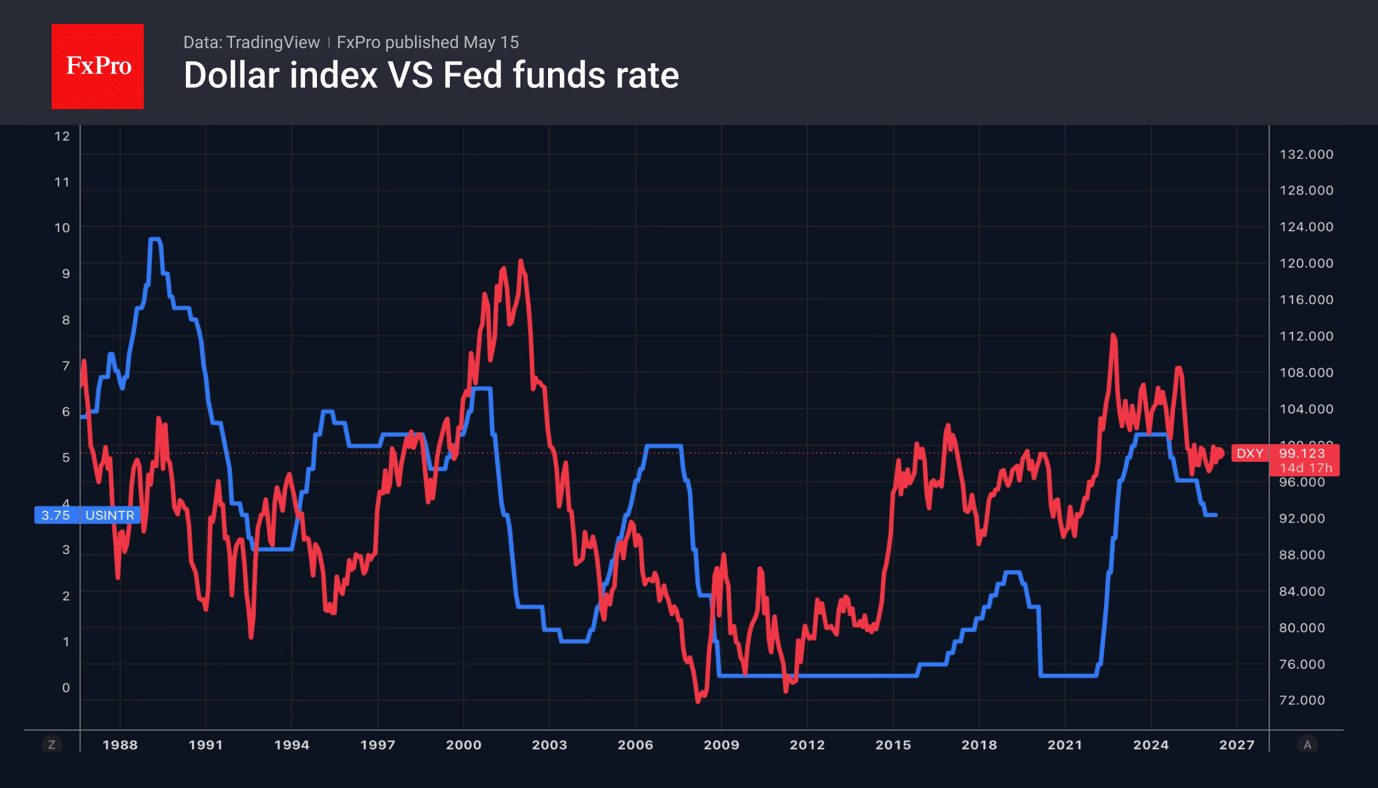
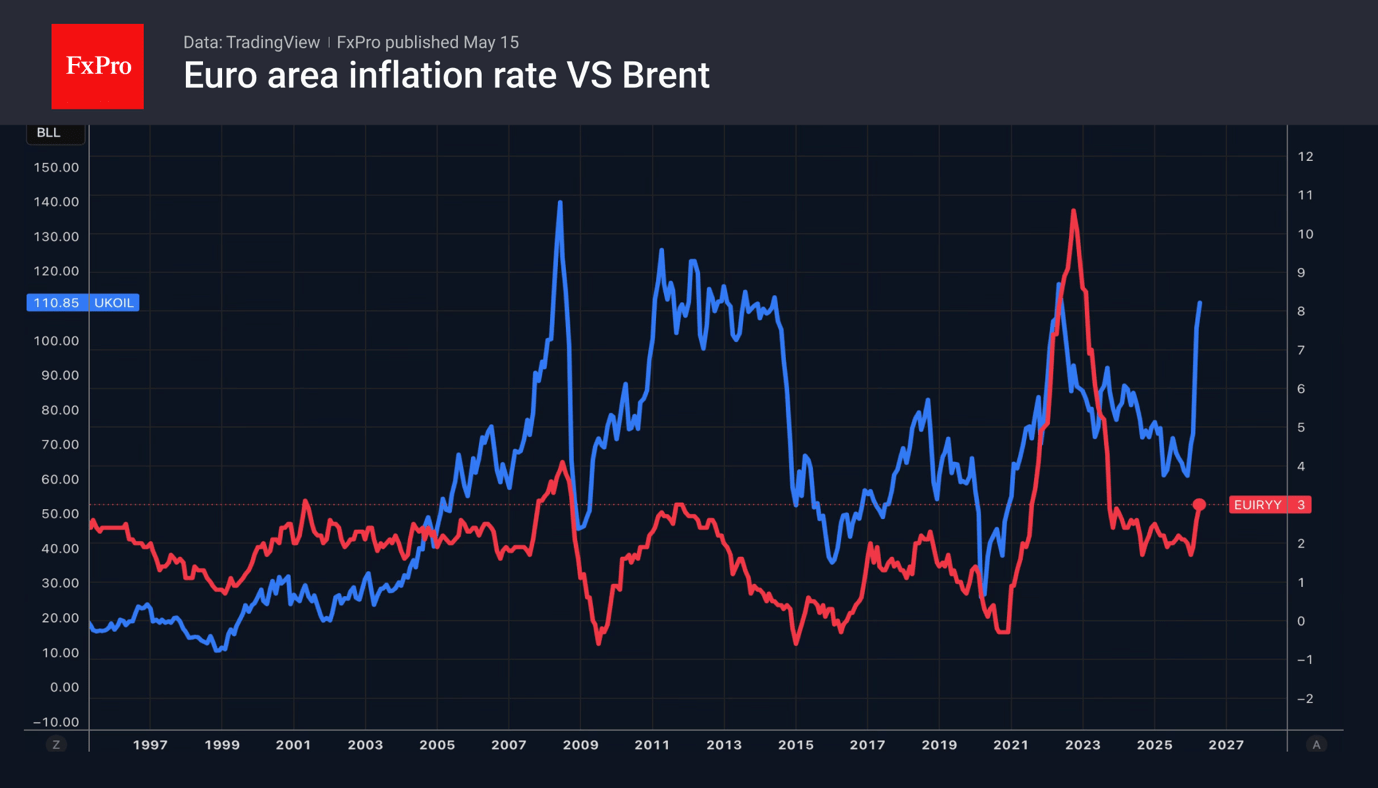
Investors had hoped that following the meeting between Xi Jinping and Donald Trump, China would put pressure on Iran by halting oil purchases. However, Beijing limited itself to statements about not wanting to see Tehran possess nuclear weapons or the Strait of Hormuz closed. It issued a stern warning to Washington regarding Taiwan, heightening geopolitical risks and pushing up oil prices and the dollar exchange rate.
Strong US economic data continues to push the timing of the Fed’s first rate hike forward, from April 2027 to December 2026. In Europe, the trend is the opposite. In April, Christine Lagarde expressed her readiness to tighten policy to prevent inflation from spiralling out of control. However, with oil prices relatively stabilised, inflationary risks in the eurozone are being contained, reducing the likelihood of a rate hike in June. The spread between the eurozone and US key interest rates will remain wide in favour of the latter, which plays into the hands of EURUSD bears, as will the shift in expectations.
The pound plummeted despite Britain’s fastest economic growth in four quarters. GDP expanded by 0.6% in January–March, though sceptics attributed this to manipulation by the Office for National Statistics. In recent years, the economy has been characterised by a statistical quirk: it gets off to a flying start but loses momentum as it approaches the finish line.
Pressure on GBPUSD came from Manchester Mayor Andy Burnham’s challenge to Keir Starmer, as he announced his readiness to stand for parliament. This politician is the only Labour Party member with a net positive voter rating and enjoys strong support from its left wing. The current Prime Minister’s position continues to waver, which is putting pressure on the pound.

The FxPro Analyst Team