


The dollar restores confidence by force
March 04, 2026 @ 14:23 +03:00
- The dollar follows successes on the international stage.
- Europe risks facing stagflation.
The US dollar is proving to remain king among safe-haven assets. At the same time, growing demand for financing in the American currency is pushing the USD index higher. The euro, on the other hand, is suffering from fears of a return of the energy crisis in Europe. Gas prices have jumped to €65 per megawatt hour. This is a long way from the peak of €345 in 2022, but the longer the conflict in the Middle East lasts, the more problems there will be for the economy.
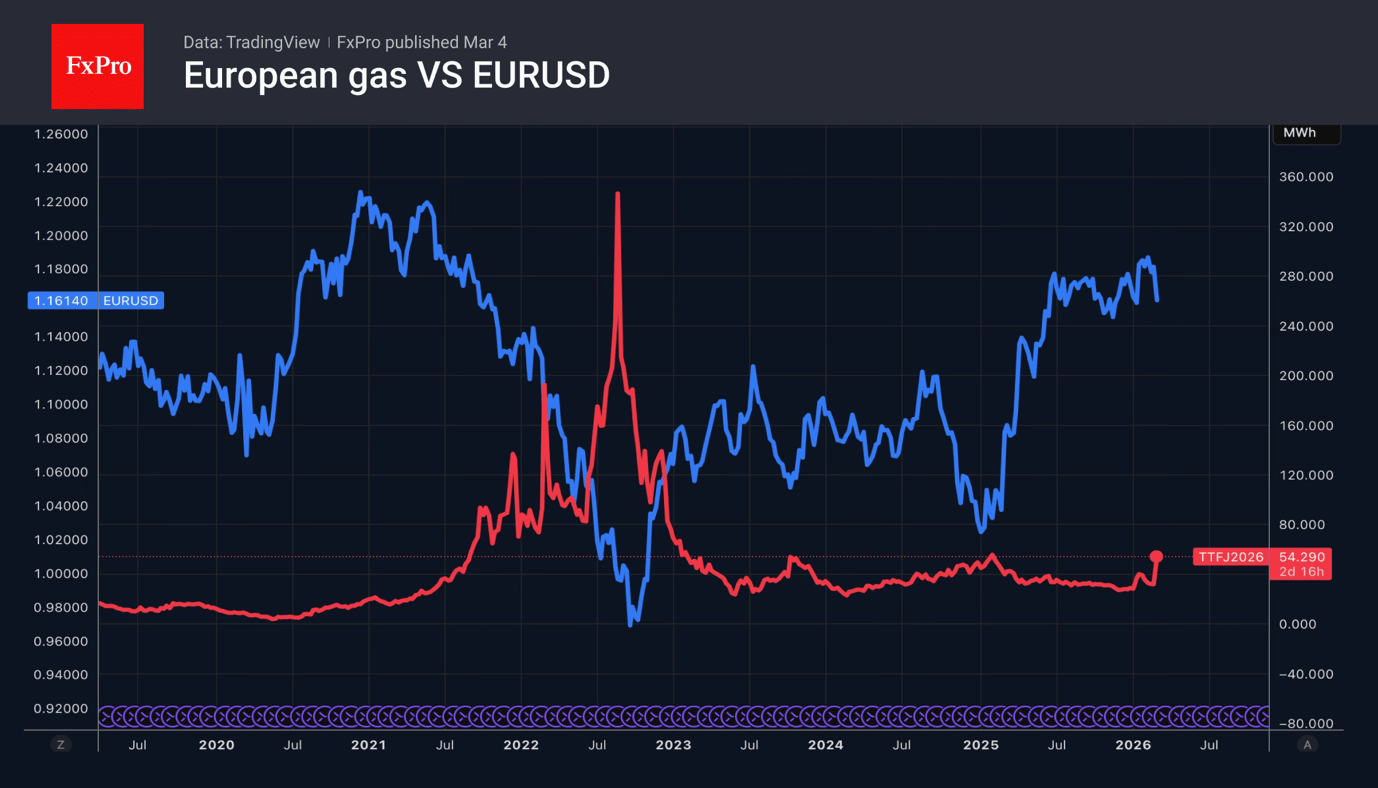
Capital Economics estimates that maintaining gas prices at current levels will add 0.5 percentage points to inflation. In February, i.e. even before the war in Iran began, consumer prices accelerated from 1.7% to 1.9% y/y, while producer prices rose by 0.7% in a month, against average forecasts of 1.7% and 0.2%, respectively. The ECB is once again facing a situation in which inflation is accelerating, and the economy is losing momentum. The stagflation scenario is pushing the EURUSD lower.
The US dollar, on the other hand, is reaping the benefits of the return of American exceptionalism to the markets. The United States is a net exporter of energy commodities, so its economy will be less affected by the surge in oil prices.
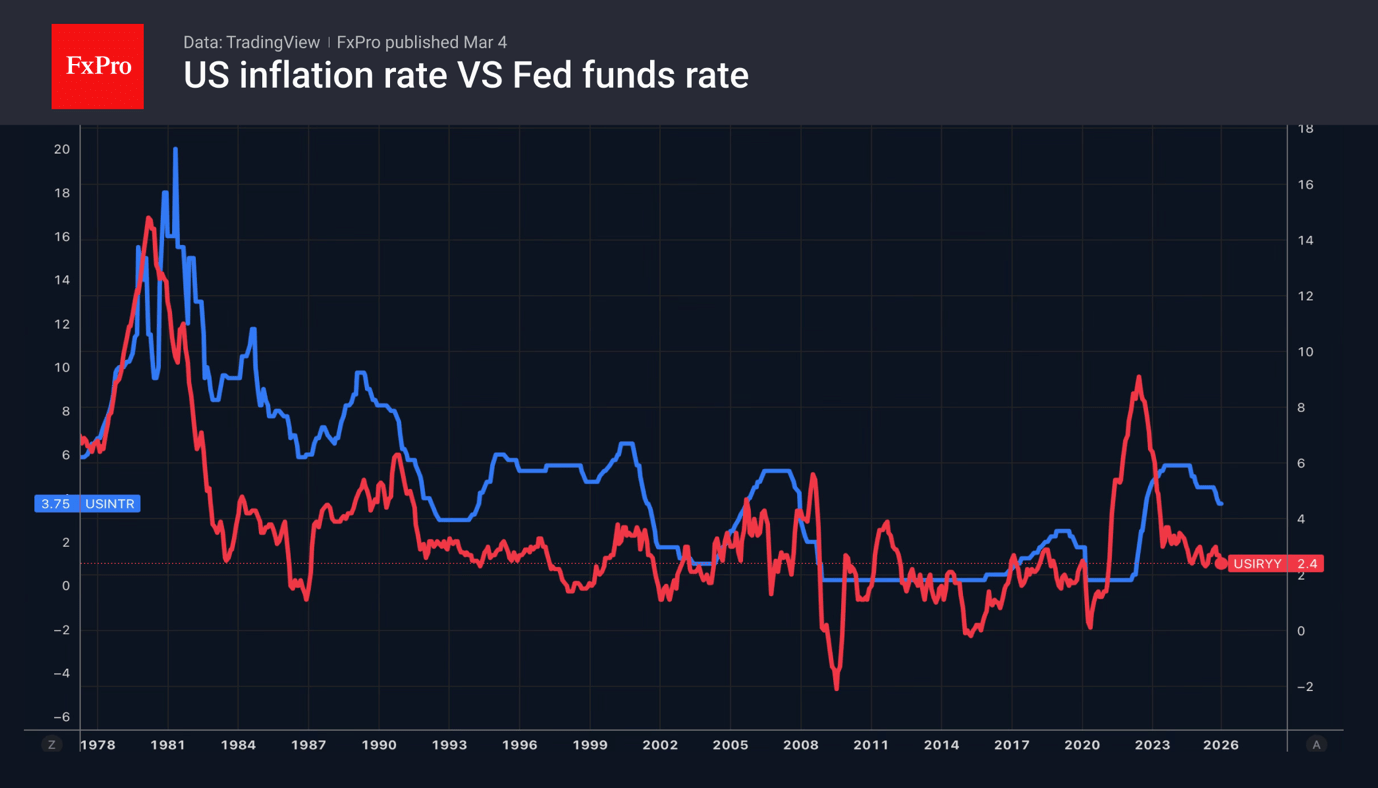
Even if the surge in inflation proves to be temporary, it will almost certainly force the Fed to extend its pause in policy easing. The chances of a federal funds rate cut in June have fallen to 37%. The futures market is pricing in less than a 60% probability of cuts in 2026, down from more than 70% a week ago.
High demand for the US dollar is undermining gold’s position. The precious metal saw its worst daily sell-off since late January. One of the key drivers of its rally in 2025 and February was the undermining of confidence in the US currency due to the uncertainty of Donald Trump’s policies and the associated debasement trade.

Macquarie notes that the greenback tends to strengthen when the United States interacts successfully abroad and demonstrates leadership. Thus, the First Gulf War in 1990-1991 was followed by a decade of success for the USD. After the US failures in the war on terror in the 2000s, the US dollar began to lose ground. The fall in EURUSD and gold proves that the greenback is regaining investor confidence.
The FxPro Analyst Team