


The dollar is rising again on renewed inflation fears
March 05, 2026 @ 16:21 +03:00
- Rumours of talks between Iran and the US sent the dollar lower, but not for long.
- The strength of the Australian economy did not help AUDUSD.
On Wednesday afternoon, a New York Times report on Tehran’s contacts with the CIA regarding negotiations sparked the fastest rise in EURUSD in a month. There is no smoke without fire, and traders should consider the risks of an earlier end to the conflict in the Middle East. However, the US dollar soon resumed its offensive after Iran denied these reports. Iran has become less homogeneous after the deaths of many representatives of the ruling elite. Even more contradictory signals are emerging regarding the Strait of Hormuz blockade, adding to the volatility of oil and stock markets.
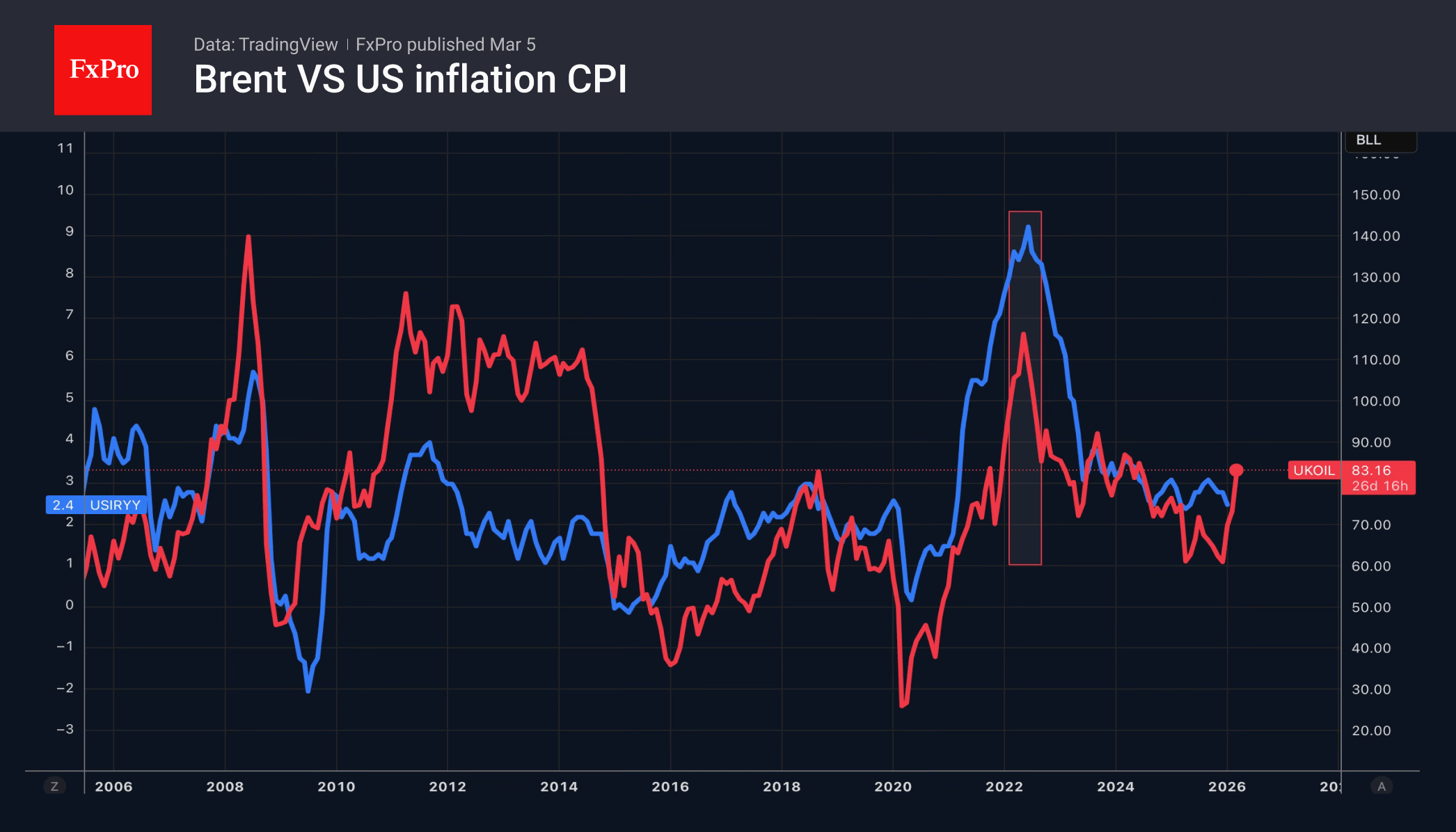
Regarding the duration of the conflict, Donald Trump’s administration is guiding markets towards a 4-5-week timeline. However, investors prefer to play it safe and are using the 2022 template, even though the protracted conflict between Russia and Ukraine disrupted oil and gas supplies to Europe. This drove up global prices and sparked a surge in inflation, including in the US, triggering an aggressive cycle of rate hikes over 40 years and strengthening the US dollar against major currencies.
The Fed is currently in a cycle of rate cuts, but has paused since December. However, the very fact of extending the pause in policy easing plays into the hands of EURUSD bears, given the existing wide yield differential between US and German bonds.
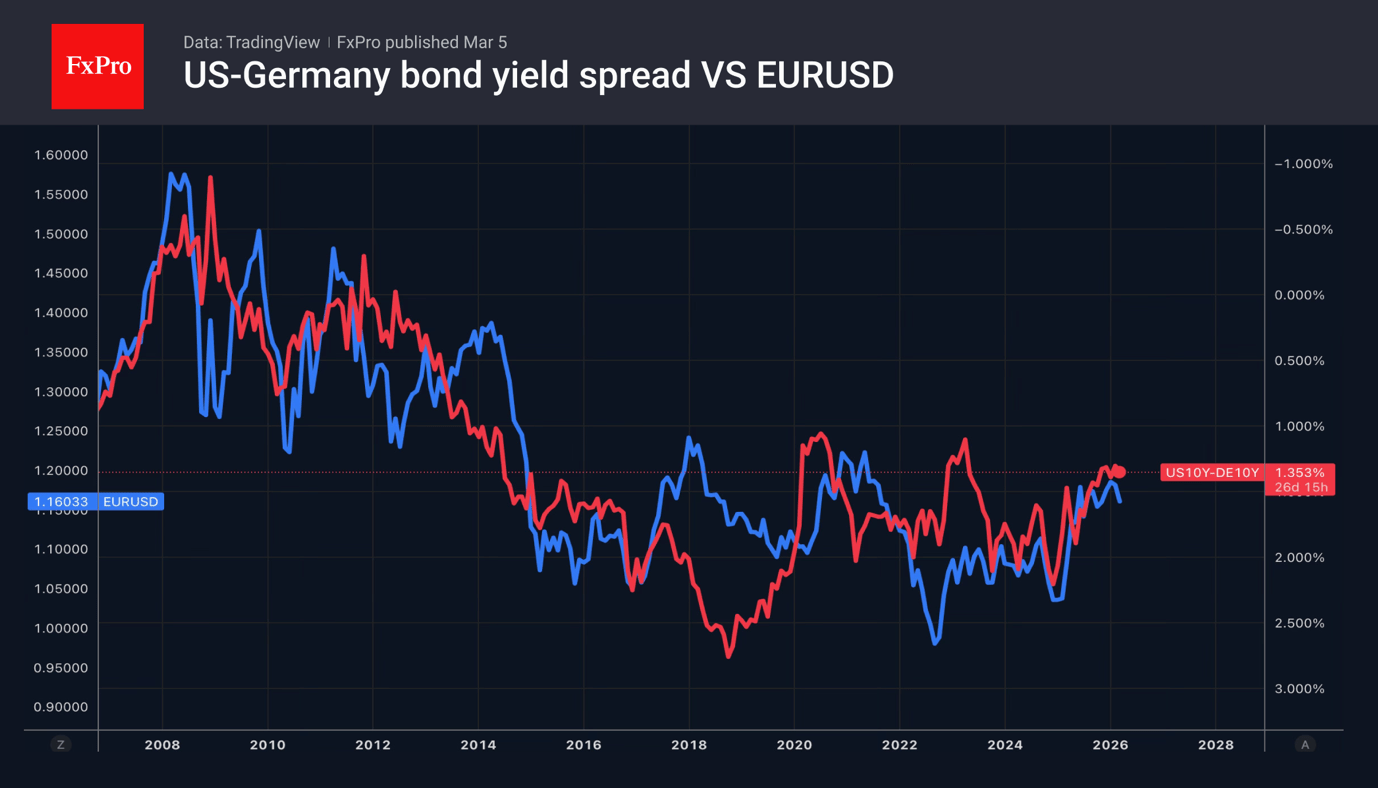
This is especially true given the growing signs of strength in the US economy. Published ADP data showed private sector employment growth of 63,000, the best result since July and above the forecast of 50,000. The ISM Services Purchasing Managers’ Index jumped to 56.1, its highest level since August 2022.
Attempts by the greenback’s competitors to launch a counteroffensive were nipped in the bud. The Australian dollar was not helped by 2.6% GDP growth in 2025, the fastest in three years. Investors believed that this statistic was already factored into the AUDUSD quote, and the chances of the RBA raising rates in March fell from 37% to 20%.

In Japan, statements by the central bank’s head about his readiness to continue raising rates boosted the yen. However, Kazuo Ueda acknowledged that the armed conflict in the Middle East is negatively impacting the national economy due to rising oil and gas prices, which have played into the hands of medium-term buyers. As a result, USDJPY returned to its daily high of 157.4, which is not far from the upper limit of the trading range of the last two years.
The pound remains under pressure not only against the dollar but also due to geopolitical factors. The risks of political instability, amid the Labour Party’s defeat in local elections, are weighing on GBPUSD.
The FxPro Analyst Team