


The Dollar: Is history repeating itself?
June 05, 2026 @ 13:43 +03:00
- Mixed news from the Middle East is helping the greenback.
- Growing similarities with the 1970s for the Fed.
The US dollar has recovered after Donald Trump said negotiations with Iran are in their final stages. This contradicts Tehran’s statement that talks with Washington have made no progress and Hezbollah’s refusal to comply with the US-imposed ceasefire with Israel. Confusing developments in the Middle East are heightening uncertainty and boosting demand for safe havens.
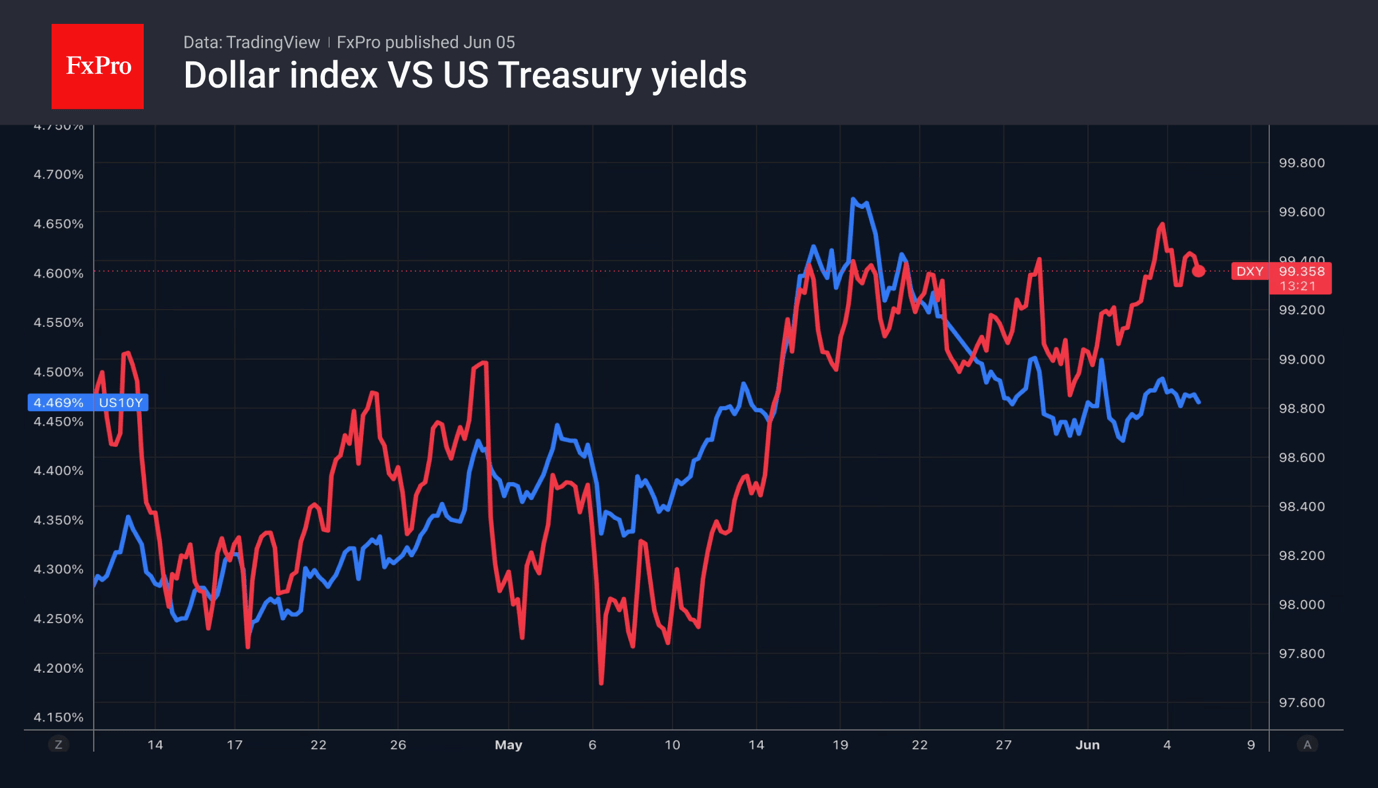
The US dollar has stabilised despite the fall in Brent crude and the resulting decline in Treasury yields. The likelihood of the Fed tightening monetary policy in 2026 is now below 50%. According to MLIV Pulse, 45% of investors surveyed believe the federal funds rate will remain unchanged this year, 35% expect it to rise, and 15% expect it to fall. More than half of respondents expect the US currency’s correlation with oil to strengthen. More than a third of investors expect the Dollar index and Brent crude to move lower together in the medium term.
This aligns with the Reuters consensus forecast for the EURUSD exchange rate to rise to 1.18, 1.19, and 1.20 over 1, 3, and 12 months, respectively. The baseline scenario is that the conflict in the Middle East will end, helping to shift Donald Trump’s focus from foreign policy to domestic issues. This probably means the White House will resume its pressure on the central bank to cut interest rates.
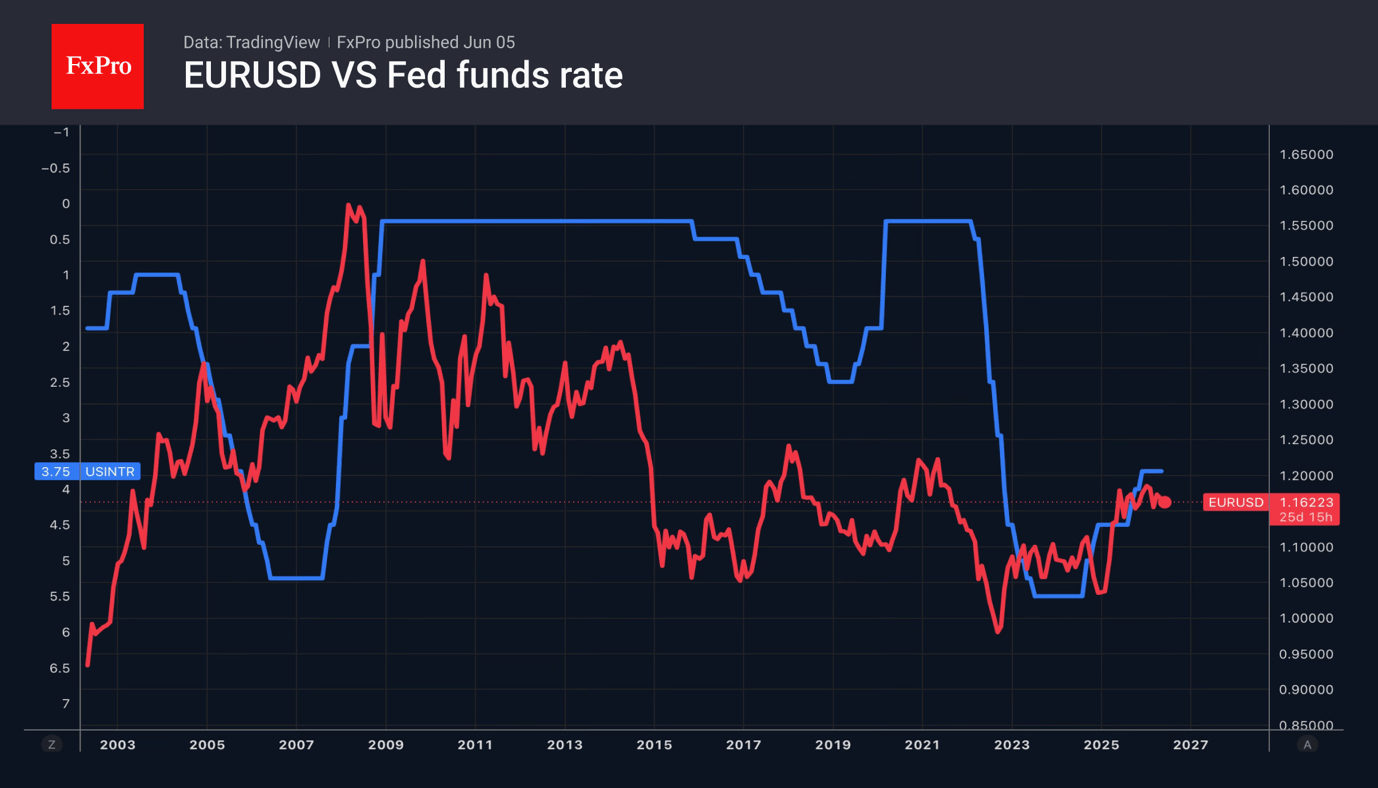
The current situation in financial markets and the global economy is, in many ways, reminiscent of the events of the 1970s. Back then, the oil crisis triggered a surge in inflation. However, instead of raising the federal funds rate, the central bank began to cut it under pressure from the White House. This led to uncontrolled price rises, successive rounds of aggressive monetary tightening, and a double-dip recession.
According to research by the Boston Fed, such a scenario is most likely to be avoided, as increased oil production has made the United States more resilient to oil shocks. Whereas in the 1970s inflation rose by 2.2 percentage points, it is now expected to rise by only 1.5 percentage points. Back then, unemployment jumped by 1.8 percentage points; today, the labour market is still generating new jobs, at least for now.

The FxPro Analyst Team