


The dollar has returned to its summer highs
September 28, 2026 @ 13:06 +03:00
• Rising Treasury yields and oil prices are supporting the dollar.
• The greenback’s rivals have their own vulnerabilities, which are preventing them from strengthening.
The US dollar opened the week with a gap up following a two-week rally. This was likely driven by the triggering of stop-loss orders in Asia. Some of these gains were given back as European markets opened, though this did not alter the bullish picture. Near 101.0, the dollar index has returned to the region of its summer highs. This retest of resistance is taking place against the backdrop of an ongoing reassessment of the Fed’s monetary policy outlook, driven primarily by persistent high levels of geopolitical tension in the Middle East and Warsh’s determination to tackle inflation. The US has rejected Iran’s proposal for a short-term reopening of the Strait of Hormuz, whilst Tehran is unwilling to soften its demands. Brent crude has resumed its rise, pulling the dollar higher at the expense of risk assets.
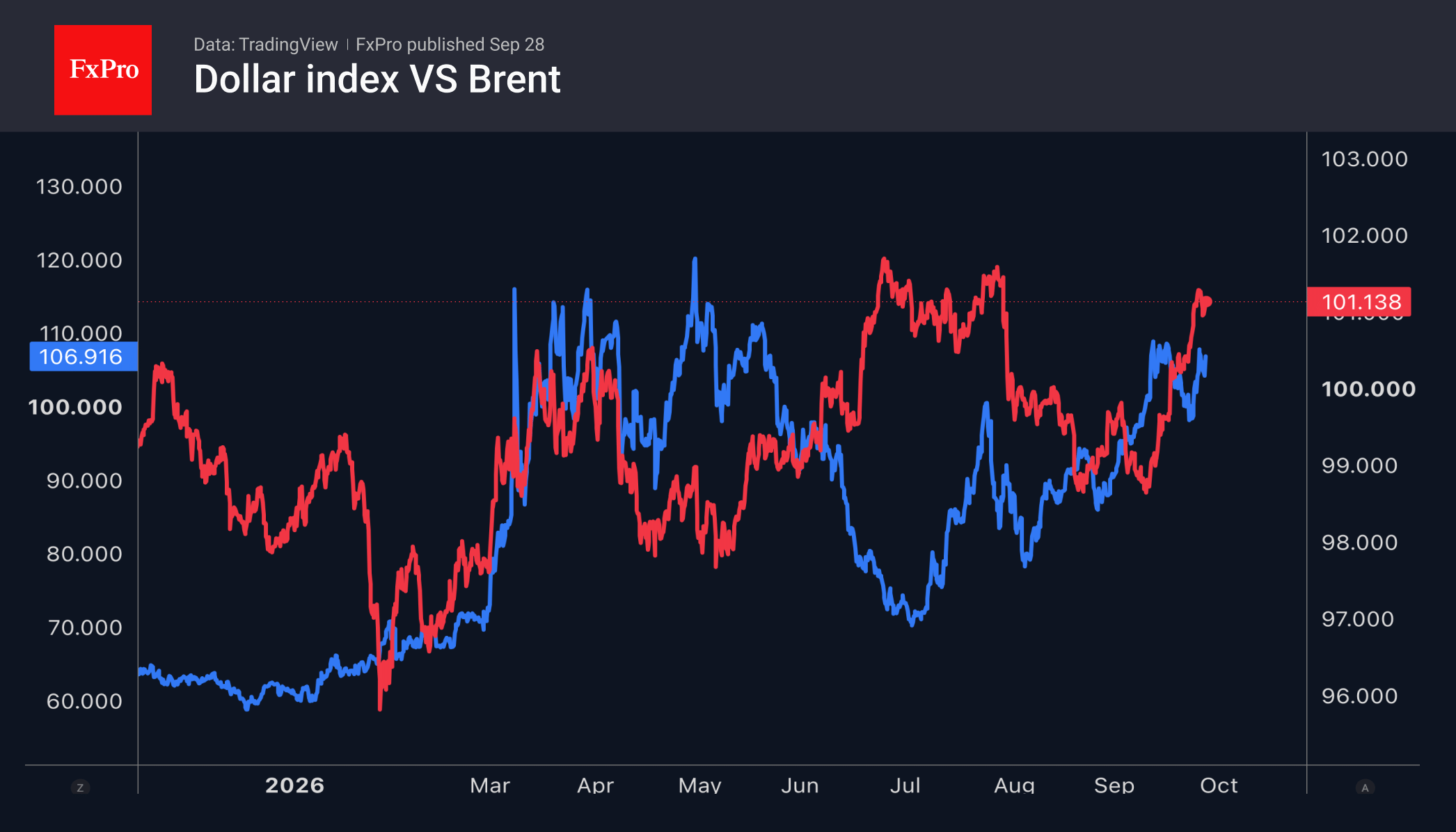
Bolstered by Treasury bond yields, the US dollar sees no obstacles to continuing its rally. All the more so as its rivals have their own vulnerabilities. The yield spread between French and German bonds continues to widen, indicating political risk in Europe.
France is being dubbed the ‘second Greece’, recalling the European debt crisis of 2012, yet the situation appears even more alarming. The public debt of the eurozone’s second-largest economy is approaching 120 per cent, which is problematic not only because of the cost of servicing it. With such a high level of debt, the economy’s responsiveness to stimulus measures drops sharply. What makes the situation even worse is that the tax burden there (43% of GDP) is already the highest in the G7 – compared with 27% in the US and 38% in Germany – and the second highest in the world after Denmark (45%), although Denmark’s public debt stands at just 27% of GDP. If this is not a dead end from which the only way out is a partial default, then, at the very least, it will require an unprecedented level of creativity and coordination from the French authorities.

USDJPY has resumed its rise, despite Scott Bessent’s statements that he had discussed with Satsuki Katayama the need to strengthen the yen. Investors argue that raising the key interest rate every three months rather than every six months no longer reflects the reality, given that the Fed is expected to deliver four hikes over the next 12 months, including a rise at the end of October following a tightening in September. By contrast, in Japan, the likelihood of consecutive rate rises is considered low.
Investors are awaiting news from the Middle East, monitoring oil prices and preparing for the release of US employment data for September. The Fed has a dual mandate. If the labour market remains strong, the central bank will be able to raise the federal funds rate in October with a clear conscience, at two consecutive FOMC meetings. The probability of such an outcome exceeds 70%, according to CME rate futures.
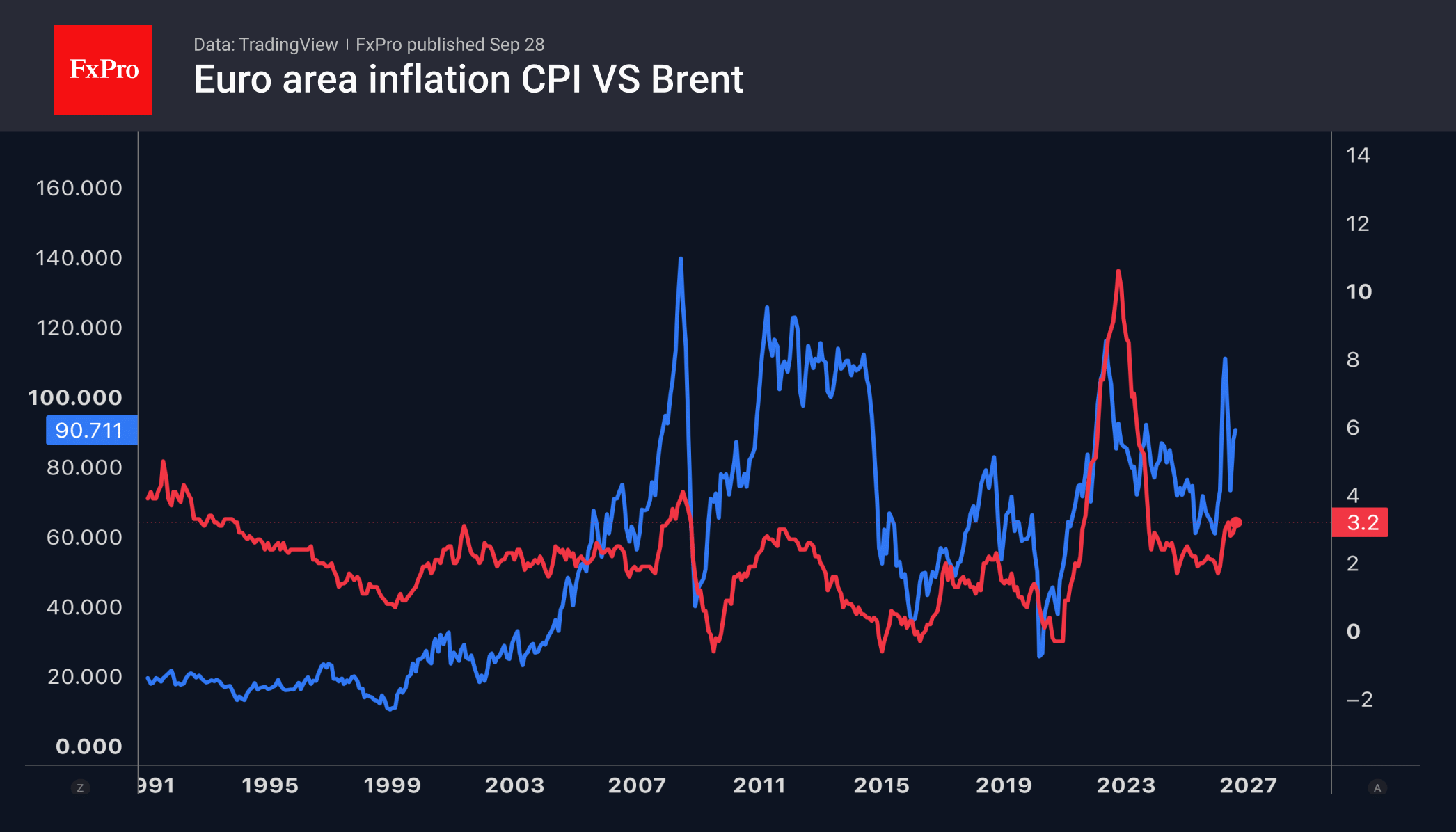
The euro is counting on inflation for support. According to Bloomberg analysts’ forecasts, consumer prices in the eurozone are set to rise from 3.2% to 3.7% in September. Investors have not seen such high rates for the past three years and will be watching closely to see whether high energy prices feed through to core inflation, which would increase the chances of an ECB rate rise in October from the 39% currently implied.
The FxPro Analyst Team