


Stock markets keep rising, but momentum slows
May 28, 2026 @ 17:45 +03:00
Dollar
The dollar regained ground as the fragile truce between the US and Iran appeared increasingly unstable. The dollar index moved back towards its April highs, recovering losses seen after the first signs of compromise between the two sides.
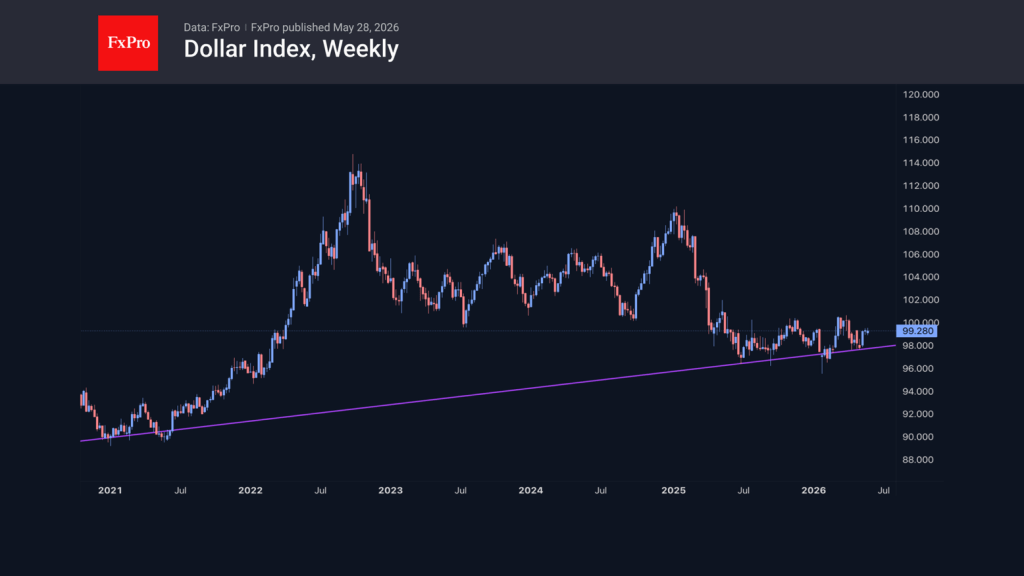
However, investors still seem to be betting on de-escalation whenever tensions begin to ease. That is an important signal for those who believe the market often prices in the most likely outcome.
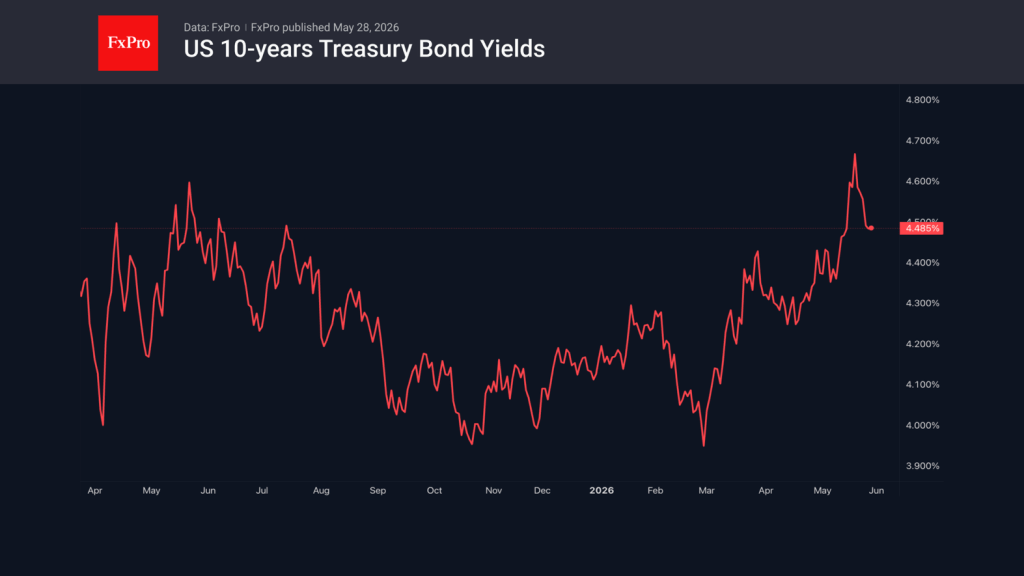
At the same time, rising US Treasury yields remain a concern. Government bonds continue to face selling pressure, with few signs of a reversal in what is often called the “smart money” market. Despite higher yields making bonds more attractive, demand for the dollar remains limited.
Indices
The S&P 500 has once again reached fresh all-time highs and is on track for a ninth consecutive week of gains. The duration, stability, and strength of this rally have only been seen a handful of times over the past 70 years.
From a contrarian perspective, the market may now be approaching a strong risk-reward setup, as some investors are likely to begin taking profits ahead of the holiday season. At the same time, historical data from similar periods suggests the index could still deliver above-average gains over the next 12 months.

Short-term pullback, long-term upside? Markets may be hinting at exactly that, though certainty never exists.
Gold
Gold has fallen back below $4,400, returning to levels last seen during March’s extended lows. The pressure comes from easing tensions around the Strait of Hormuz, combined with the declining appeal of non-yielding assets amid rising government bond yields.
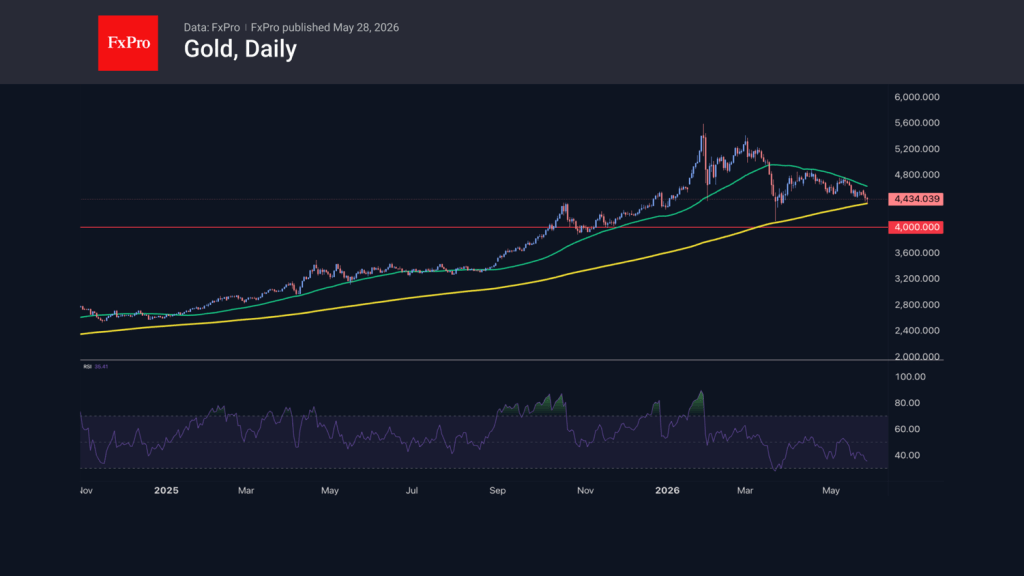
The metal is now testing its 200-day moving average, a level where buyers have repeatedly stepped in over the past three years, including during the sharp intraday sell-off in March.
The key difference this time is that gold no longer looks heavily oversold, with market conditions appearing far more balanced. A break below this level could open the door towards the $4,000-$4,100 area, but if selling pressure accelerates, the decline could go much deeper. But who knows where the real bottom might be?
Crypto
The crypto market is accelerating to the downside as the month comes to an end, continuing the weakness that began in May after Bitcoin failed to hold above $82,000. The latest sell-off suggests this may no longer be just a correction after April’s rally, but the start of a deeper bearish phase.
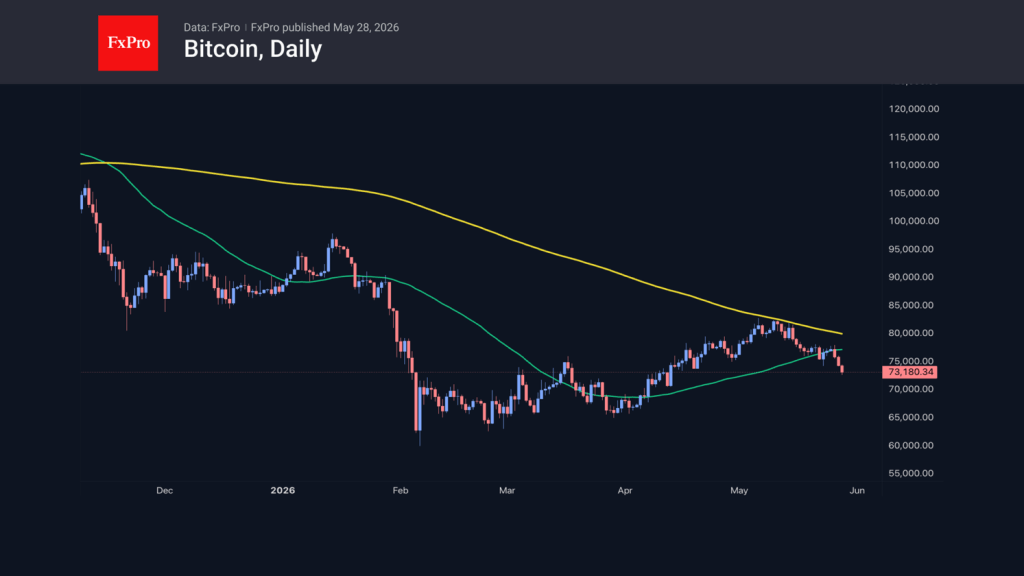
Unless buyers step back in soon, Bitcoin could drift back towards the $65,000 area seen earlier this year.
Ethereum has also dropped below $2,000 and is once again testing a major long-term support level. The concern is that when support is tested too often, buyers can start to lose confidence.
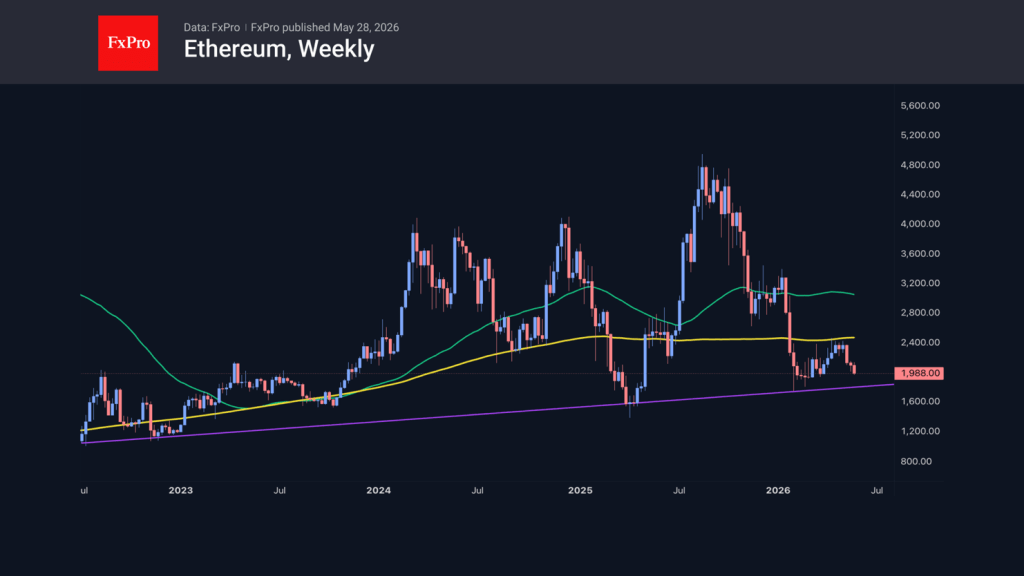
That matters because Ethereum often acts as an early signal for broader market sentiment and can sometimes hint at Bitcoin’s next move.