


Oil rallies as Middle East conflict escalates
March 10, 2026 @ 01:38 +03:00
- Strait of Hormuz disruption fears and OPEC supply cuts fuel oil rally.
- Higher oil may keep global interest rates higher, which could trigger an economic deceleration.
Oil prices reached its highest level since June 2022 amid the escalation of the Middle East conflict, with prices of Western Texas Intermediate almost reaching $120 per barrel yet settled for gains of over 7%, below the $100 figure.
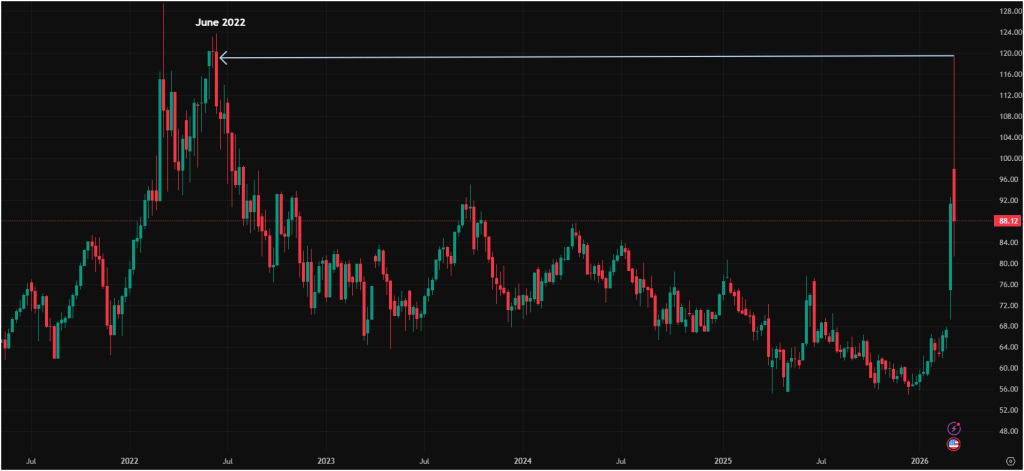
Fears of an extended shutdown of the Strait of Hormuz sent oil rallying close to 30%, its highest level since June 2022. Additionally, output cuts by Saudi Arabia and other members of the OPEC, including Kuwait, Iraq and the UAE, pressured oil prices.
Breaking news revealed that G7 countries will discuss a joint release of emergency oil reserves at a meeting led by the International Energy Agency. They would discuss about the impact of the Iran war, and the release of oil reserves, to temper oil’s advance. Three of the G7 countries, including the US are in favor of releasing oil reserves – between 300 to 400 million barrels, to alleviate supply shortages.
After the meeting, G7 nations revealed that they were prepared to implement “necessary measures” to surging oil and energy prices. However, they decided to wait before tapping oil reserves, while the US President Donald Trump said on CBS News that the wars were “pretty much” complete, signaling that a de-escalation might be around the corner.
A prolonged conflict would push energy prices higher, preventing central banks from easing monetary policy. in fact, there should be sudden changes due to high inflation, which could prompt the Federal Reserve amongst other central banks to raise rates, which would weigh on economic growth.
