


Gold risks repeating the 1980s demise
April 09, 2026 @ 12:34 +03:00
- High interest rates could force central banks to sell gold.
- The US dollar could rise thanks to the Fed’s passivity.
Amidst the turmoil in the Middle East, the US dollar almost missed an important event – the minutes of the FOMC meeting. Now, the Fed began managing expectations, formally maintaining its stance on cutting rates but kicking this idea down the road. In March, Fed officials acknowledged that the chances of inflation slowing down were diminishing, and not just because of the surge in oil prices. The impact of US tariffs on prices will be felt for a long time to come, and Americans’ growing habit of living with high price growth will result in heightened consumer inflation expectations. The Fed indicated that it is closely monitoring upside inflation risks, although it sees a greater threat from a slowdown in the labour market.
News of a ceasefire in the Middle East raised the chances of a policy easing by the end of the year from 12% to almost 50%, but the subsequent publication of the FOMC minutes pushed them back down to 25%. Investors realise that even a stabilisation of current petrol prices will keep prices higher in the coming months, forcing the Fed to keep rates on hold. It is too early to consider monetary policy easing, just as it is too early to count on a rally in EURUSD.
The surge in the main currency pair following news of the ceasefire is largely due to the mass liquidation of long US-dollar positions rather than a targeted bet on the euro’s rise. Until a peace agreement between Washington and Tehran is signed and while oil prices remain high, the eurozone economy remains vulnerable.
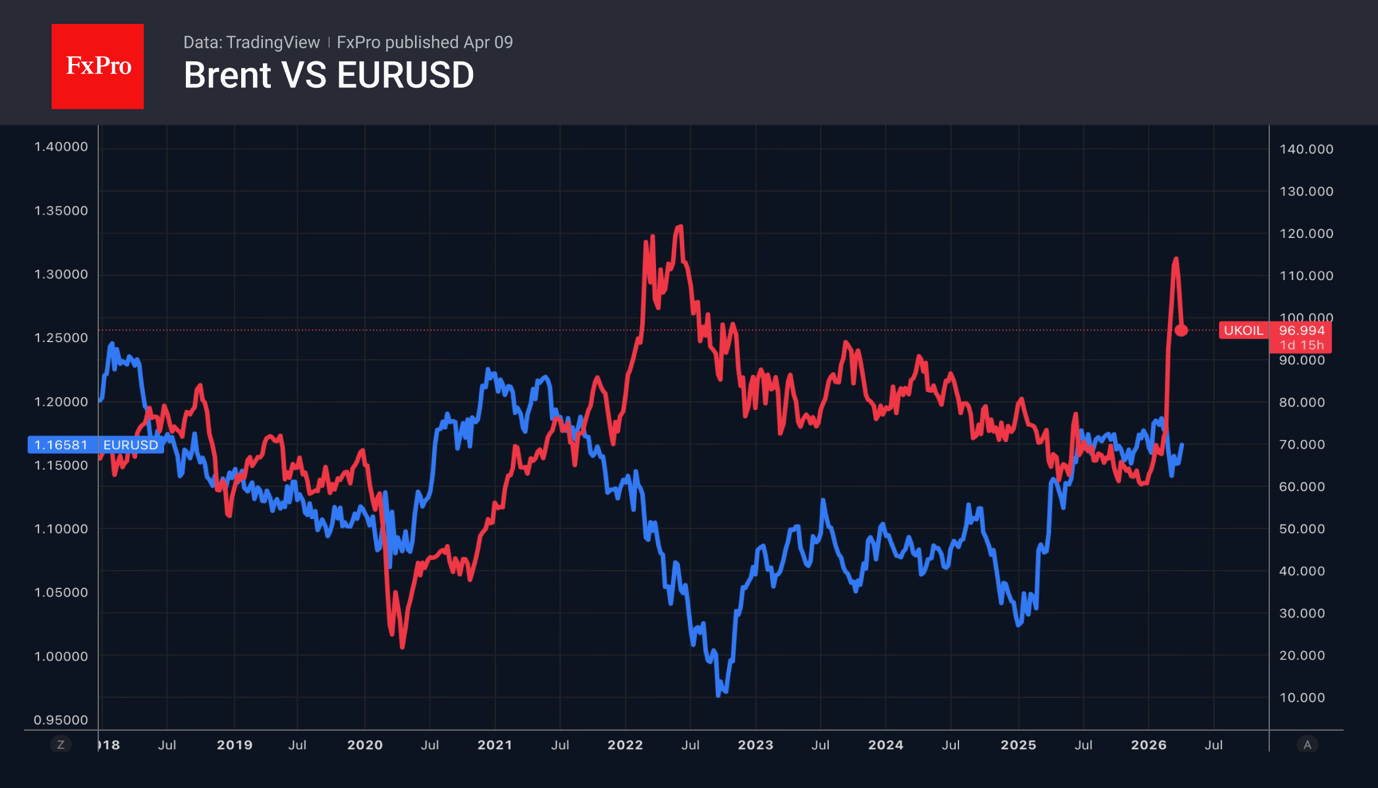
Gold was too quick to believe in an end to the conflict and a cut in Fed rates. The opposing sides remain far apart. Donald Trump has declared a total victory and is demanding a large payout from the supposedly defeated Iran. The latter continues to control the Strait of Hormuz.
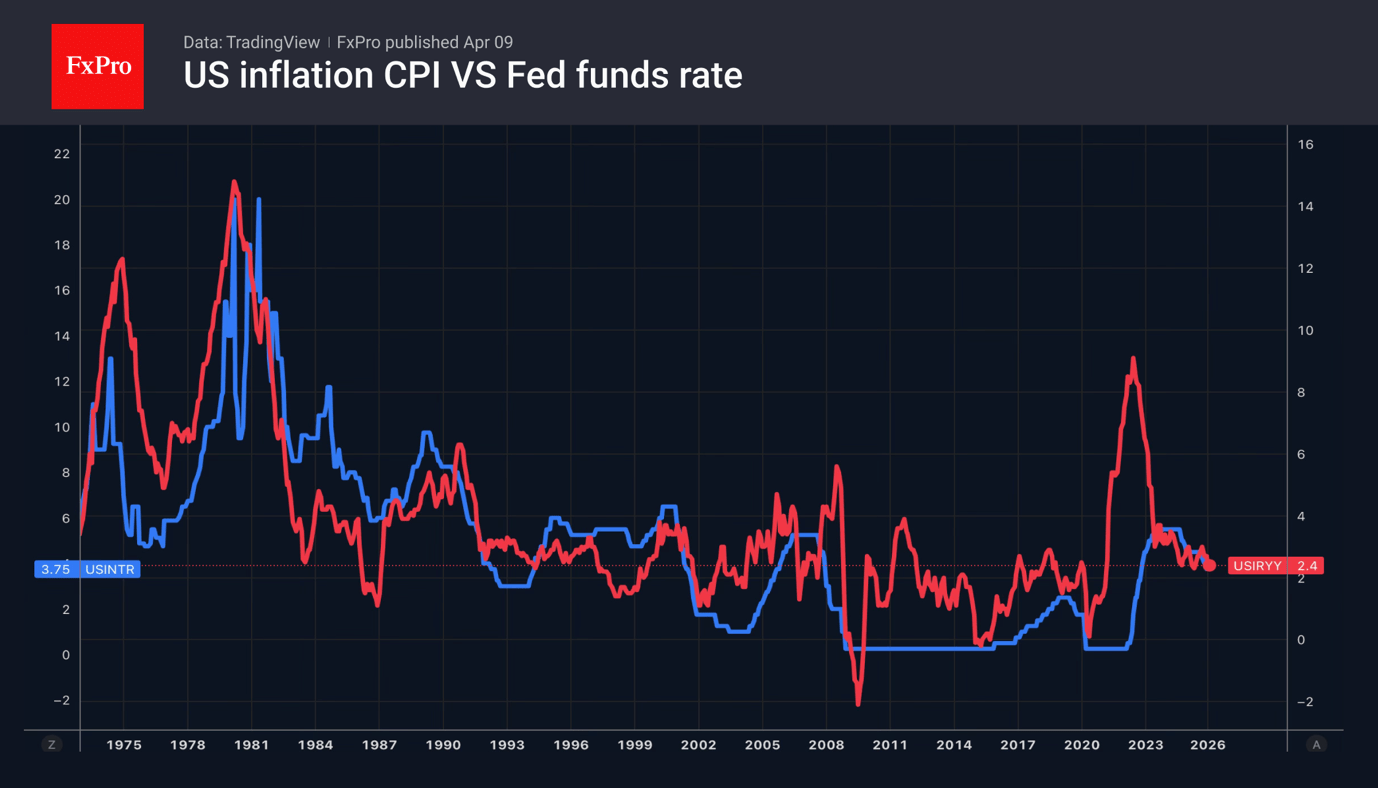
If the negotiations fail, a situation similar to the late 1970s will arise, when the oil crisis sent US consumer prices soaring. In response, the Fed raised rates to 20%, and gold prices plummeted by 85% between 1980 and 1999. As a result, central banks began actively offloading their gold reserves. For instance, the Bank of England sold 395 tonnes of gold between 1999 and 2002. Some countries, such as Turkey, are beginning to follow suit. This will put a spanner in the works for gold bulls.

The FxPro Analyst Team