


Gold: a nice recovery, but this is already a bear market
April 10, 2026 @ 16:14 +03:00
Gold has maintained a nice uptrend since the 23 March crash. However, the price spends a lot of time near the lower boundary of the channel and quickly rebounds from its upper boundary. The price is currently near the lower boundary at around $4,750, whilst the upper boundary stands at $5,000, a level we were expecting to see a week earlier.
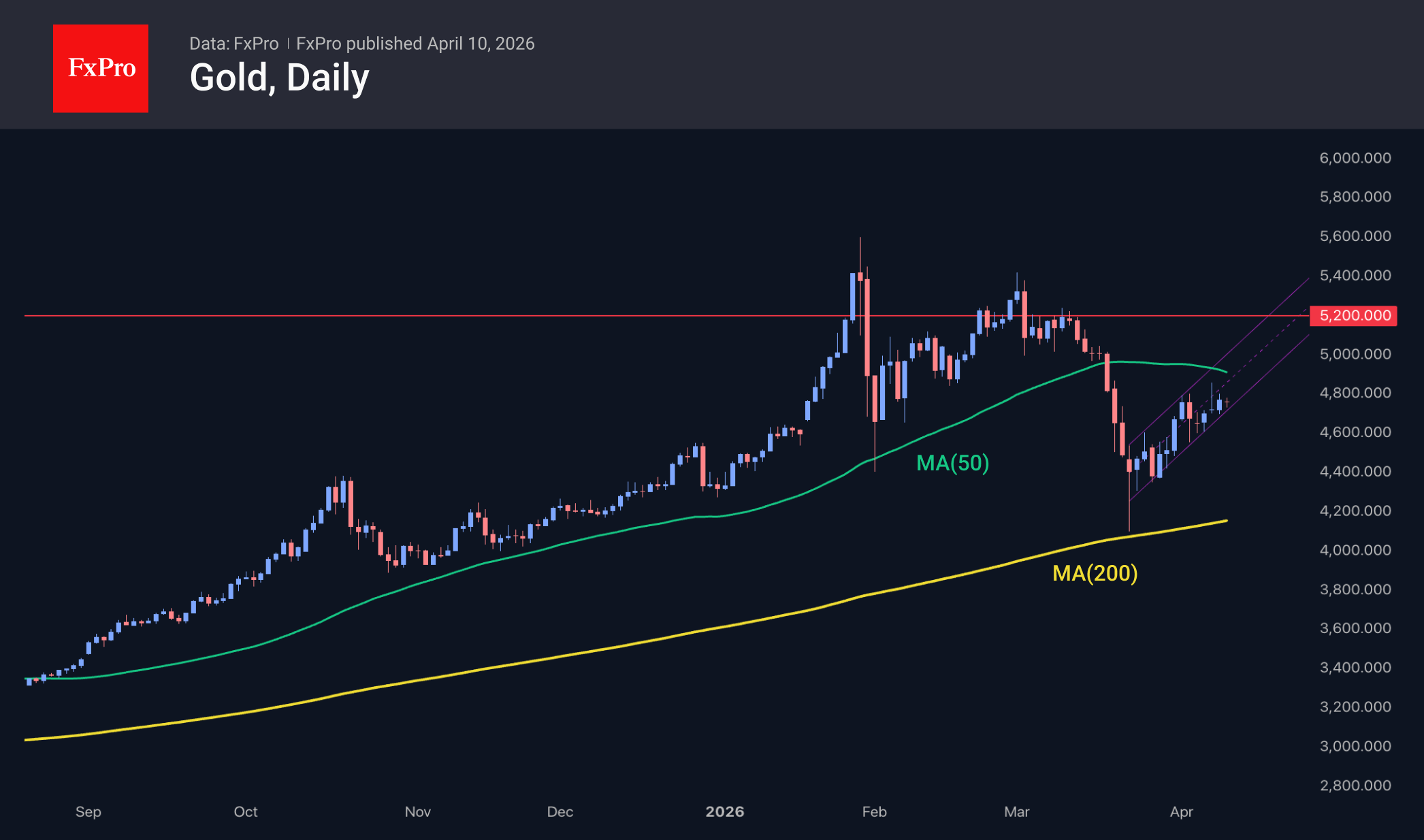
From a technical analysis perspective, bulls are undoubtedly encouraged by the strong rebound following the 200-day moving average, which was touched at the end of March, after which the upward trend was established. Furthermore, the downward-sloping 50-day moving average is gradually lowering the threshold that buyers must clear to confirm a bullish trend.
However, a weakness lurks in the latter point. A fall of more than 20% from the peak signals the start of a bear market, whilst the latest rebound merely indicates that not everyone has accepted this fact, buying at the bottom. We last saw the same sharp decline following a similar rally that touched the 200-day moving average, followed by a powerful rebound, back in 2011. Gold then rose even above the 50-day moving average, recouping three-quarters of the downward momentum, but left its highs untouched for the following nine years. Adjusting past movements to current figures, we see the potential for a rebound to around $5,200, where gold traded in the first days of March.
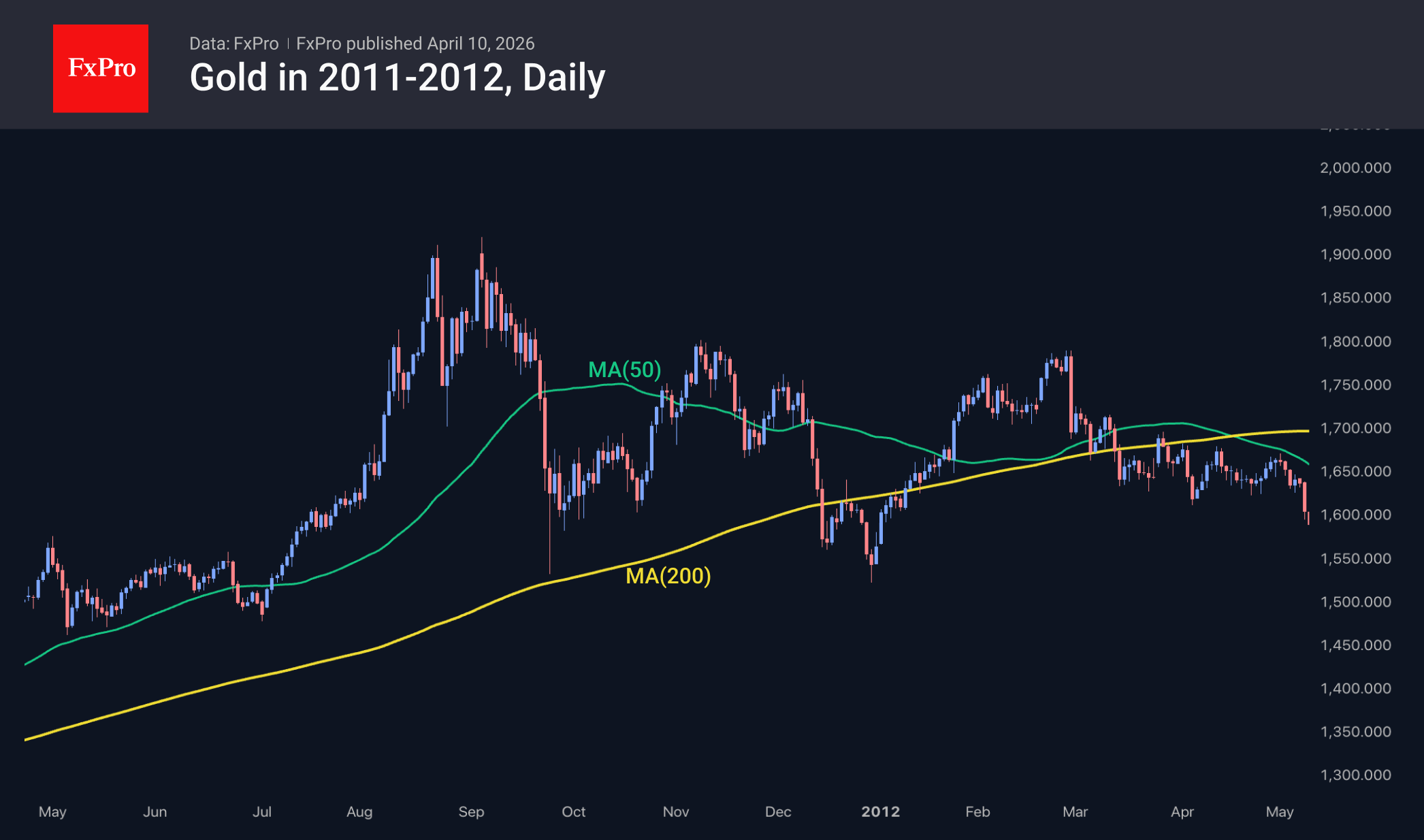
Even these latest levels may prove out of reach for the bulls, and the price rise may well stall as it approaches $5,000, as the deteriorating macroeconomic outlook, inflation prospects (and central banks’ responses to them) are sharply fuelling selling interest among both retail investors and large fund managers.
Gold was too quick to believe in an end to the Middle East conflict and a cut in Fed rates. If the negotiations fail, a situation like the late 1970s will arise, when the oil crisis sent US consumer prices soaring. In response, the Fed raised rates to 20%, and gold prices plummeted by 85% between 1980 and 1999.

The FxPro Analyst Team