


A strong economy shields shares from the Fed
September 28, 2026 @ 16:41 +03:00
- The US share market has not always fallen in response to rising bond yields.
- A strong economy and high demand for AI are supporting the S&P 500.
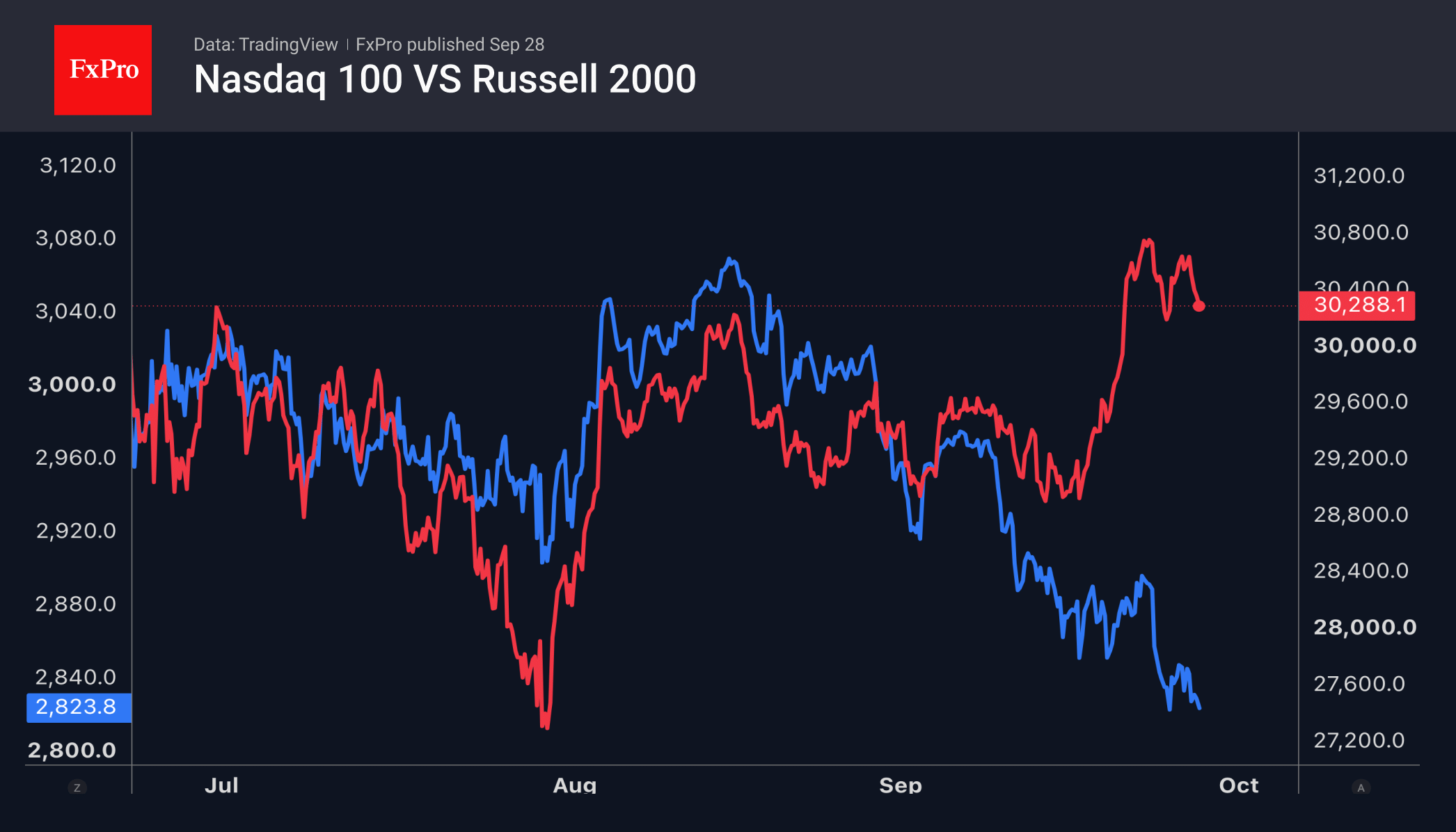
The stock market has identified its friends and foes. The main headwinds for stock indices are geopolitics and the Fed’s intention to tighten monetary policy. This leads to rising bond yields, weakens corporate fundamentals and intensifies competition with Treasuries for investors’ money. The main positive is the resurgence of the artificial intelligence boom and the renewed interest in technology-sector companies. Unsurprisingly, the Nasdaq 100 rebounded sharply in September to near its highs, in contrast to the ongoing sell-off in the Russell 2000 and the Dow Jones.
History shows that a rapid rally in Treasury bond yields has not always led to a collapse in stock indices. In 1994, the Fed, under the leadership of Alan Greenspan, tightened policy while the S&P 500 continued to rise. Investors believed that the US economy was on a firm footing and would be able to withstand higher interest rates. Five years later, in 1999, Treasury yields began to rise even before the monetary tightening cycle began. The S&P 500 was saved by strong demand for shares in internet companies. The dot-com crash occurred shortly afterwards, with the index falling by around 49% from its peak in March 2000 to its low at the end of 2002.
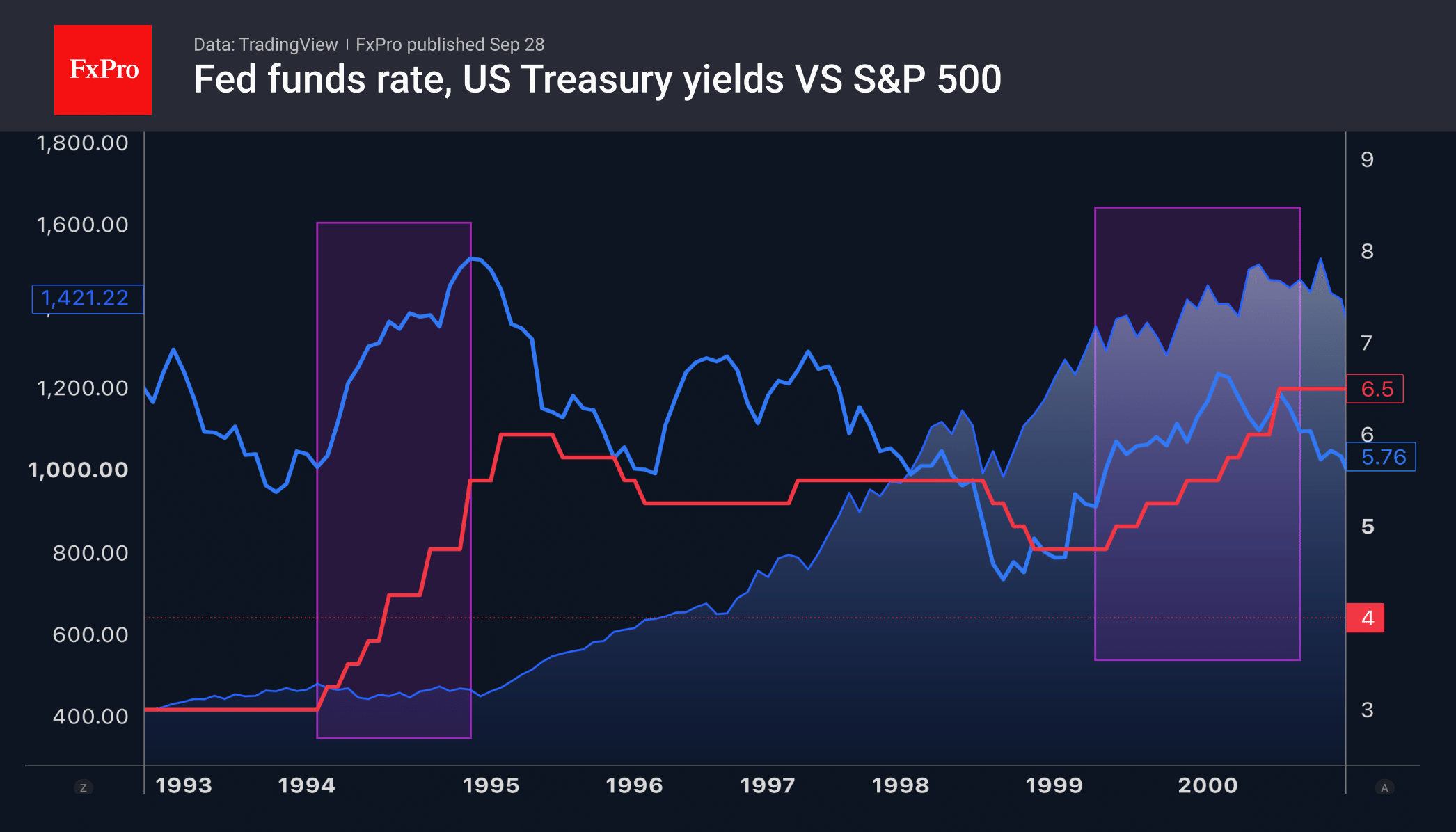
Currently, the market is characterised by a mix of a strong economy and heightened demand for shares in technology companies specialising in artificial intelligence. This is enabling the S&P 500 to remain resilient even as yields on 10-year Treasuries have soared to their highest levels since 2007 and those on 30-year Treasuries to their highest since 2004. Investors are not even deterred by the looming inversion of the yield curve, which has often been a harbinger of recession.
The US economy is currently on a firm footing, and data due later this week is expected to confirm that a rate rise is both acceptable and necessary. Under these conditions, only a bursting AI bubble could trigger a full-scale correction in the S&P 500. Until there are signs of growth slowing, investors will stick to a buy-the-dip strategy.
The FxPro Analyst Team
