


A new barrier for oil
May 20, 2026 @ 15:14 +03:00
- The rally in yields could weigh on oil demand.
- The US and China are working to keep prices in check.
Oil continues to react sensitively to White House rhetoric; nevertheless, the Strait of Hormuz remains closed, global reserves are dwindling rapidly, and the market’s calm suggests complacency.
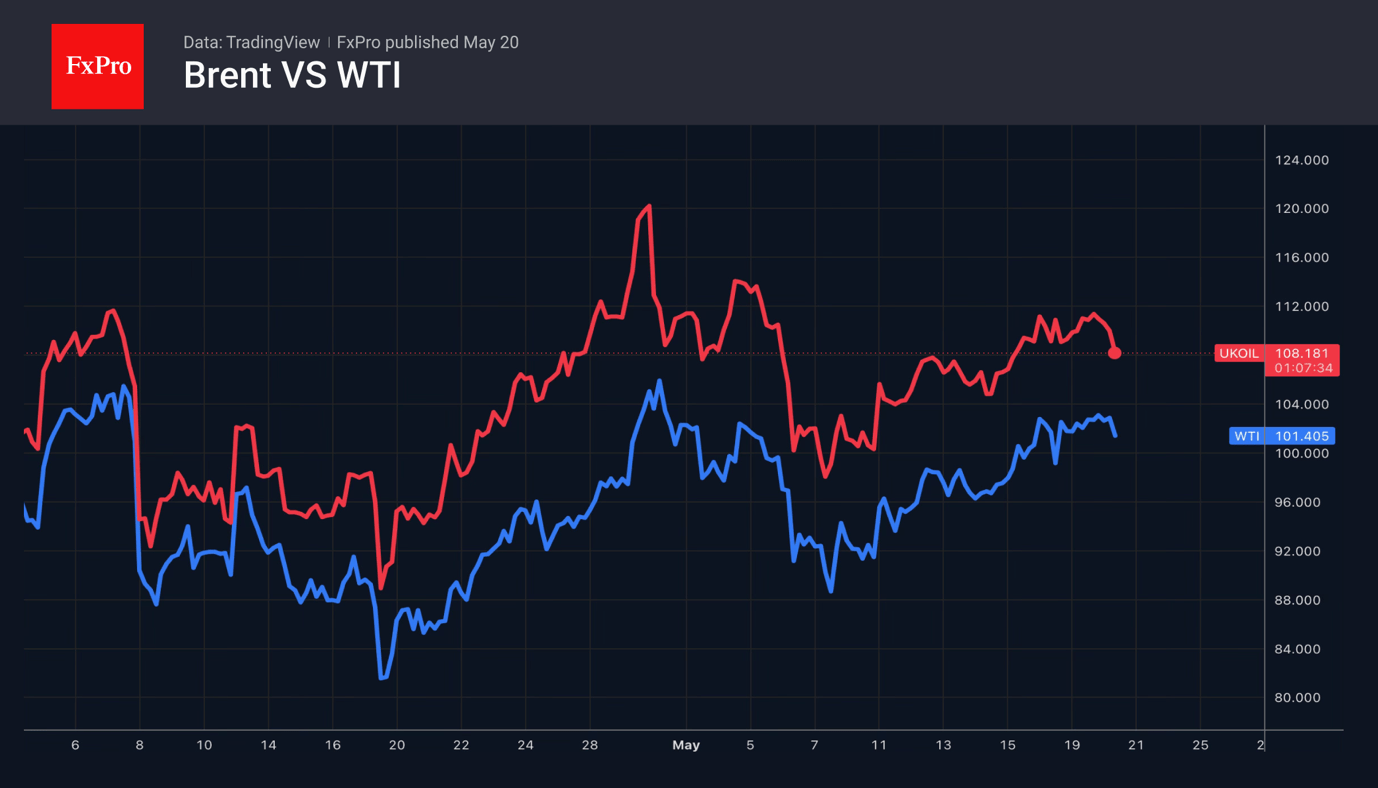
Citi believes investors are underestimating the risks of prolonged supply disruptions, leading them to expect Brent to continue its rally towards $120 per barrel. PVM expects global oil reserves to reach critically low levels in the near future. However, oil is in no hurry to rise because traders are underestimating the consequences of the conflict in the Middle East.
Indeed, the US and Iran have no clear path to a peace agreement. The parties’ positions remain far apart, and Brent’s rise is being held back only by the White House’s optimistic rhetoric. Nevertheless, the Strait of Hormuz remains closed. Investors realise they have been here before when there are many talks but no results.
Credit must be given to the US and China. The Americans are increasing exports despite a fifth consecutive week of falling domestic stocks. They have extended the licence to purchase Russian oil, thereby supporting global supply. China is cutting back on oil imports, affecting refineries. In April, they processed 54.65 million tonnes, which is 11% less than in March, and 5.8% less than in the same period last year.
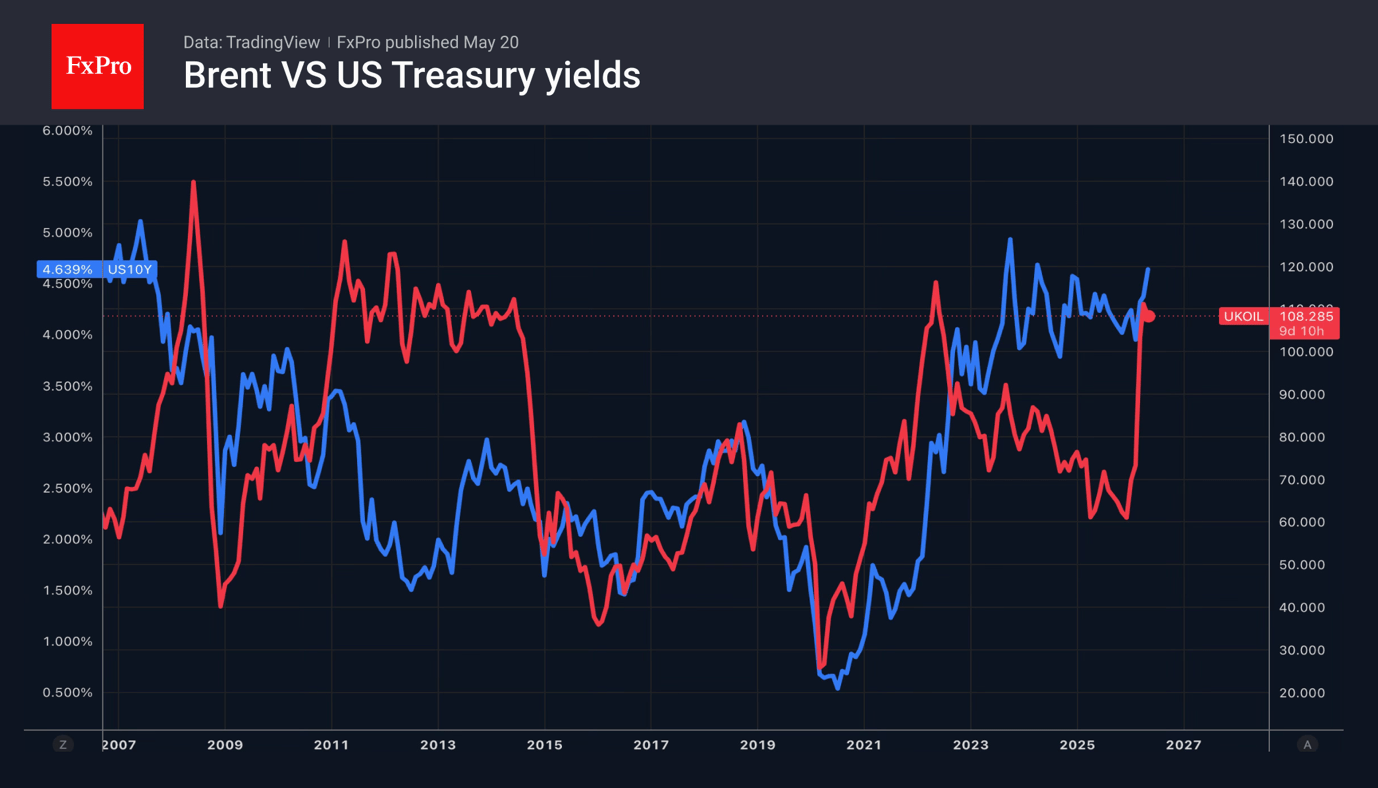
There are quite a few barriers to oil heading north. One of the most significant could be a substantial reduction in global demand. The risks of such a scenario are mounting amid a rapid rally in bond yields. This is a harbinger of widespread monetary tightening. Higher interest rates could push economies closer to recession and reduce demand for energy commodities.

Commodity markets are cyclical. Rising oil prices lead to accelerating inflation, higher bond yields and monetary tightening. This puts pressure on Brent and triggers a new cycle. When central banks cut rates to rescue economies, they increase oil demand.
The FxPro Analyst Team