- Nvidia’s competitors are ready to take its place.
- Buying the dip in the S&P 500 is a thing of the past.
The era of recklessness in US equities appears to be ending. Over the past three years, investors have been buying shares in US technology companies on the assumption that artificial intelligence would improve corporate performance across various sectors of the economy. However, as soon as cracks began to appear in the AI industry, it became necessary to separate the winners from the losers. A vigorous reassessment of risks is underway, leading to a shift in market sentiment. On the charts, this is reflected in consolidation in the S&P 500 and, according to the NYSE, in the trend towards greater strength and breadth in the equity market since late October.
Nvidia‘s loss of $573 billion in market capitalisation over the course of a week, the largest in the history of both the company and the market as a whole, could have brought the market down at any other time. Since its peak in early October, the chipmaker’s market capitalisation has slumped by $1.8 trillion, pushing it down to third place by this measure after a fairly long period at the top of the list.
Given Nvidia’s circular financing system for chip buyers, investors have good reason to be concerned. However, competitors are ready to supply as many chips as needed. Moreover, the resignation of CEO Jensen Huang, announced on 12 November, does not mean that yesterday’s leader is out of the game.

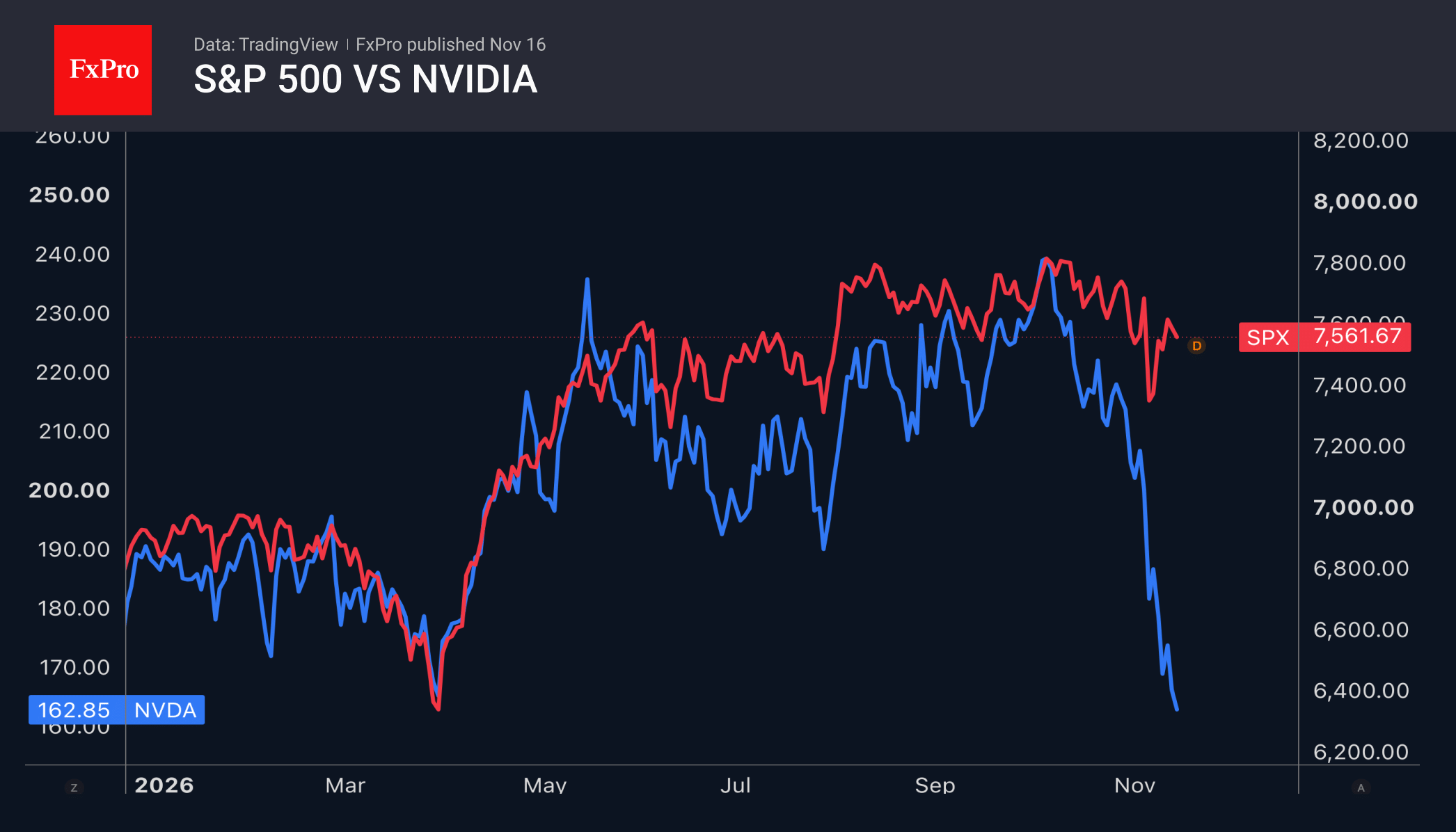
Source: TradingView, as of 16 November 2026.
This allows investors to remain optimistic. Goldman Sachs acknowledges that hyperscalers, such as Alphabet, have faced negative cash flow for the first time in their more than 20-year history. However, other indicators point to the resilience of their balance sheets. Even if earnings per share (EPS) growth for S&P 500 companies slows to 11% in 2027 from 36% in 2026, this will not prevent the broad stock index from rising to 8,700 over the next 12 months, according to the bank’s forecasts.
Investors are gradually becoming more discerning, and this trend is to be welcomed. In our view, it is time to move away from a one-size-fits-all strategy of buying the dip in the S&P 500 towards more sophisticated rotation models. While investment portfolios were being rebalanced in favour of small-cap companies throughout the first half of 2026, the task has now become more complicated, as the Russell 2000 is facing headwinds from the Fed’s monetary policy tightening, which affects smaller companies more than the giants.
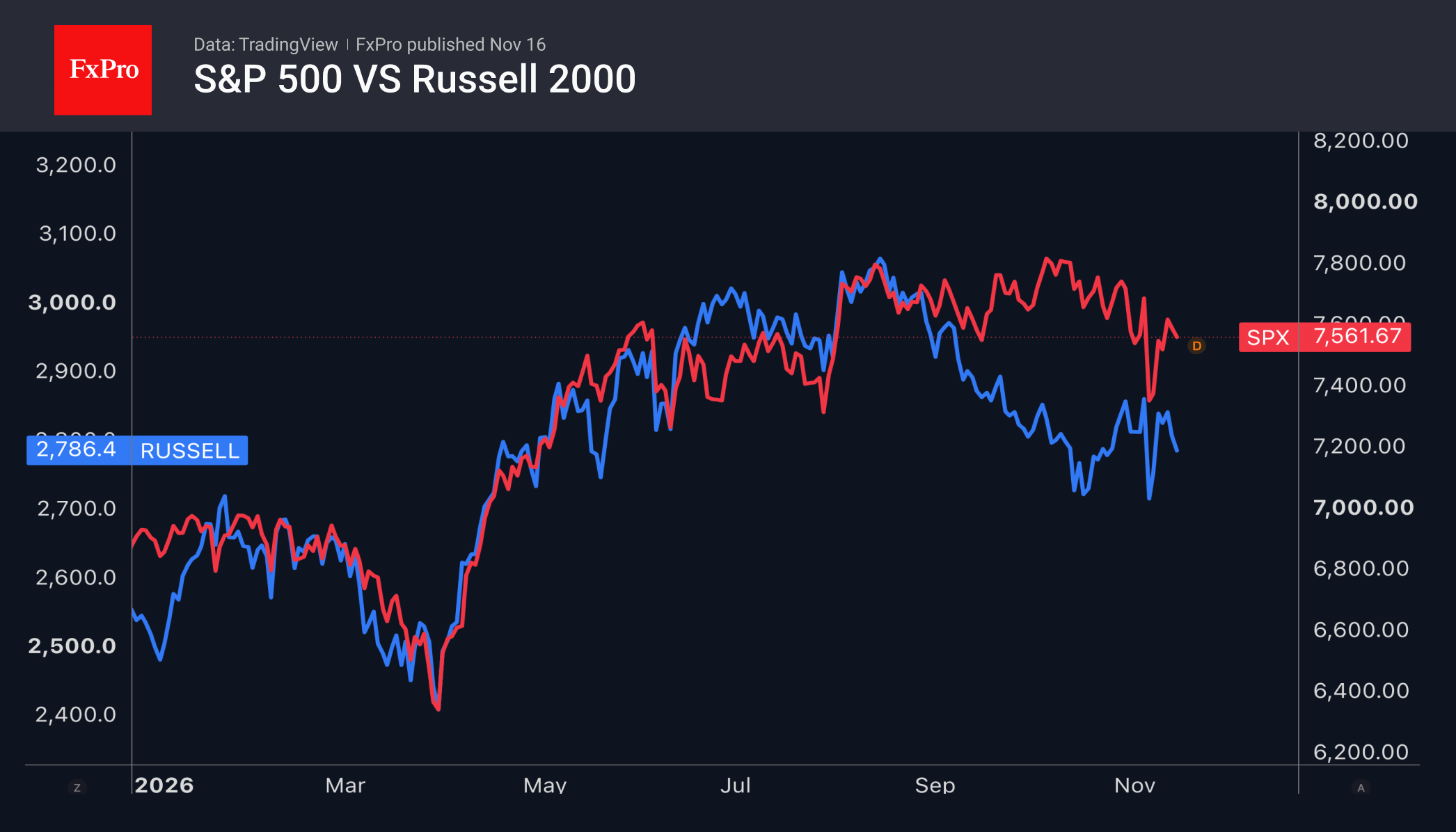
Source: TradingView, as of 16 November 2026.
What to watch
Base case: in our view, the S&P 500 will continue to consolidate as market strength and breadth improve, with investors shifting from buying the dip towards rotation within the market.
Risk: fresh cracks in the AI industry and a further fall in Nvidia; Fed tightening is weighing on the Russell 2000.
Upcoming: Nvidia earnings and US retail sales on 17 November (Nvidia after the market close); Anthropic’s IPO on 18 November, with trading starting on 19 November; the FOMC minutes on 18 November at 19:00 GMT. Check the economic calendar for more events.
The FxPro Analyst Team