• The weakening of the US dollar has allowed GBPUSD to mount a counterattack.
• The greenback is struggling due to waning interest in artificial intelligence.
The US dollar has seen its four-week winning streak come to an end due to doubts about the effectiveness of artificial intelligence investments and a diminishing likelihood of the Fed tightening monetary policy in October. These factors led to a fall in Treasury bond yields, despite rising oil prices. The 200-week moving average became a technical barrier to the DXY’s rise. This curve served as support from 2022 to 2025. History suggests that this line has rarely acted as an insurmountable resistance level. Similar price patterns in 2018 and 2021 signalled the start of a pause, but the subsequent reaction depended heavily on the Fed’s policy response.

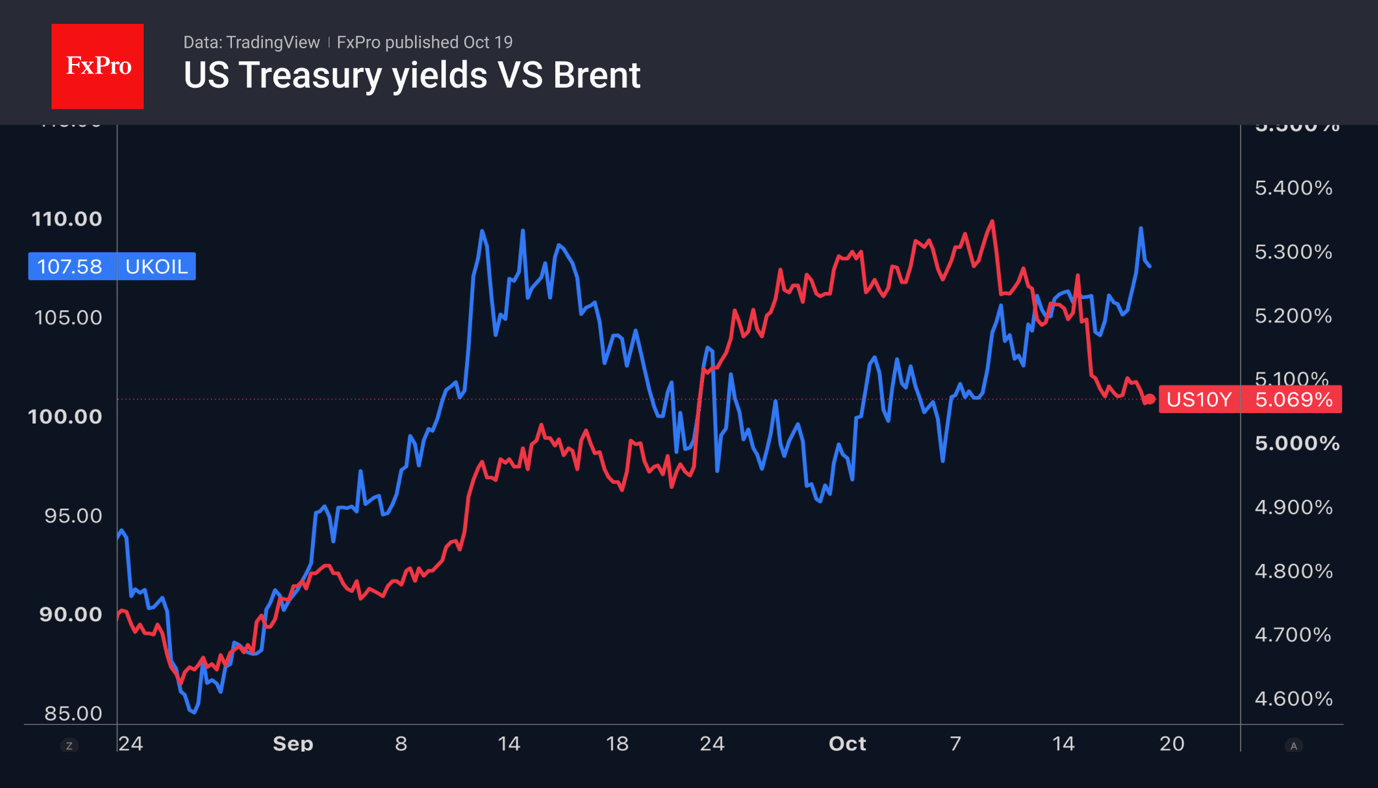
The US economy is the primary beneficiary of AI adoption, alongside those of South Korea and Taiwan. According to Kevin Warsh, the surge in investment is no coincidence, and the momentum currently being experienced in the US is accelerating inflation. However, the further development of AI will curb price rises by expanding supply.
Market participants interpreted the Fed Chair’s remarks as confirmation that inflation will accelerate only temporarily, which is why the central bank is in no hurry to intervene. Strong inflation figures for September also did not increase the likelihood of a monetary policy tightening in October, causing the US dollar to pull back from its multi-month highs.
Sell-offs in the US stock market may also have put pressure on the greenback. According to Citigroup, the USD will not serve as a safe haven if the AI trade takes hold. In that case, investors should buy the yen or the Swiss franc.
For now, USDJPY is in no hurry to fall, despite support for the yen from the government and the central bank. Kazuo Ueda noted that core inflation is close to 2% and that the Bank of Japan will not allow it to exceed its target. Such rhetoric could certainly be described as hawkish, but it failed to spur the yen into a fresh rally.
Prime Minister Sanae Takaichi has rejected accusations that she was responsible for a weak currency and high interest rates during her time in office. She sees her task as building a strong economy that will bolster confidence in the yen.
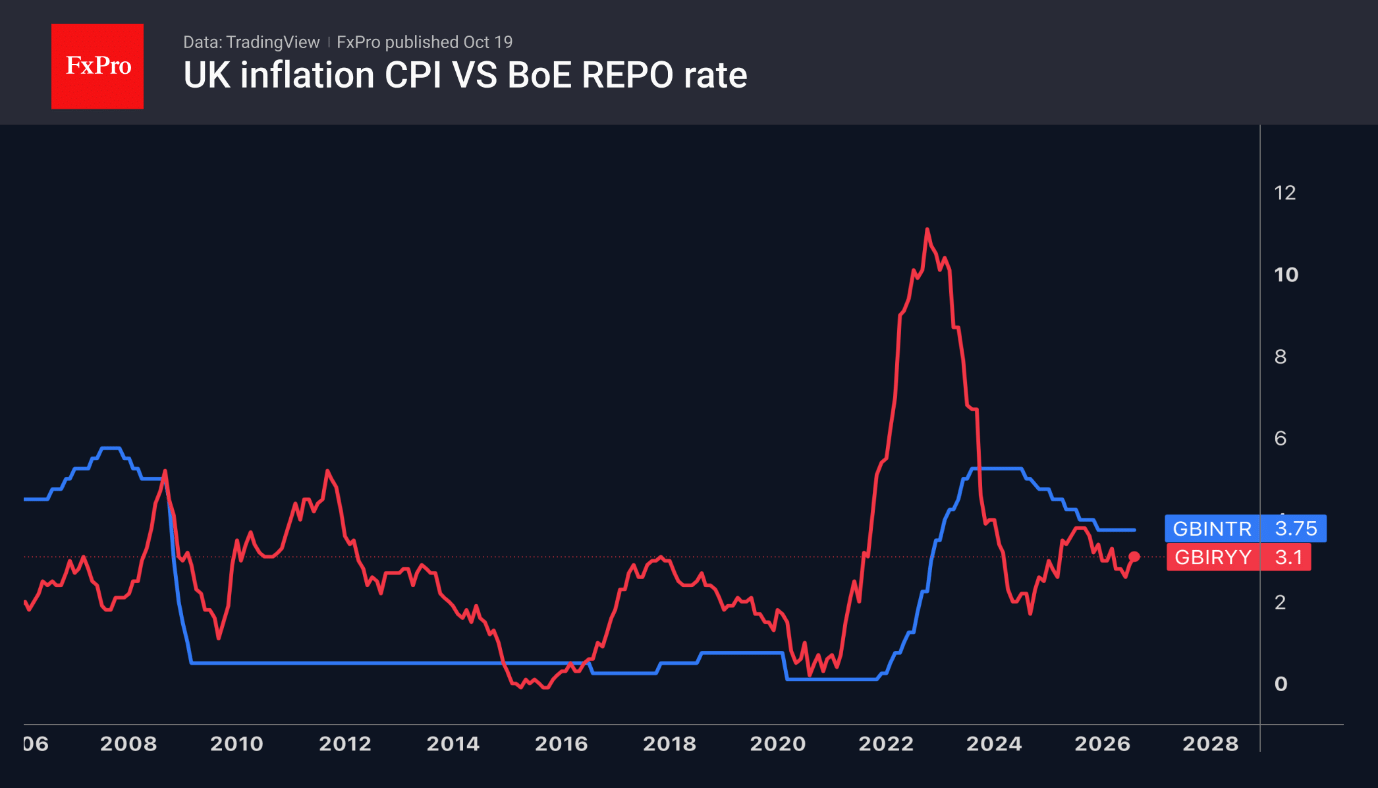
One of the main beneficiaries of the US dollar’s weakness was the British pound. GBPUSD rose to a four-week high amid forecasts that inflation would accelerate to 3.4%. This pushed market expectations of a Bank of England monetary policy tightening in November up to 93%. Separately, concerns over a sharp tax rise in the Labour government’s draft budget have eased. Both of these factors have helped the pound to gain momentum.
The FxPro Analyst Team