- A loss of confidence in currencies and bonds is leading to capital outflows
- CHF and JPY benefited as a result of the Treasury’s actions
The US dollar has stabilised near three-month lows thanks to a rapid recovery in Treasury bond yields. Yields on 30-year bonds are returning to the levels seen following the Treasury’s announcement that it was increasing the minimum purchase volume to $4 billion. The greenback got support from falling stock indices, the continued rally in Brent crude, and positive signals from the US economy.

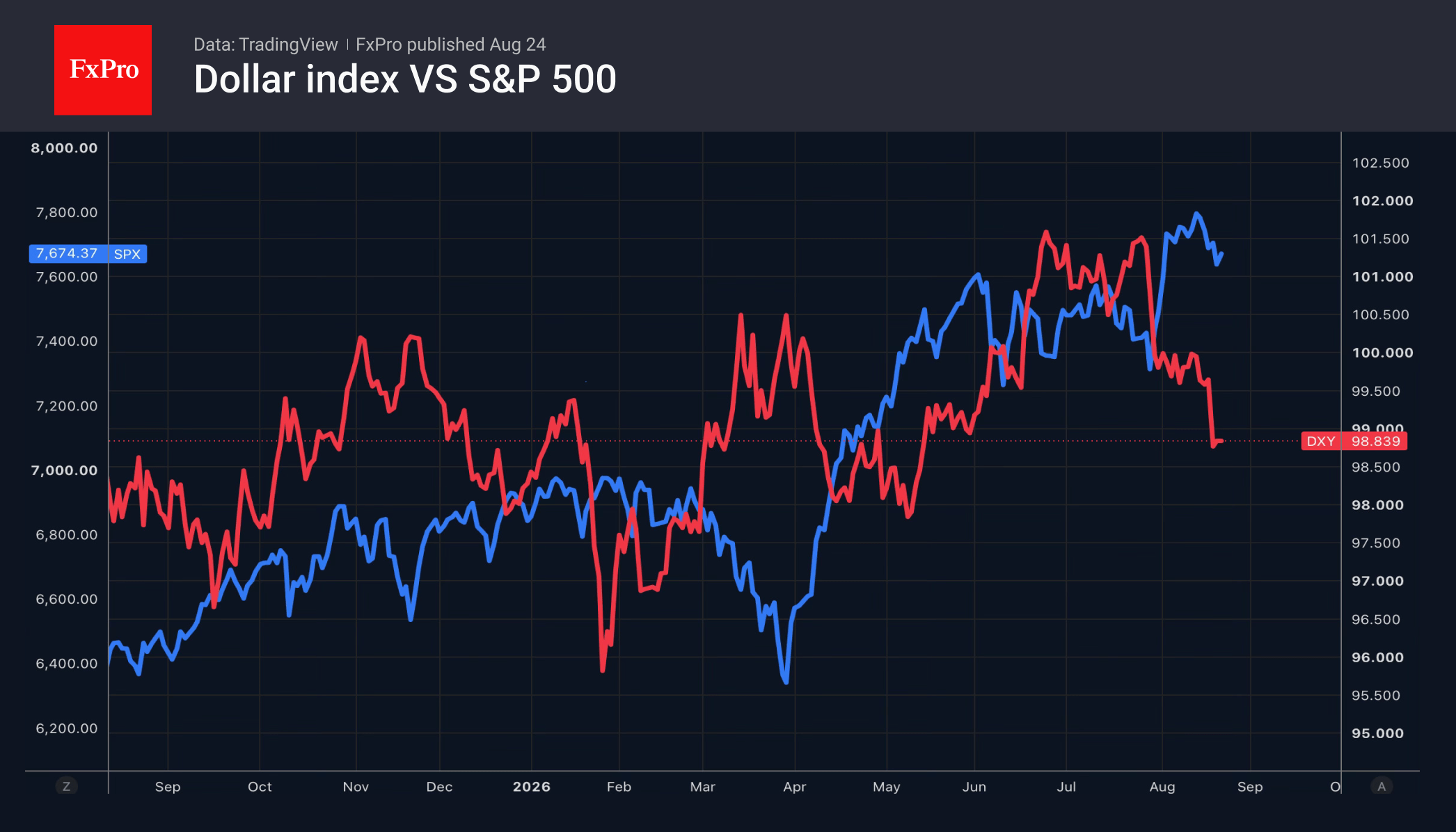
S&P Global’s Purchasing Managers’ Index (PMI) jumped to 56 in August, its highest level since April 2022. Bloomberg analysts have raised their forecast for US GDP in the third quarter from 2% to 2.5%. Yields on Treasury bonds may be rising not only due to geopolitics, the budget deficit, or competition from hyperscalers’ corporate bonds. The strength of the US economy may additionally underpin inflation.
According to Goldman Sachs, the only way to lower yields on US Treasury bonds is to slow down inflation. This will only happen if Kevin Warsh stops relying on the market and begins to tighten monetary policy. And the best way to give such signals is the upcoming Jackson Hole Economic Policy Symposium.
The Treasury’s intention to bring Treasury yields under control has revived the ‘debasement trade’. Eroding confidence in bonds and currencies driven by the policies of their issuing authorities is leading to capital flight from debt and currency markets to other markets. Assets associated with decentralised finance, namely gold and Bitcoin, are proving particularly popular.
As in a typical carry-trade pattern, when the world is worried about the dollar, capital in forex flows to low-yield currencies such as the Swiss franc and the Japanese yen. These are used as funding currencies in carry trade operations, and fears of falling Treasury bond yields have led to the unwinding of these trades.
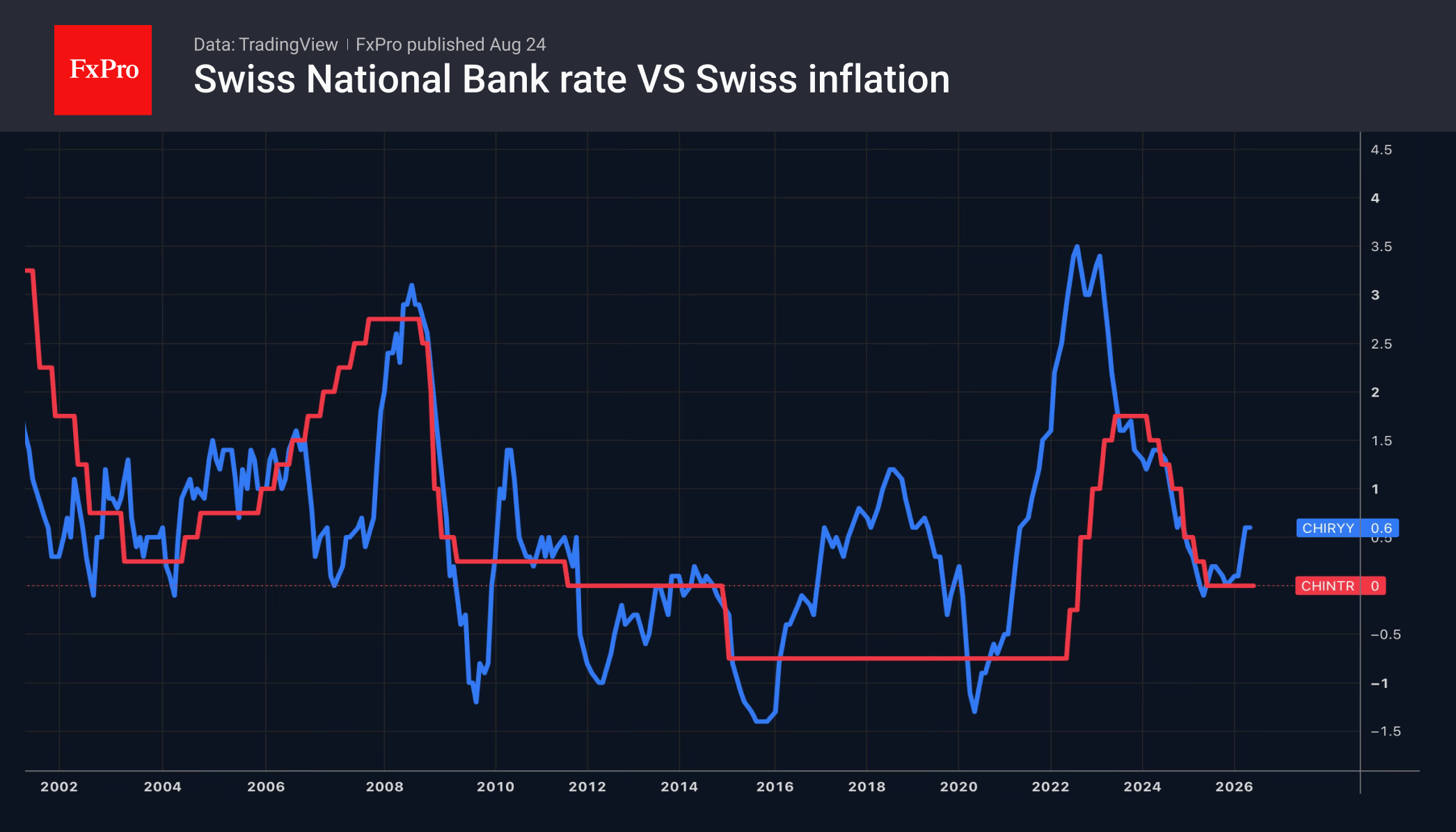
The franc’s appreciation proved so strong that it forced the Swiss National Bank to resort to currency interventions. According to SNB Governing Board member Petra Tschudin, the regulator may introduce negative interest rates to keep inflation within the target range of 0–2%.
The FxPro Analyst Team