- The market is virtually certain that the Fed will raise interest rates.
- Speculators are beginning to return to the US dollar.
The US dollar has risen in response to inflation data and the escalation of tensions in the Middle East. Attacks by Yemeni Houthis have forced Saudi Arabia to shut down the East-West pipeline, which has a capacity of 7 million barrels per day. This threatens to reduce oil supplies to the global market and will push Brent towards $120 per barrel. Under such circumstances, the Fed will be forced to begin a cycle of monetary tightening.

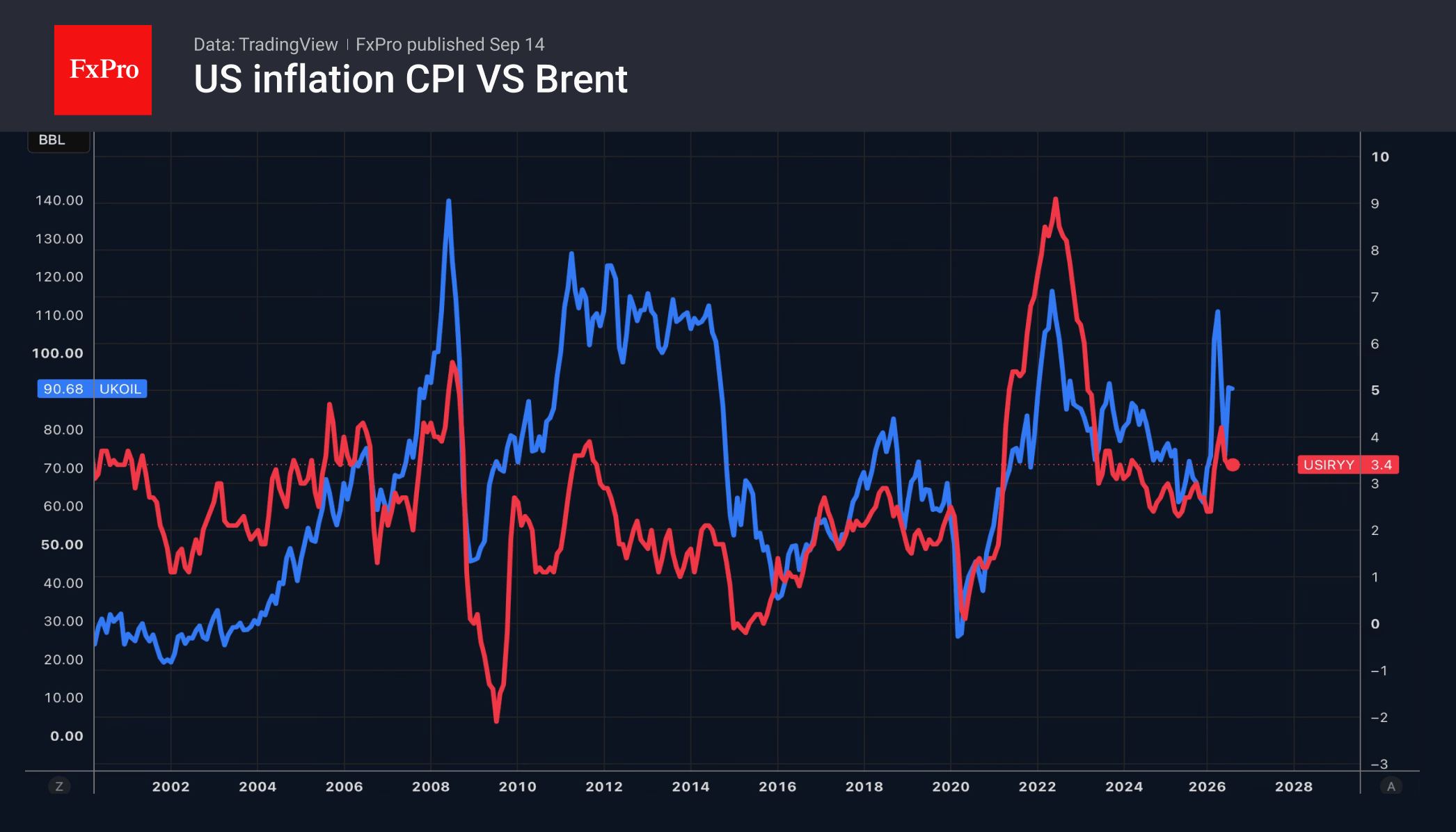
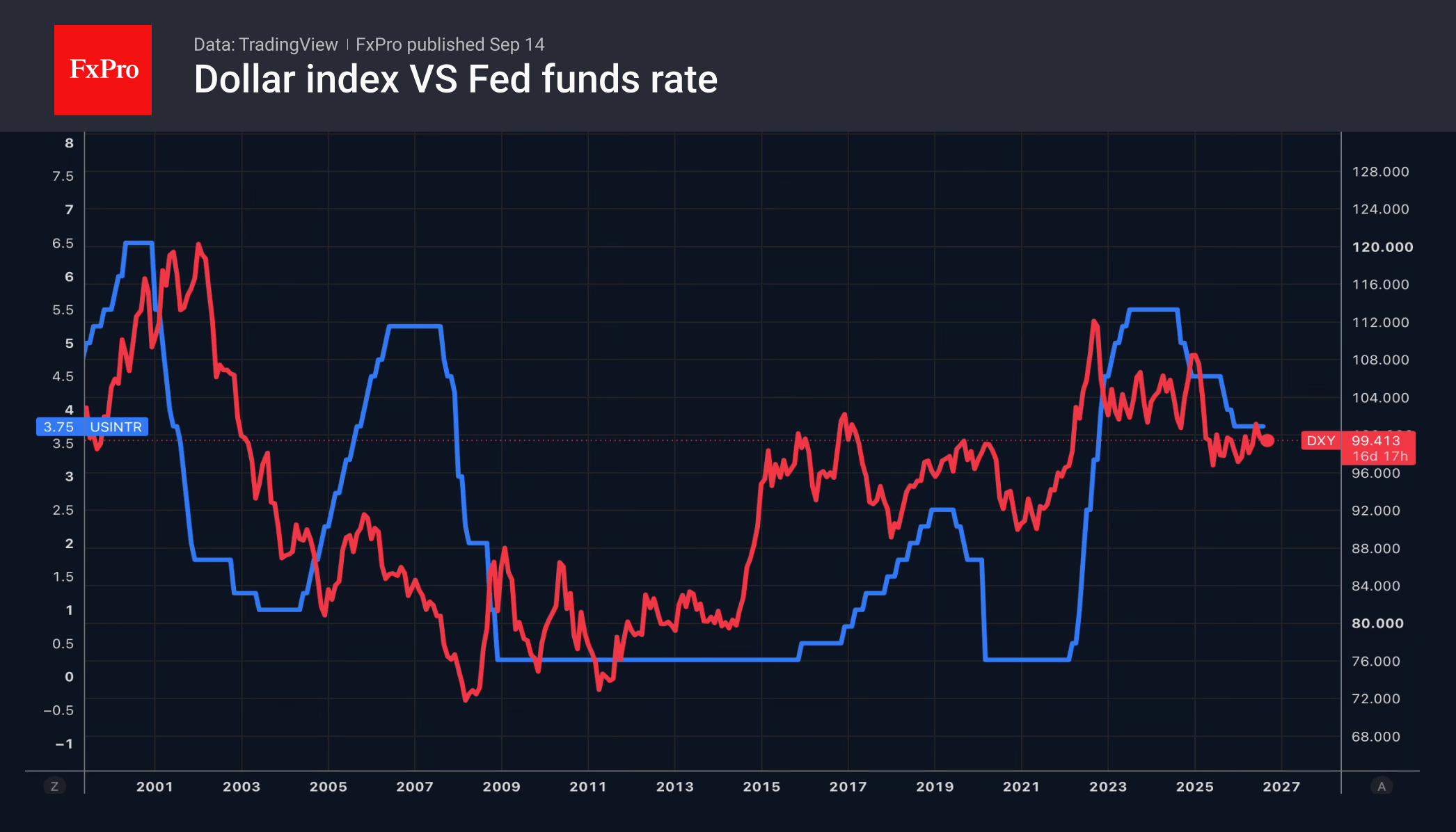
When Kevin Warsh stated at Jackson Hole that he had not been misled by the slowdown in inflation in June and July, and that he did not consider the current level of interest rates to be holding back the economy, he set the bar high. Perhaps only inflation that was significantly weaker than expected could have forced markets to discount the prospect of a rate rise. But the figures came in line with expectations as the markets entered the home straight, leaving almost no room for doubt. At the time of writing, CME derivatives had raised the probability of a monetary policy tightening from 60% before the PPI data release to 87%.
This proved sufficient to reignite interest in the US dollar. Speculators have been unwinding their net long positions in the greenback for the sixth week running. These have fallen by $50 billion compared with the end of July, when positions were at their highest since 2014.
The rate hike offers a different perspective on the US dollar. A WSJ journalist regarded as a Fed insider, who often hints at the regulator’s sentiment, points out that the FOMC will not stop at a single rate rise, but will continue down this path until it has defeated inflation. The market has currently priced in two rate rises and a small probability of a third by March 2027. If the updated FOMC forecasts indicate more than this, the dollar index will gain fresh momentum.
The strengthening of the US dollar has allowed the bulls on USDJPY to launch a counterattack. Morgan Stanley forecasts a return of USDJPY to 163. According to the bank, the fall was caused by the unwinding of speculative short positions in the yen following rumours of the GPIF’s portfolio diversification. At the same time, fundamental factors are working against the Japanese currency, and a large-scale repatriation of capital appears unlikely.
The release of inflation data proved to be a rollercoaster ride for gold. Historically, the start of the Fed’s monetary-tightening cycle has been a headwind for the precious metal, though it has since adapted.
The FxPro Analyst Team