- Expectations of ECB monetary tightening are driving the EURUSD rally.
- The US dollar’s lacklustre performance is linked to the risk of a sharp fall in Treasury yields.
The US dollar shrugged off the favourable backdrop of rising oil prices, increasing Treasury yields, and falling stock indices. Investors anticipate that the Treasury will widen and deepen its buyback of long-term Treasuries, alongside hawkish rhetoric from the ECB. The European Central Bank is expected to raise its deposit rate from 2.25% to 2.5%, and the only question is when the tightening cycle will end.

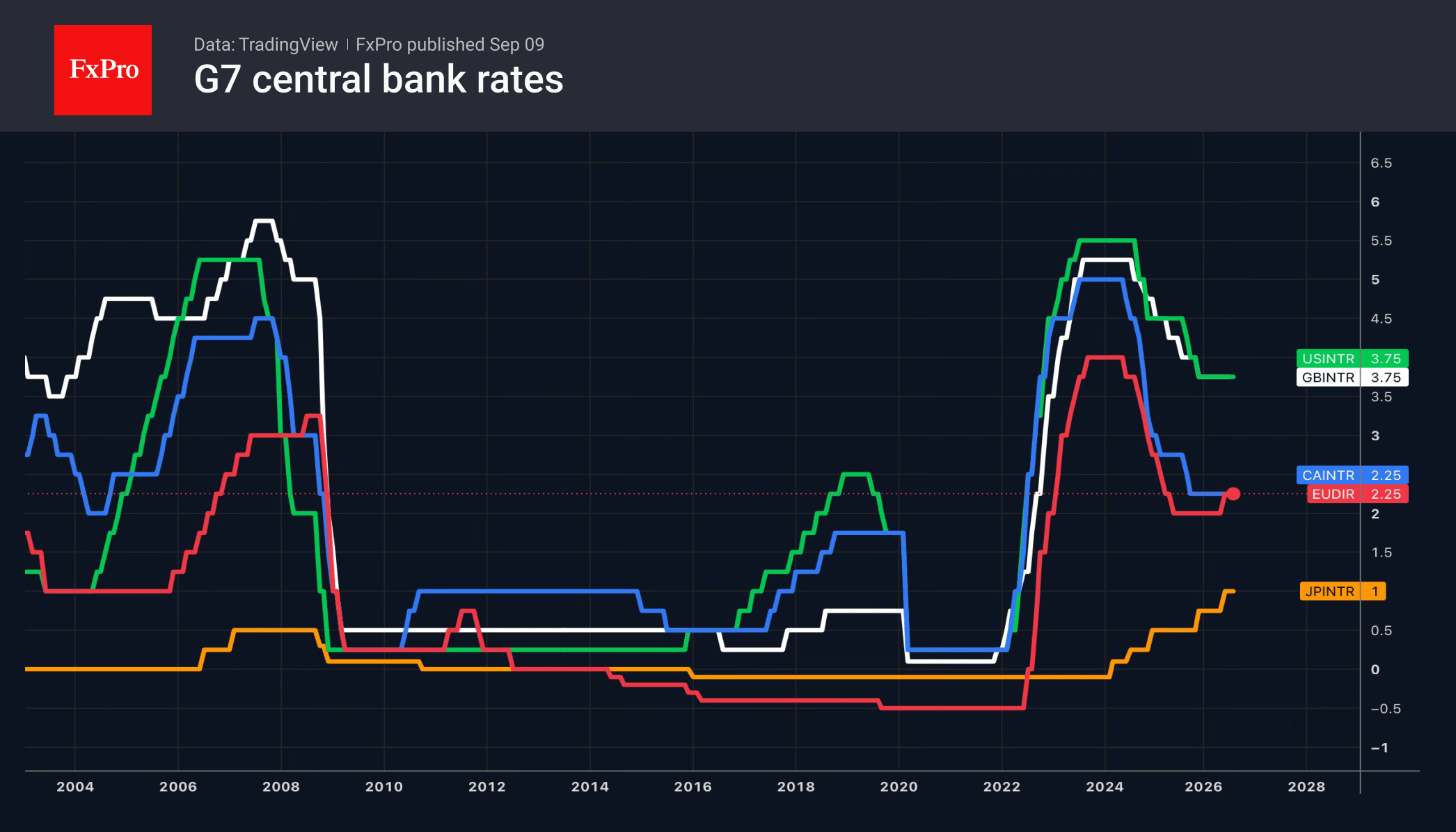
The ECB is the main hawk among the G7. It was the first to tighten policy in response to rising energy prices linked to the conflict in the Middle East. In September, the Governing Council is set to do so for a second time. After that, Bloomberg’s experts expect a prolonged pause, while markets have priced in a rate rise to 3% by mid-2027. Who will be right? The answer to this question will provide a key clue about the trajectory of EURUSD.
The ECB has compelling arguments for raising the deposit rate in September. Consumer prices rose to a three-year high of 3.3% in August, with GDP growth accelerating to 0.6% in the second quarter of 2026. Moreover, the central bank does not want to repeat the 2022 mistake, when its too-late response sent inflation shooting above 10%. The longer the conflict in the Middle East continues, the greater the risk of second-round effects from rising energy prices.
On the other hand, hiking the deposit rate to 3% will be difficult to justify. Rising oil and gas prices will, over time, reduce domestic demand and slow GDP growth, whilst an aggressive tightening of monetary policy will only exacerbate the eurozone economy’s woes. Moreover, the ECB must be careful not to add fuel to the fire of rising European bond yields.
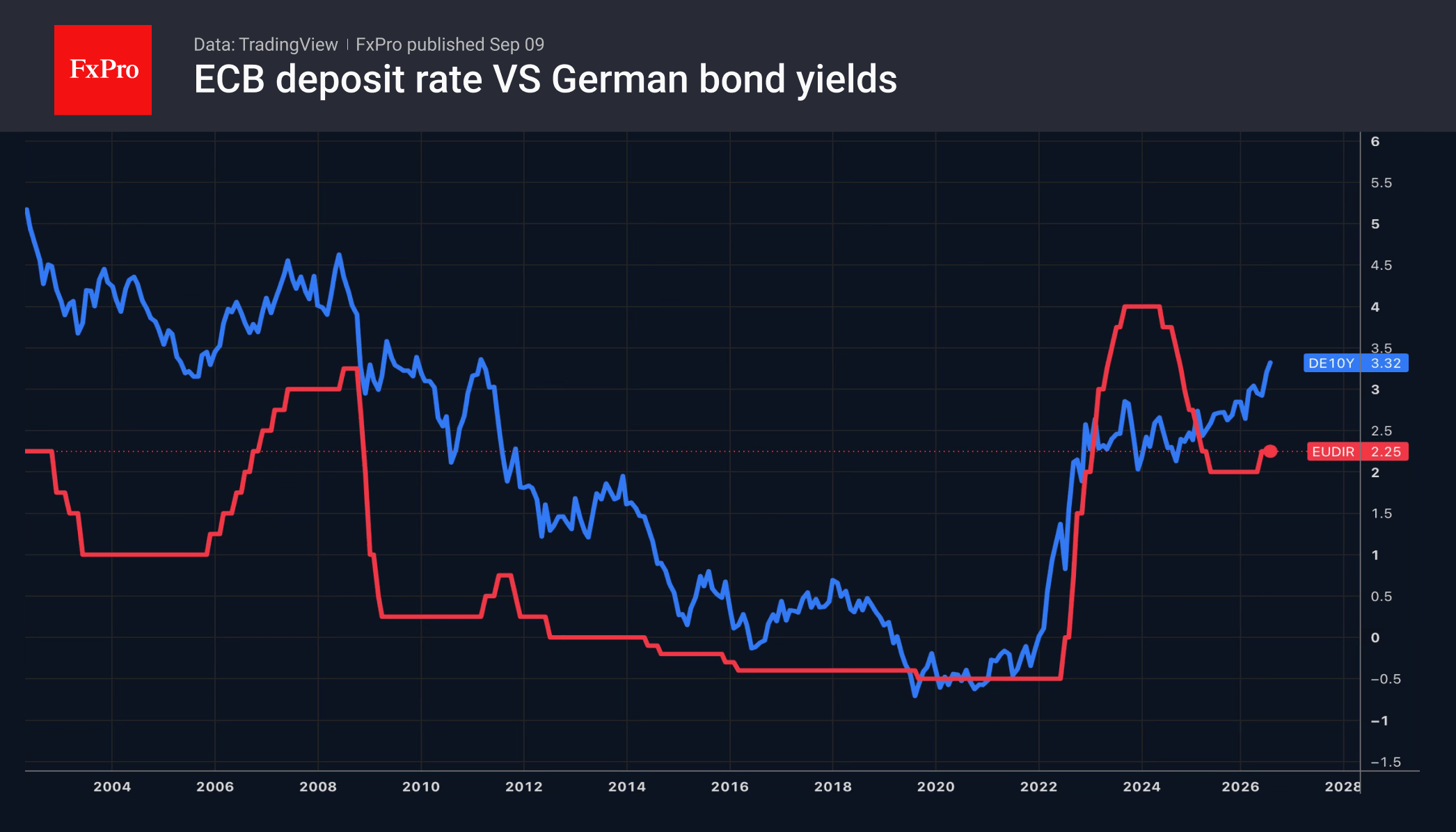
Taken together, these factors point to the need for a cautious approach. The base-case scenario is that Christine Lagarde will adopt a cautious tone, which could put pressure on EURUSD after its rally, fuelled by rumours of hawkish rhetoric from the ECB.
Another factor is that all this will take place against the backdrop of the debt market’s reaction to the US Treasury’s announcement on the volume of Treasury buybacks. Morgan Stanley expects the figure to be $10 billion, which, in theory, would put pressure on yields across a broader range of bonds. It is precisely because of such fears that the US dollar is failing to strengthen.
The FxPro Analyst Team