- Signals from the Bank of Japan about a December rate hike will favour the bears on USDJPY.
- The ECB is likely to follow the Fed’s lead and adopt a cautious stance.
The US dollar corrected as the Fed, having left its key rate unchanged on Wednesday, refrained from signalling a rate rise in December. Fed Chair Kevin Warsh highlighted the economy’s strength and the fact that inflation remains high. He noted that the central bank remains vigilant and that financial conditions remain tight. However, the Chair’s remarks that an acceleration in GDP growth would not necessarily lead to a surge in inflation have caused markets to doubt that there will be several rounds of policy tightening in 2027.

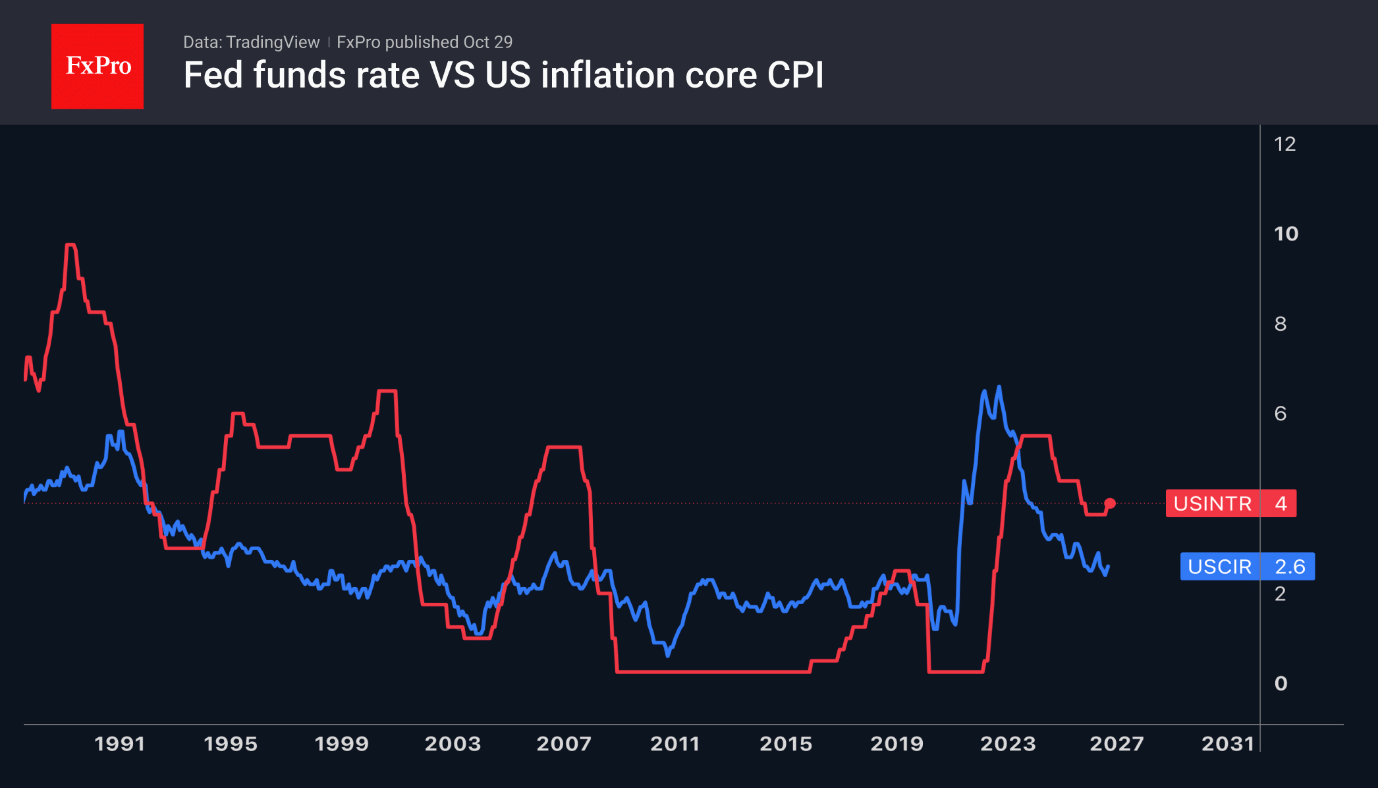
According to Warsh, the AI sector is becoming increasingly sensitive to rate rises. It is precisely thanks to new technologies that productivity is rising, and growth is accelerating. If growth is aggressively curbed through aggressive monetary tightening, the structure risks collapsing.
As a result, yields on 2-year Treasuries have fallen as markets have become less concerned about a sharp tightening of monetary policy and have priced in increasingly dovish expectations. Consequently, the US dollar retreated, EURUSD rebounded from a 17-month low, and USDJPY edged back. The euro and the yen are bracing for central bank meetings.
All but one of the experts polled by Bloomberg believe that the ECB will keep its key rate at 2.65% on Thursday and raise it in December. There are a few signs that high energy prices are feeding through to core inflation; the eurozone economy is losing momentum, and the surge in European bond yields has already significantly tightened financial conditions.
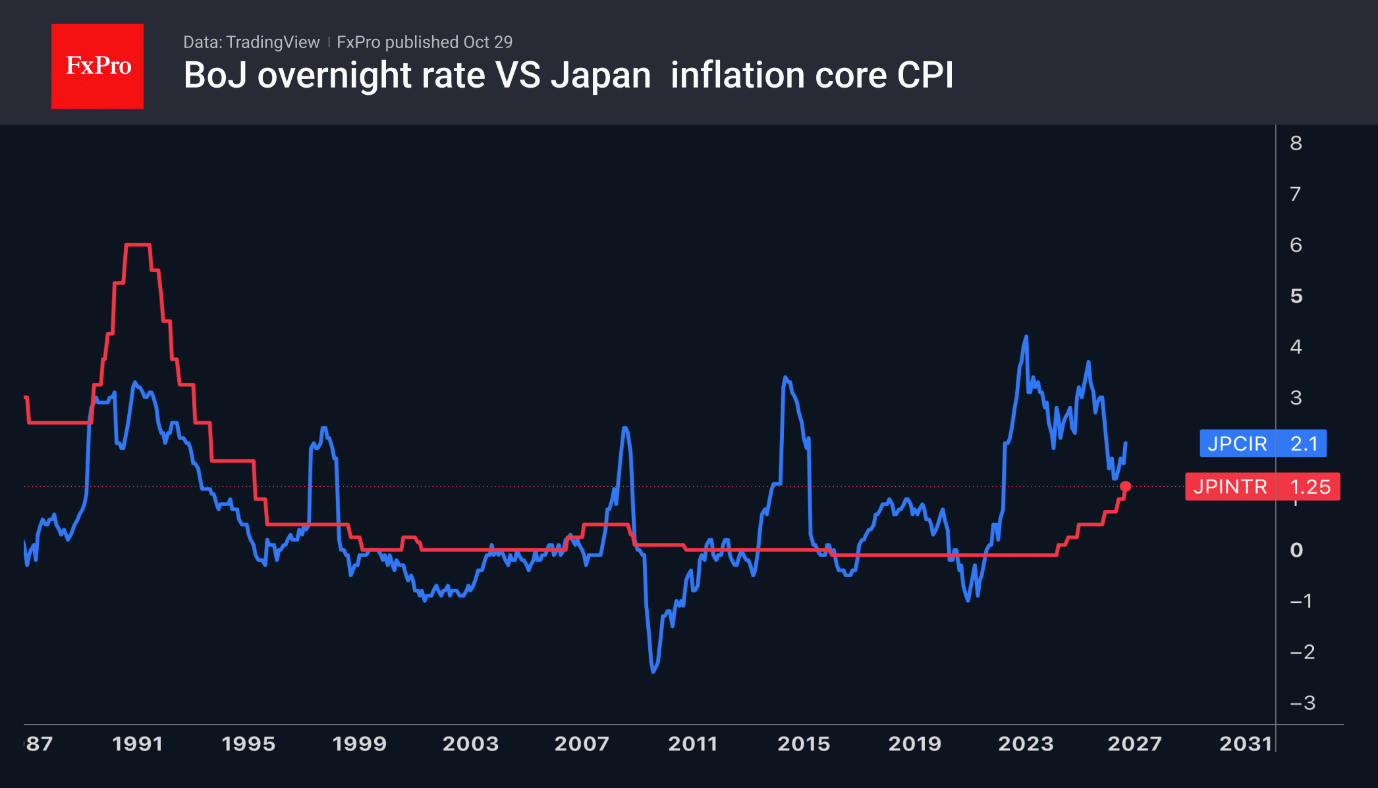
All experts surveyed by Bloomberg forecast that the BoJ’s overnight rate will remain at 1.25%. The main outcome of the Bank of Japan’s meeting will be the declaration of victory over inflation. Although consumer prices have been above target for several years, the core inflation rate only returned above the 2% mark in September. Its trajectory was distorted by government measures designed to cushion the negative effects of rising prices on households. October marks the moment to announce that the target has been achieved.
Although the BoJ would like to bring rates to a neutral level as quickly as possible, the risks of inflation spiralling out of control are not high enough to warrant tightening monetary policy at every meeting. It is most likely that BoJ Governor Kazuo Ueda will signal a continuation of the cycle in December.
The FxPro Analyst Team