- The slump in US stock indices has strengthened the greenback’s position.
- The BoE’s Bank Rate hike did not help the pound.
The US dollar has found a floor and bounced back amid a decline in global risk appetite. The S&P 500 recorded the largest loss in market capitalisation in history. Investors are concerned about the future of artificial intelligence technologies, leading them to sell shares and buy safe-haven assets. While they previously limited themselves to Treasuries, gold, the yen and the Swiss franc, they have now turned their attention to the greenback.

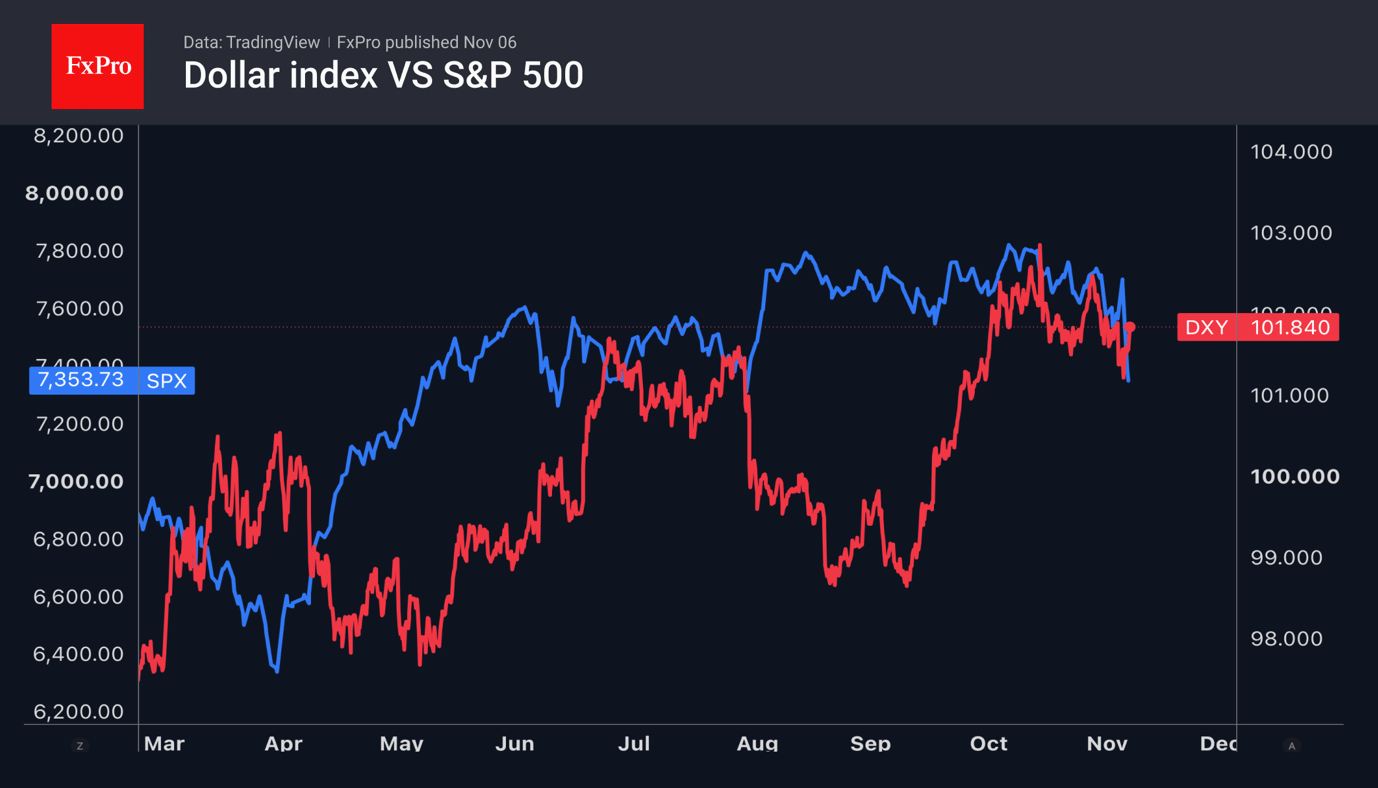
The catalyst for the dollar’s spike was the unwinding of currency hedges by non-residents who had previously been actively buying US shares. Strong macroeconomic data on jobless claims and productivity, as well as hawkish rhetoric from Fed officials, added fuel to the dollar’s rally. A politically weaker Trump may give the central bank a free hand in the fight against inflation. CME derivatives put the odds of a federal funds rate hike in December at two in three. The probability of two rounds of monetary tightening over the next 12 months stands at 52%.
The US dollar has not lost its trump cards, namely a strong economy and the Fed’s readiness to tighten monetary policy to combat inflation. The greenback’s weakness, driven by political factors, may be temporary. This was already the case in the early days of political turmoil during the introduction of tariffs or talk of seizing Greenland.
All the more so as competitors are unable to capitalise on the turmoil in the US dollar caused by the Democrats’ victory in the midterm elections. The Bank of England’s first Bank Rate hike since 2023, to 4%, had little impact on GBPUSD. Andrew Bailey urged investors not to view this move as the first in a cycle of monetary tightening. The BoE’s next steps will depend on developments in the Middle East.
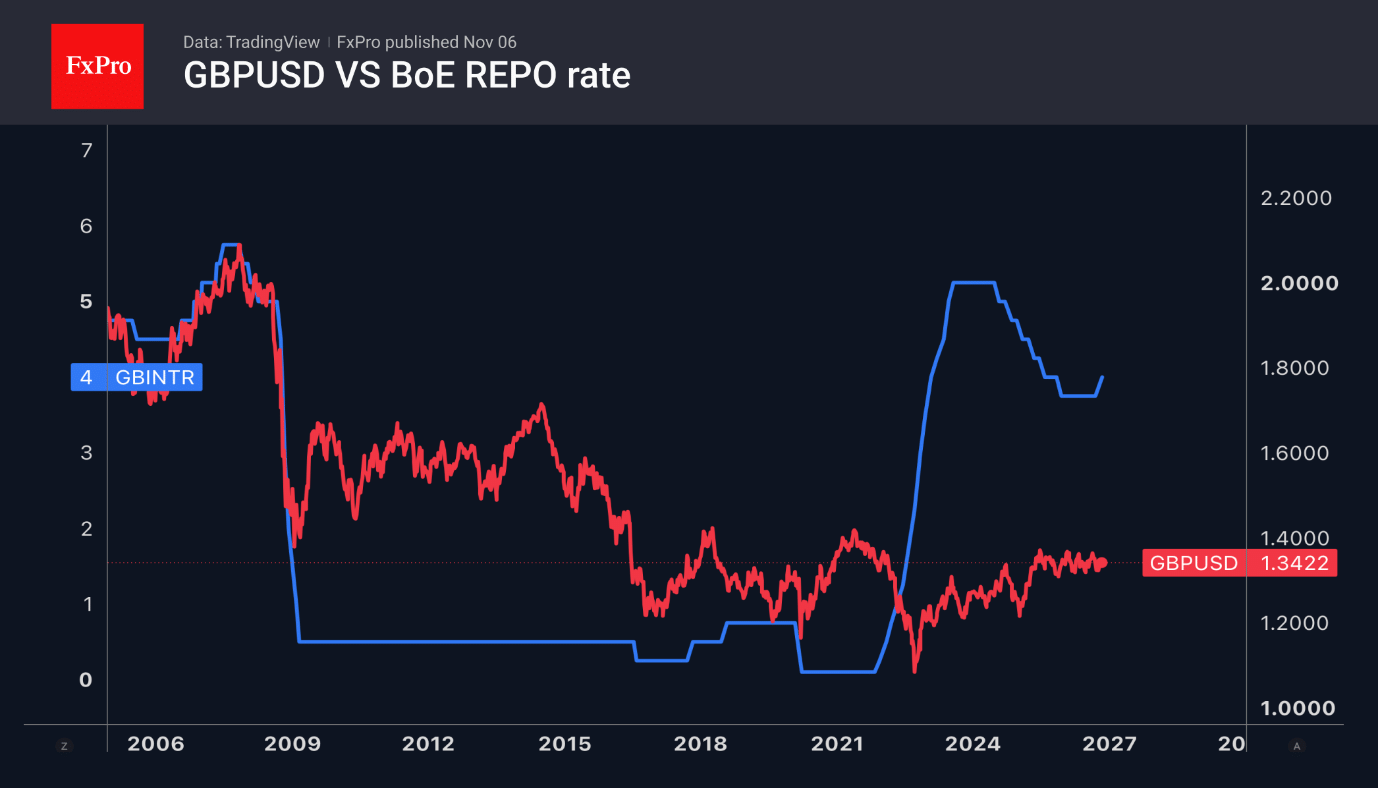
Given that the futures market had anticipated five rounds of monetary tightening ahead of the Monetary Policy Committee (MPC) meeting, such rhetoric was bound to be perceived as dovish. As a result, GBPUSD retreated from a six-week high.
Goldman Sachs describes the Japanese yen as an effective hedging tool against market shocks caused by artificial intelligence. However, the bears on USDJPY lack momentum, despite the decline in Treasury bond yields and the expectation that the overnight rate will increase from the current 1.25% to 2% by 2027.
The FxPro Analyst Team