- Inflation data could boost the US dollar.
- Gold is rising as risk appetite recovers.
The US dollar is attempting to stabilise after its slump on 8 April, as oil prices find their footing following their worst rout since 2020. The truce between the US and Iran is fragile, having led only to a reduction in the ‘war premium’, but not its complete elimination. Donald Trump has called on Israel and Lebanon to engage in talks and stated that Tehran is struggling to manage the opening of the Strait of Hormuz. Indeed, according to Marine Traffic, only 8 tankers have passed through it in the last 24 hours, compared to 135 before the March conflict.

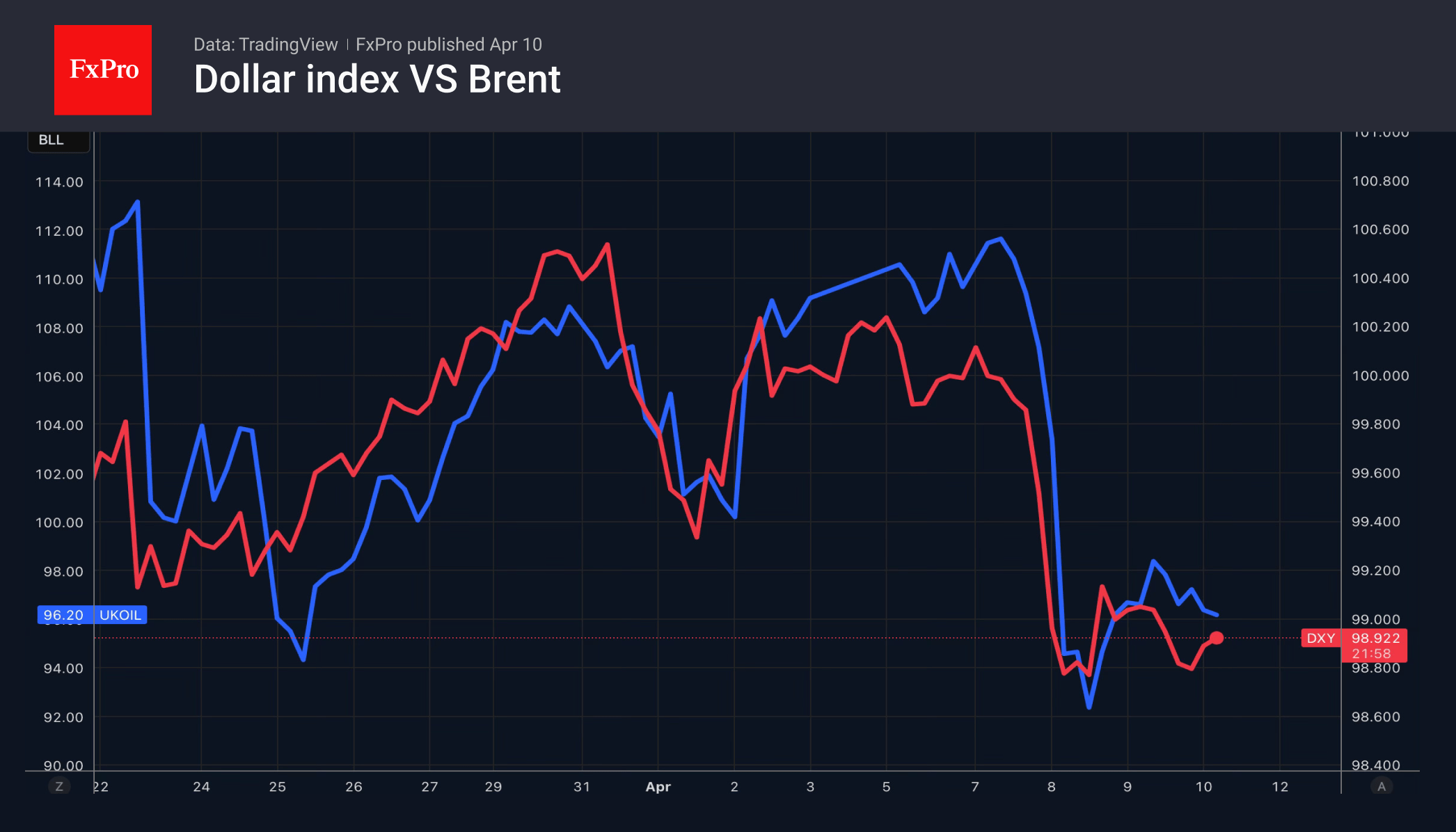
The IMF warns that it will soon lower its growth forecast for this year from 3.3%, as estimated in January. Even if the US and Iran agree on a lasting peace, the economic scars will remain, says Fund chief Georgieva. The OECD believes the impact on global GDP will depend on the damage to energy infrastructure. The worse the situation for the world, the worse it will be for the eurozone, which imports raw materials and energy, and its currency, the euro. In this context, a recovery in EURUSD appears premature. Traders bought into the rumours of negotiations, but the time will soon come to sell on the facts.
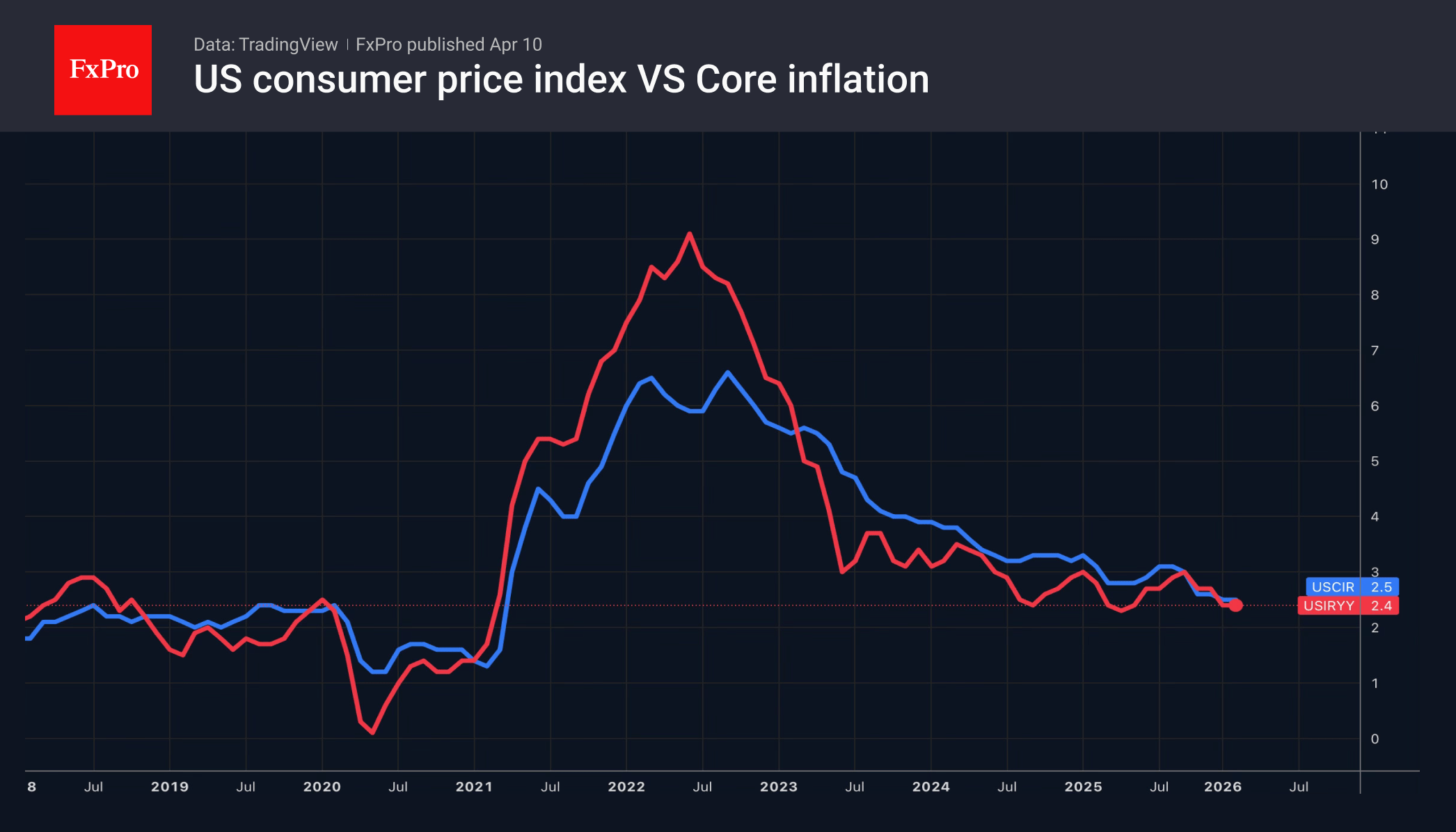
US inflation data for March could act as a short-term trigger for a decline in EURUSD. Consumer prices are forecast to rise by 0.9% month-on-month and 3.3% year-on-year. Such dynamics, along with the risks of core inflation accelerating from second-order effects, will force the Fed to keep rates high. Moreover, the resilience of the US economy may lead the futures market to anticipate a rise in borrowing costs. This will play into the dollar’s hands.
Meanwhile, USDJPY bulls are recovering after the sell-off triggered by news of the Washington-Tehran talks. The consolidation of oil prices at high levels makes Japan’s energy-import-dependent economy and the yen extremely vulnerable. At some point, the government’s verbal interventions will cease to work, and it will revert to currency interventions. Increased volatility in the pair is guaranteed.
Gold is gaining favour thanks to a resurgence in risk appetite and the long-term erosion of confidence in the US dollar as a reserve currency. In its time, the British pound lost this function due to the First World War, the abandonment of the gold standard, Bretton Woods and the Suez Crisis. Now, due to White House policy, the greenback may follow suit. For the first time in history, the value of assets denominated in it within the central bank’s reserves has fallen below the value of its precious metal reserves.
The FxPro Analyst Team