- Weak inflation and labour market figures have led to a fall in the USD index.
- The strength of the UK economy and the pound is most likely only temporary.
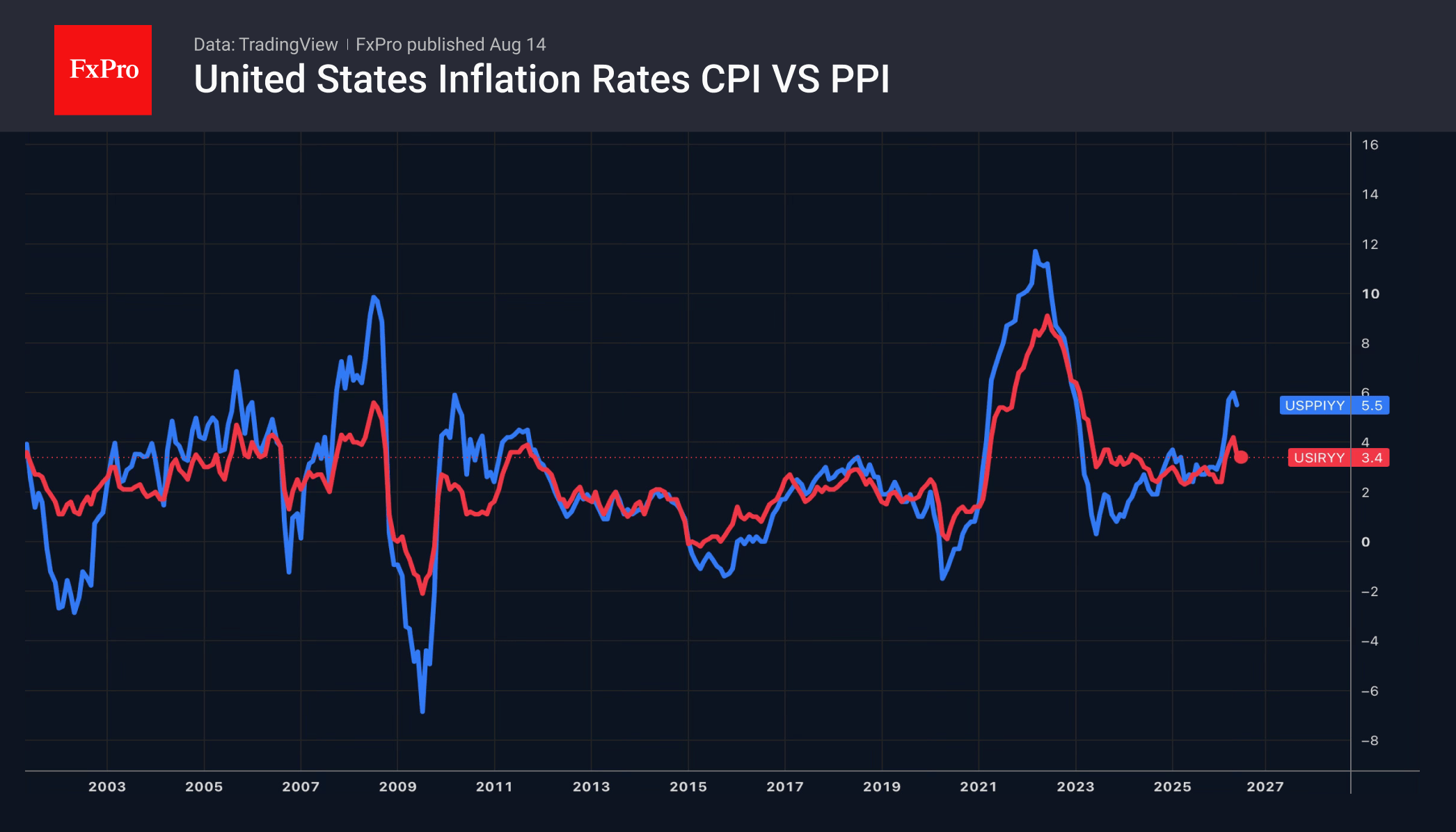
The US dollar has reacted differently to the inflation data. While the slowdown in consumer price inflation led to its strengthening, a slower pace of producer price inflation, from 5.5% to 4.7% y/y, weakened the greenback. At the same time, the probability of the Fed hike in September fell to 32%, and in October to 47%. The forward market expects rates to remain on hold until December, which is weighing on the USD index.

Data on Unemployment Claims also put pressure on the US dollar. Initial claims rose to 209K, fuelling concerns about the weakness of the US labour market.
Other currencies capitalised on the US dollar’s retreat. UK GDP grew by 0.4% q/q in April–June. On an annualised basis, this equates to 1.6%. This represents faster economic growth than in the US. According to BoE Chief Economist Hugh Pill, this should prompt the central bank to raise its repo rate.
In fact, the UK temporarily benefited from the World Cup, the abnormal heatwave that boosted the service sector, and the de-escalation of the conflict in the Middle East in June. Going forward, GDP is at risk of slowing, which will put pressure on GBPUSD.
USDJPY has pulled back from 160, a level that, if breached, could have triggered renewed currency interventions by the US and Japan. According to BlackRock, intervention in the forex market is the yen’s first line of defence. To consolidate these gains, the BoJ needs to accelerate its monetary-policy tightening cycle and adopt a more ‘hawkish’ stance.
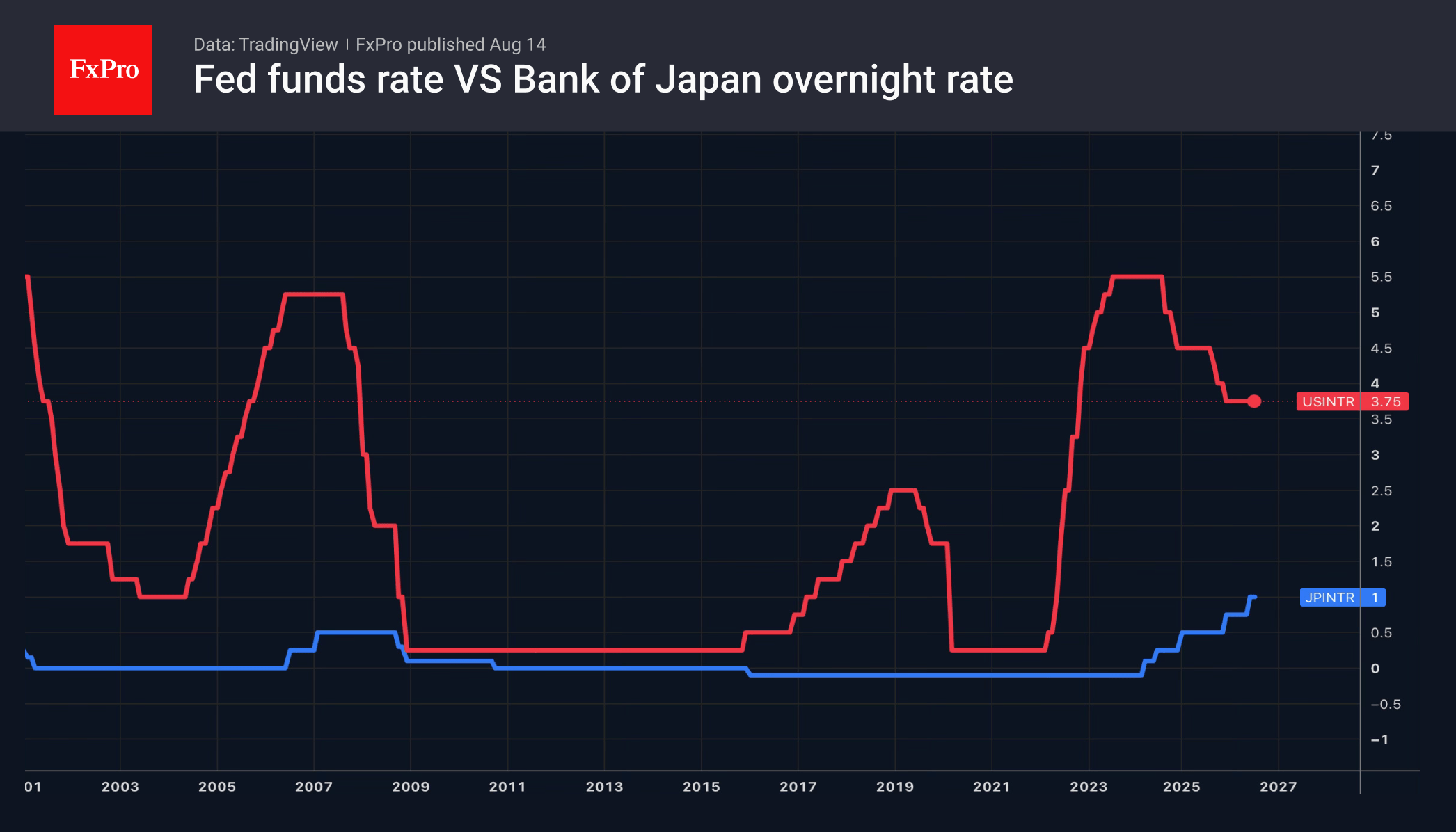
According to a Bloomberg insider, the Board of Governors intends to raise the overnight rate in September or October. The market showed virtually no reaction to this report, as investors are already anticipating a tightening of the Bank of Japan’s monetary policy this autumn. The probability of this happening by October is estimated at 60%.
That said, the interest rate differential between the Fed and the BoJ remains wide, creating a haven for carry trades. Carry traders took advantage of the coordinated currency intervention by the US and Japan and sold the yen at a higher price. This allowed the USDJPY bulls to recoup a significant portion of the losses incurred due to government intervention in the forex market.
The FxPro Analyst Team