• The reduction in geopolitical risks in Venezuela has weakened the greenback.
• Precious metal investors bought up the dip.
The US dollar has been on a rollercoaster ride thanks to the retreat of geopolitical risks. Donald Trump said that the United States intends to manage Venezuela for some time, and Caracas expressed its willingness to cooperate with Washington. There will be no war. This means that demand for the greenback as a safe-haven asset is declining.

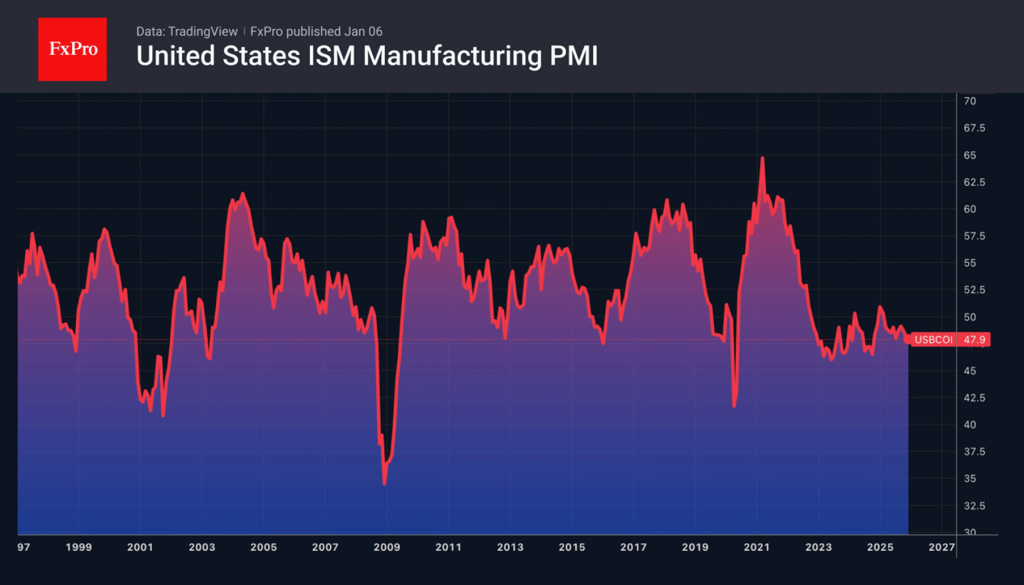
The USD index was hit by disappointing purchasing managers’ index statistics and dovish rhetoric from Fed officials. According to Minneapolis Fed President Neel Kashkari, inflation is likely to continue to slow and unemployment to rise. This combination suggests that the cycle of monetary expansion will resume soon. This is especially true given that business activity in the US manufacturing sector fell from 48.2 to 47.9 in December. The indicator has been below the critical 50 mark for 10 consecutive months. This indicates a contraction in the sector.
As a result, the futures market has increased the chances of a federal funds rate cut in March from 49% to 51%. This has led to a weakening of the US dollar against major world currencies. At the same time, speculators continue to believe in the continuation of the USD index peak. At the end of 2025, they increased their net shorts on the greenback to their highest levels since July.
The yen has been strengthening for the second day in a row. The minutes of the Bank of Japan’s December meeting showed that officials discussed further increases in the overnight rate.
The euro and pound sterling rallied sharply. This was partly due to comments by Keir Starmer, who is seeking to remain in power. The Prime Minister spoke about expanding trade relations with the European Union in order to accelerate Britain’s economic growth. A decade after Brexit, the British have finally recognised the negative impact of severing ties with a key trading partner.
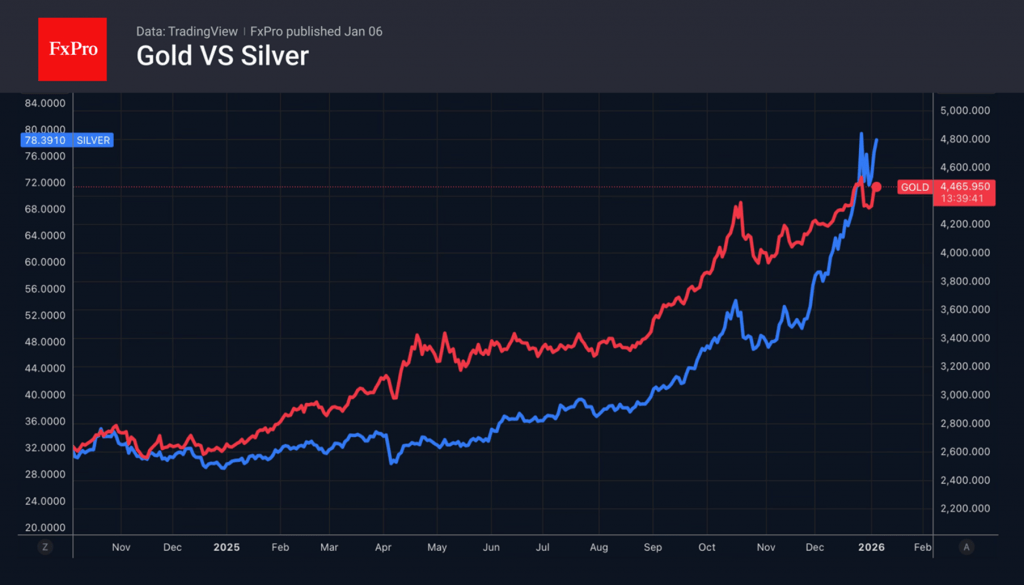
Gold and silver rallied strongly thanks to geopolitics. Record growth in the white metal in 2025 led to an increase in its share in the Bloomberg commodity index to 9%. According to TD Securities estimates, the target benchmark for passive tracking funds is 4%. This means that one of the reasons for the XAGUSD pullback was their sale as part of an adjustment of investment portfolios. However, investors then bought up the dip.