Bullish sentiment on global stock and commodity markets supported the prevailing positive mood in oil prices last week. However, on Friday, the price turned downwards when it touched the 200-day moving average. This is due not only to technical factors but also to a set of fundamental reasons.

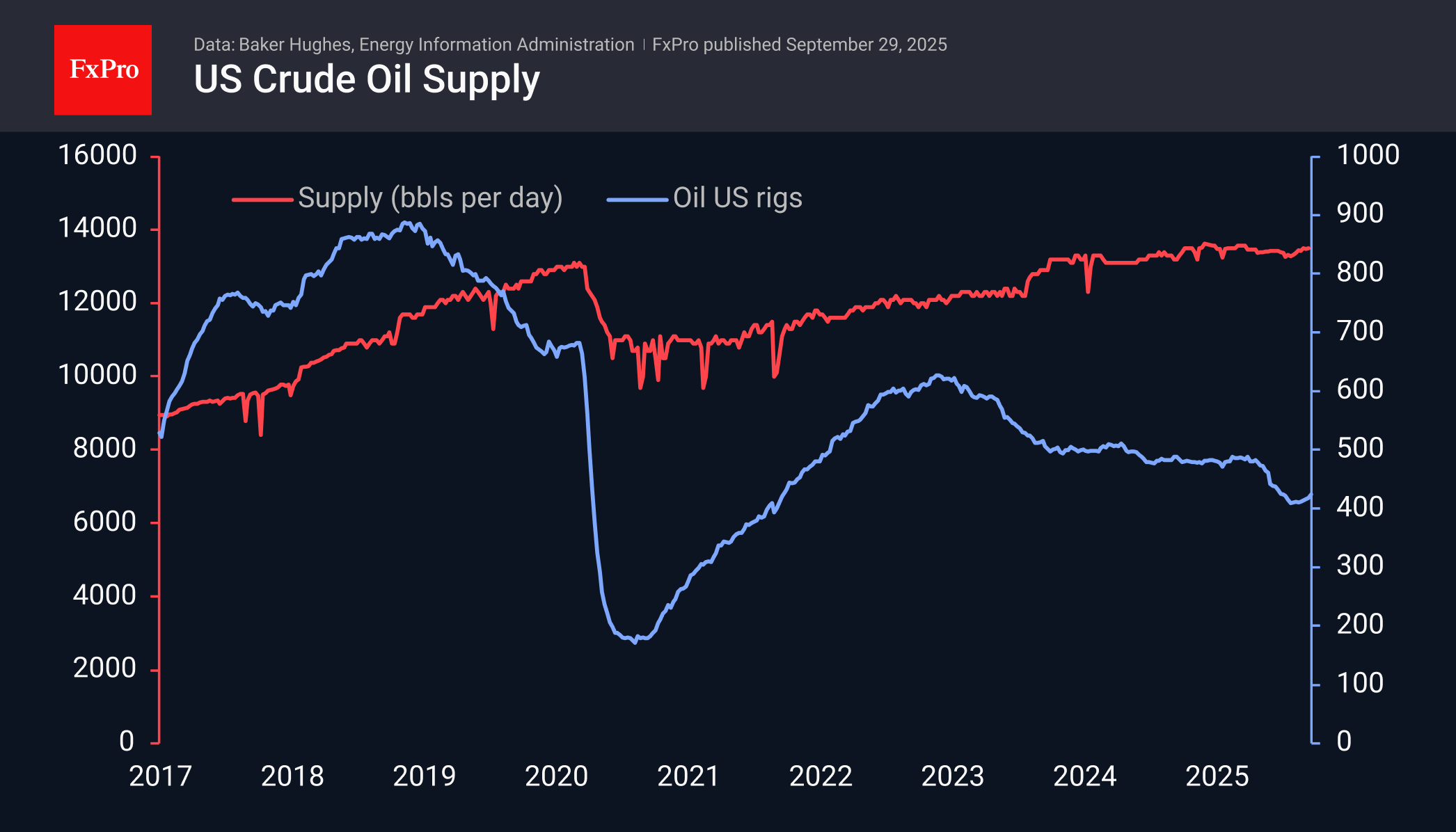
The latest weekly data on stocks and production reinforce the position of oil sellers. On Friday, Baker Hughes noted an increase in the number of active oil rigs to 424 (+6 for the week and +14 from the low in early August). Although this is significantly lower than the levels at the beginning of the year, when the latest decline began, it still resembles a trend that points to increased activity among US oil producers and their renewed confidence in the need to invest in the sector.
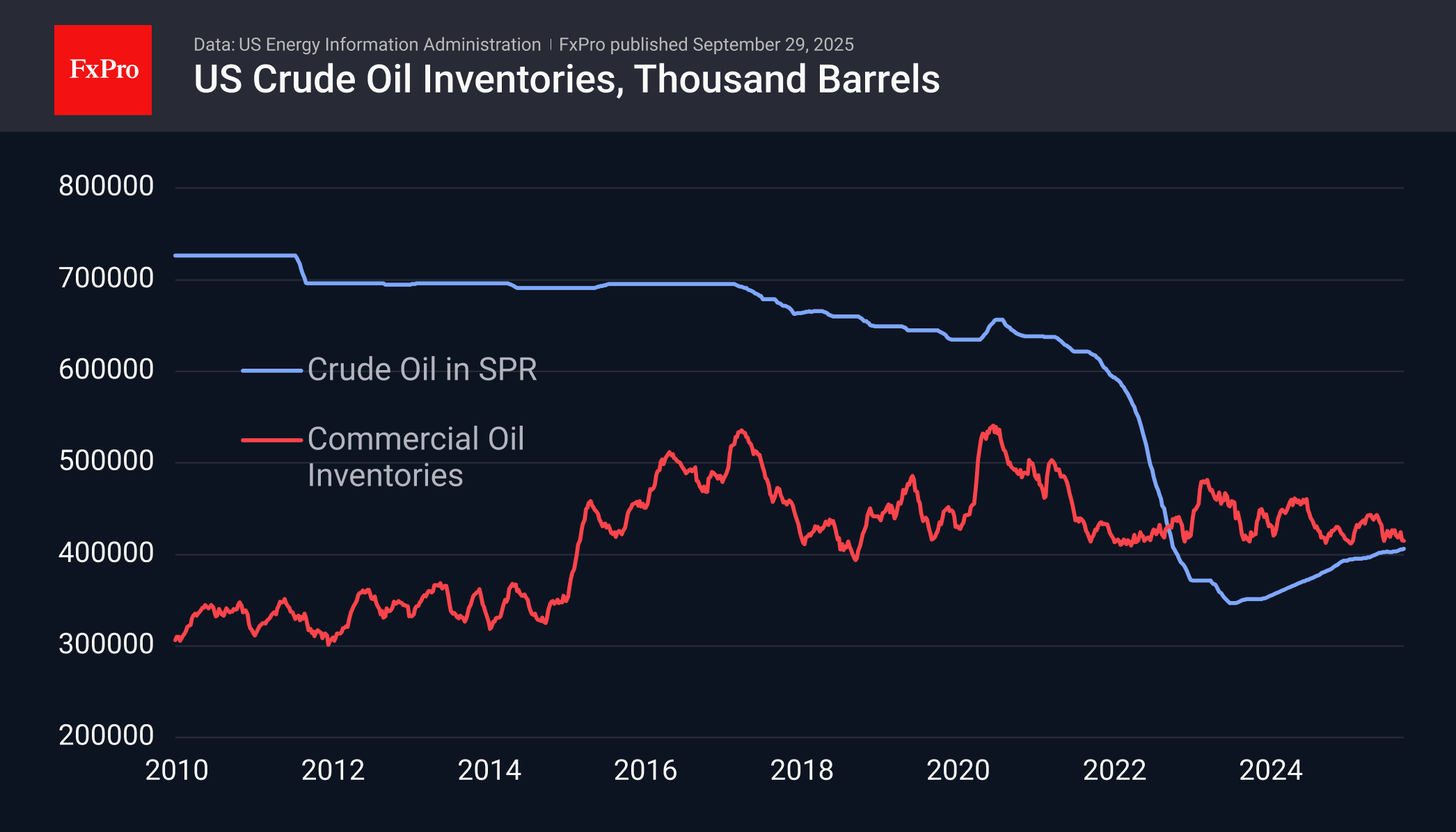
In addition, actual production levels have been rising since mid-July. In the middle of last week, the EIA reported an increase in production to 13.5 million barrels per day, the highest since the end of March. Interestingly, this has not yet led to an accumulation of reserves. Commercial stocks have fallen by almost 10 million barrels over the past two weeks, staying close to the lower limit for this indicator over the past ten years. The strategic reserve is being replenished, but at about half the rate it was before Trump’s election victory in November last year.
Over the weekend, it was also reported that at the next monthly meeting of the OPEC+ monitoring committee on October 5, a recommendation will be considered for the cartel to increase quotas by at least another 135,000 barrels per day starting in November. The cartel has made a shift in its strategy, actively increasing quotas, first by removing voluntary cuts and now by raising the bar for all participants. In total, quotas have been increased by 2.5 million barrels per day during this period.
The intensification of oil production has halted attempts by oil to grow, despite the positive macroeconomic backdrop. As a result, oil prices have been unable to sustainably consolidate above the 200-day moving average for more than a year now. This downward trend line has fallen to around $70, compared to $82 just over a year ago and a peak of $100 at the end of 2022.

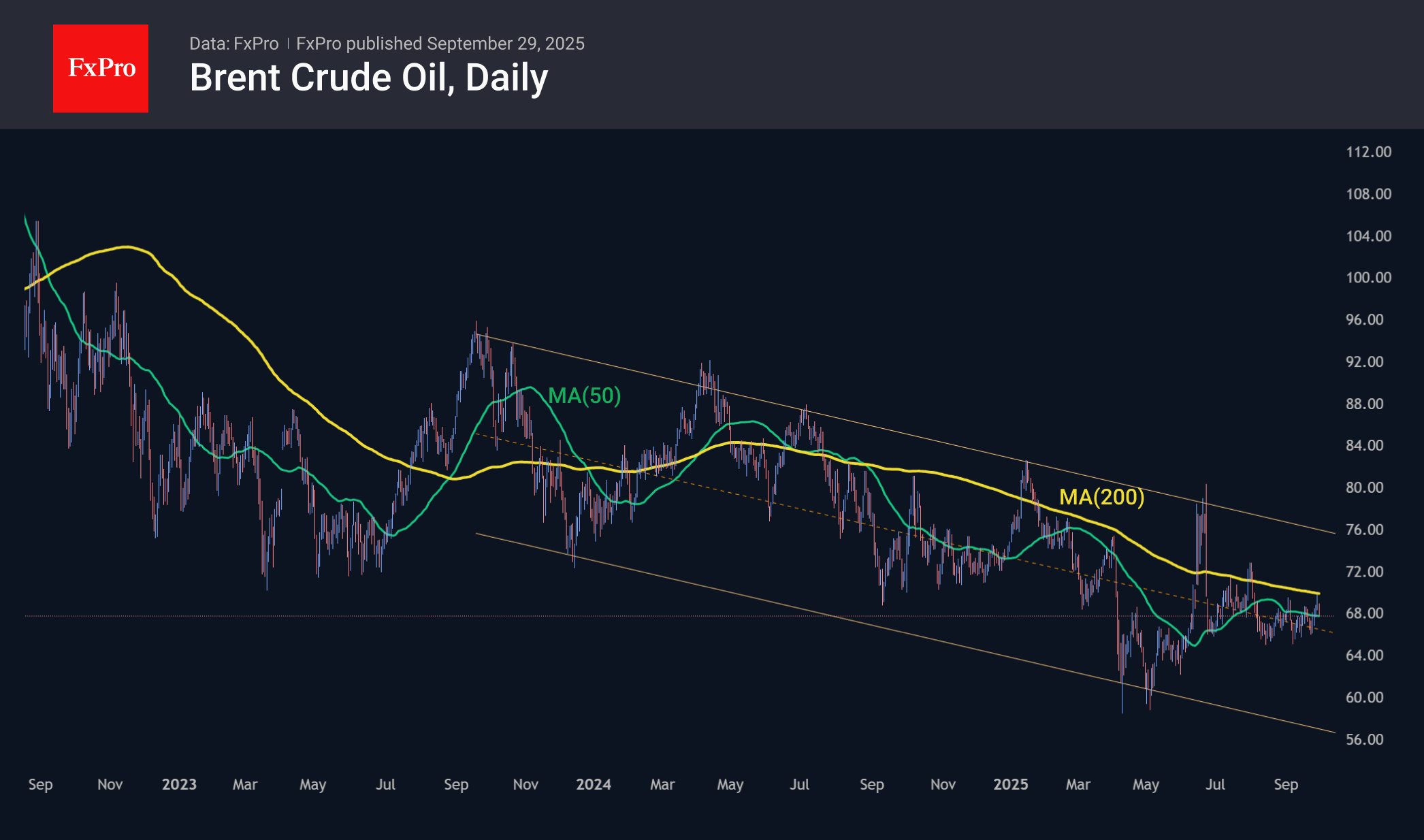
Oil has been moving within a downward range for the past three years, with the upper limit for Brent at $73 per barrel and the lower limit at $53. Although the price is now significantly closer to the upper limit, a set of fundamental factors and technical pressures makes a decline more likely than growth in the near term.
The FxPro Analyst Team