- Iran is threatening to block an alternative supply route.
- Global stocks are at risk of falling to critical levels.
The oil market has gradually adjusted to the shock and has been hoping for a quick US-Iran deal. However, clashes between the opposing sides continue, and the conflict between Israel and Hezbollah risks exacerbating the situation. As a result, Brent has seen a three-day growth in declining chances of the Strait of Hormuz reopening soon. Polymarket estimates the chances of such an outcome by the end of June at 22%.

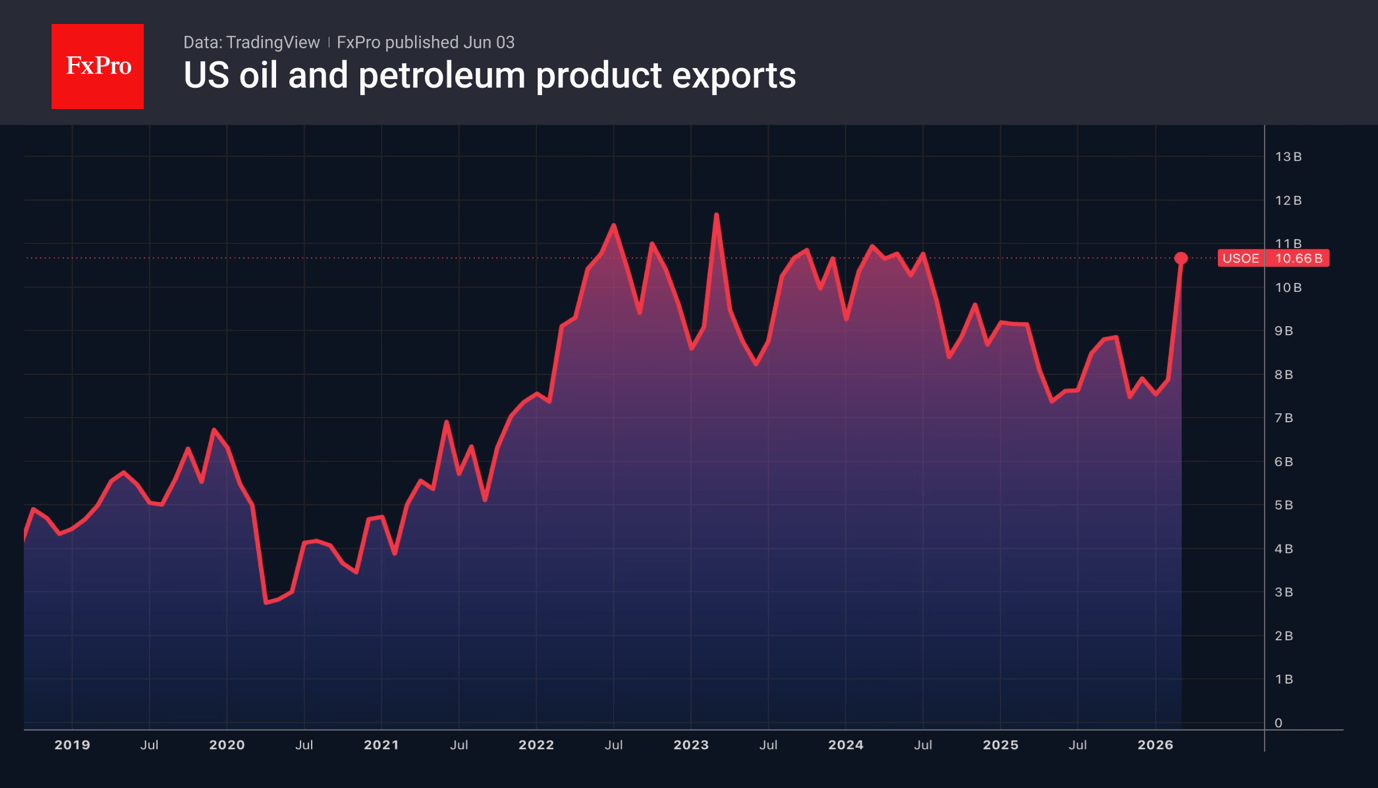
The IEA forecasts 1.5 million bpd of supply growth from North and South America in 2026, higher than the 600,000-bpd expected at the start of the year. US crude oil exports have surged to a record 5.6 million bpd. The temporary lifting of sanctions against Russia has increased crude oil supply from that country to 3.46 million bpd. This is 120,000 bpd above 2025 levels and the highest in four years.
Supplies from non-Gulf states are increasing. Demand is falling, primarily in China, where crude oil imports have fallen to 6 million bpd. According to Goldman Sachs, global consumption will fall by 2 million bpd due to China, which will push the average Brent price down by $10 per barrel.
Nevertheless, the loss of supply resulting from the closure of the Strait of Hormuz is estimated at 14 million barrels per day, and the combined efforts of the US, China, Russia and other countries are not yet sufficient to make up for the resulting shortfall. Global stocks are filling the gap. The IEA warns that these could fall to critical levels at the very peak of the season of heightened oil demand in July and August. This will result in a linear rise in Brent prices.
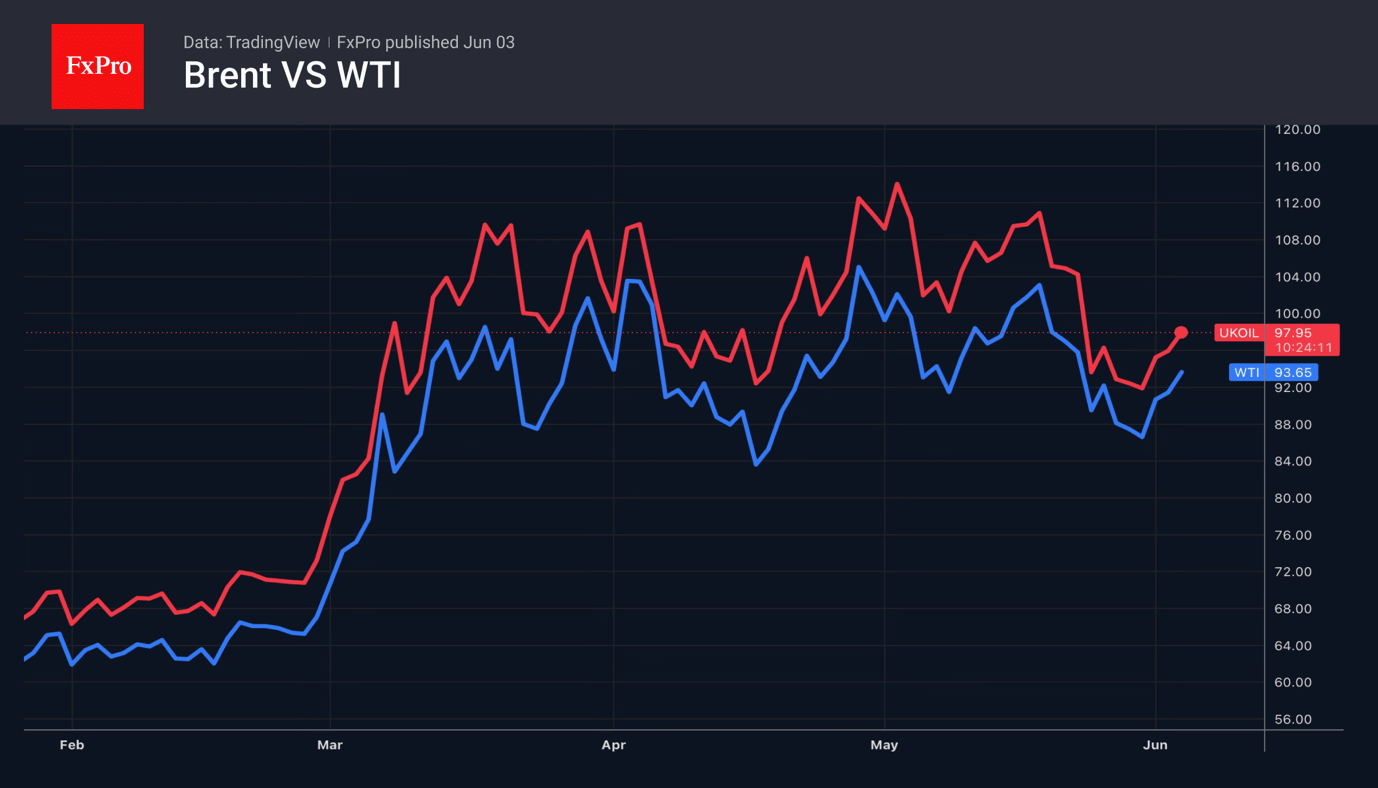
The situation risks worsening if Iran’s threats to block the Strait of Bab el-Mandeb materialise. This would affect an alternative supply route via the Red Sea. Through this route, Saudi Arabia supplies around 5 million bpd to the global market.
The situation in the Middle East is heating up. Investors are growing increasingly weary of the White House’s promises of an imminent deal with Iran. If the US agrees to meet Tehran’s demands, the deal risks being a bad one. Meanwhile, the IEA warns that even if the Strait of Hormuz were to reopen today, it would take at least 6–8 months to resume full operations.
The FxPro Analyst Team