- Strategic reserves and the re-routing of supplies are keeping Brent prices in check.
- The longer the conflict in the Middle East lasts, the greater the risk of rising oil prices.
The IEA describes the current oil crisis as the biggest in history. Indeed, the closure of the Strait of Hormuz has caused serious disruptions to supply routes. Prior to the conflict in the Middle East, around 20 million barrels per day flowed through the world’s largest oil artery. Currently, only 2 out of 100 tankers are passing through, and the majority of these are backed by Iran. Nevertheless, Brent is still significantly below its 2022 peak.

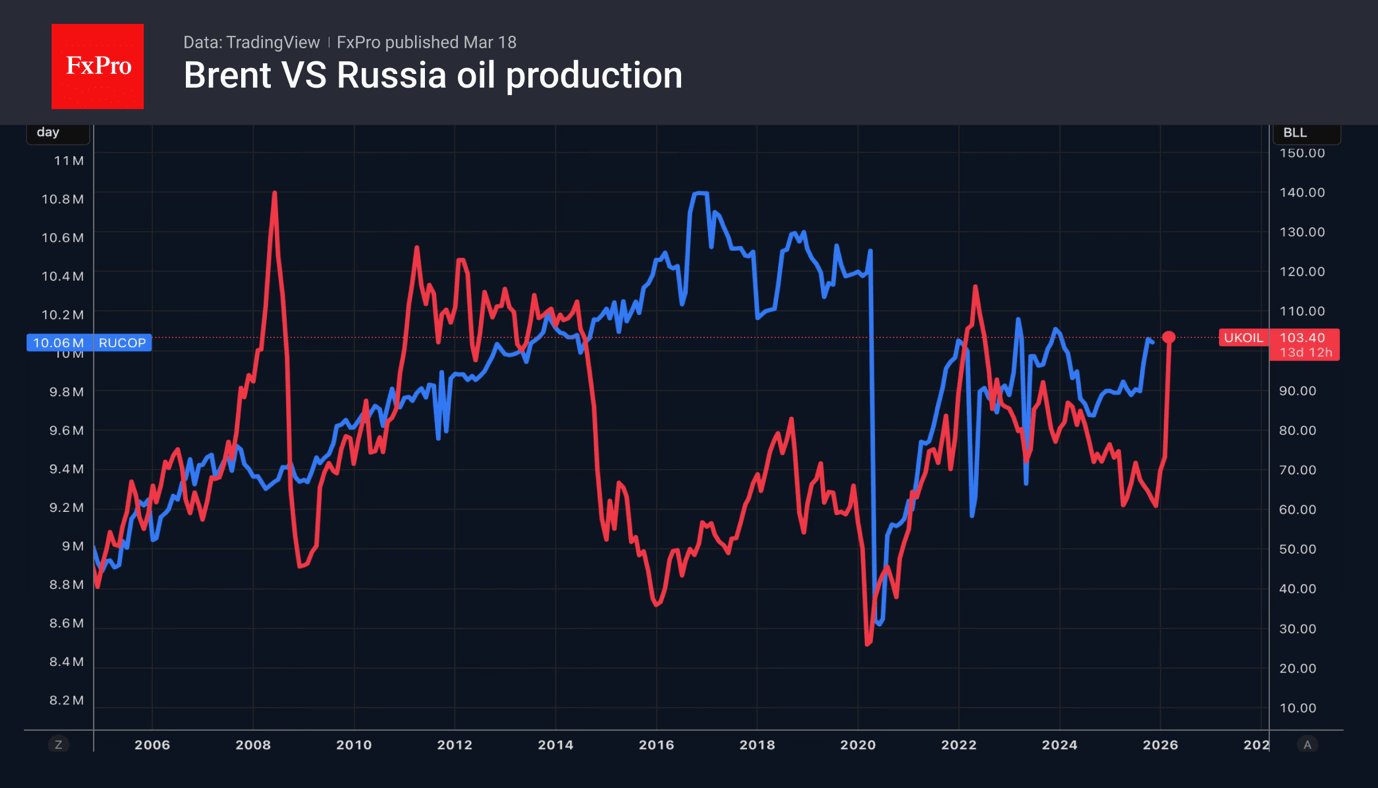
At the start of the armed conflict in Ukraine, investors were alarmed by the intent of the US and other countries to remove Russia, the largest oil producer, from the market. Its production volume was about 10 million barrels per day, of which 3 million were routed to Europe. Europe’s rejection of Russian oil led to a growing shortage and sent Brent above $133 per barrel. Later, the Kremlin redirected supplies to Asia, leading to a decline in prices. Unsurprisingly, rumours of Iraqi exports via Turkey halted the oil bulls.
The scale of the current crisis is considerably larger. According to Clarksons and Braemar, approximately 1,100 tankers are stranded in the Strait of Hormuz, and about two dozen ships have been attacked since the conflict began. Even if the US succeeds in depriving Iran of its weapons, it will take weeks for fears to lessen and for traffic through this vital oil route to resume. Under such conditions, the increase in Brent futures for January 2027 delivery from $68 to $75 per barrel appears reasonable.
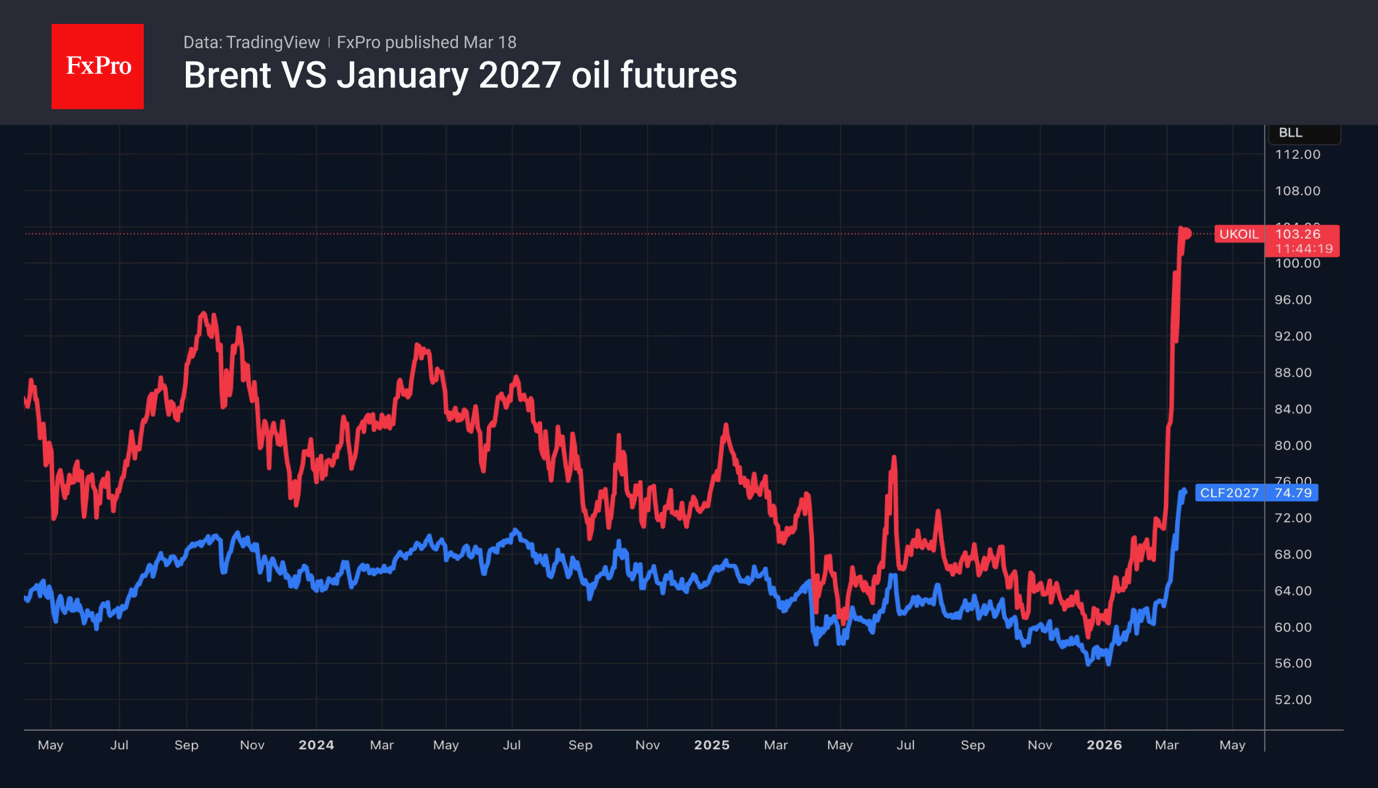
So why isn’t black gold higher? Before the conflict in the Middle East, Crude Oil was in a bear market. The IEA had forecast a record surplus and then decided to sell 400 million barrels from its strategic reserves. According to the organisation’s estimates, this amounts to around 20%. A further 1.4 billion barrels could be released onto the market in future. China has another 1.4 billion barrels. According to FGE NexantECA, Beijing plans to supply 1 million bpd from its reserves over the next 3–4 weeks.
Therefore, redirecting supplies and utilising strategic reserves are reducing the negative impact. However, the longer the conflict in the Middle East endures, the greater the likelihood that Brent will continue its ascent.
The FxPro Analyst Team