- Oil proved to be more important than inflation for the dollar.
- USDJPY is approaching the intervention zone of 162–164.
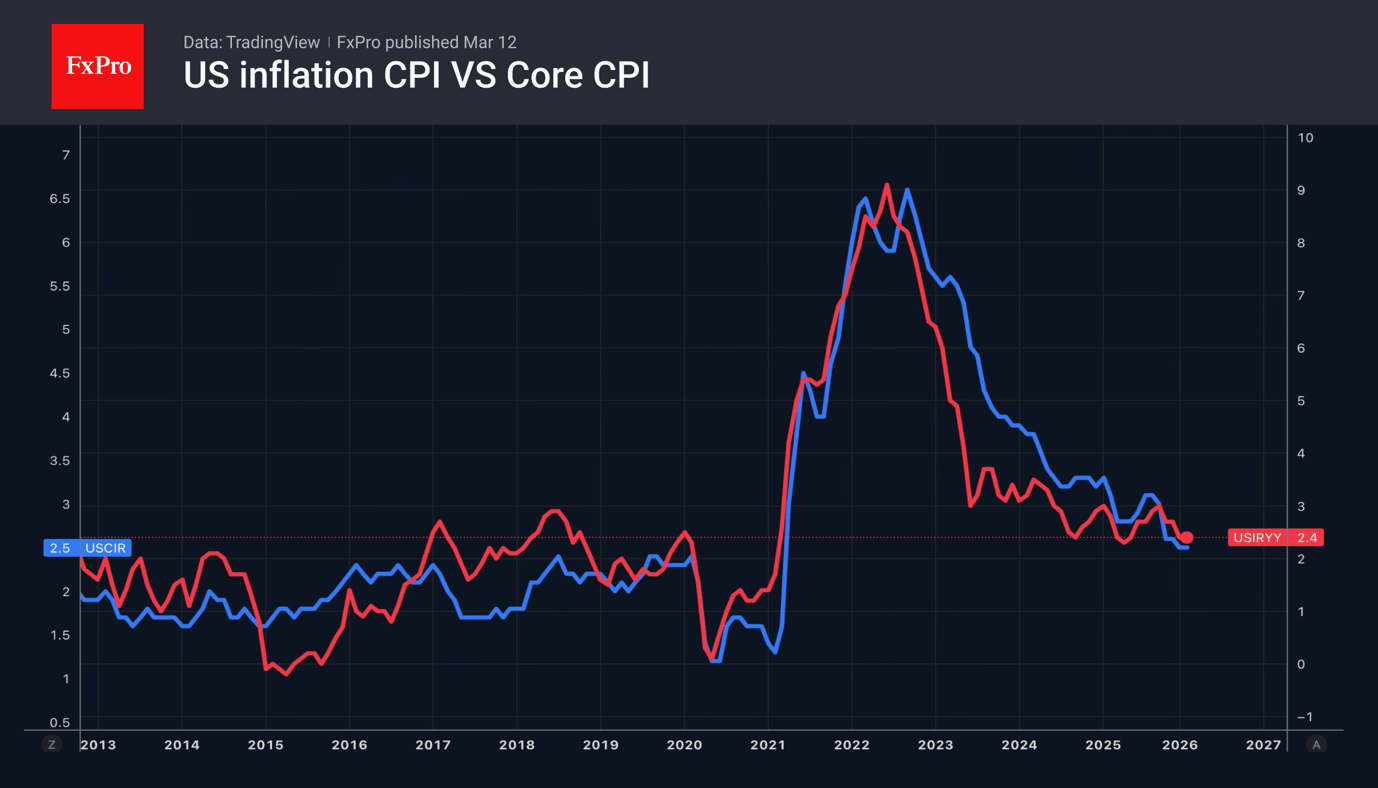
The US dollar continues its victorious march on Forex. The USD bulls are not bothered by the cooling US labour market or the reluctance of inflation to accelerate. In February, consumer prices and core CPI were anchored at 2.4% and 2.5%, respectively. The situation is reminiscent of the end of 2025, when the Fed, concerned about falling employment, cut rates three times. But with one exception, this time, oil prices are poised to return above $100 per barrel.

The closure of the Strait of Hormuz will be costly for the American economy and even more so for the European economy. The EU has warned that Brent settling above $100 per barrel will push inflation up to 3%. GDP growth will slow from the previously expected 1.4% to 1% in 2026. The scenario assumes an increase in gas prices to €75 MWh, which is significantly lower than the more than €300 MWh on a peak in 2022. The European Union does not expect a repeat of the energy crisis; bit similar shock could drag EURUSD below parity.
According to Donald Trump, releasing 400 million barrels of oil from developed countries will significantly reduce prices. However, Brent is steadily rising instead. The US contribution is estimated at 172 million barrels. According to the Department of Energy, this will take about 120 days with about 1.4 million bpd. The total daily supply from IEA members is unlikely to exceed 3 million bpd. A way lower than 20 million bpd passed through the Strait of Hormuz then Before the war. These figures are incomparable and convince investors to buy Crude.
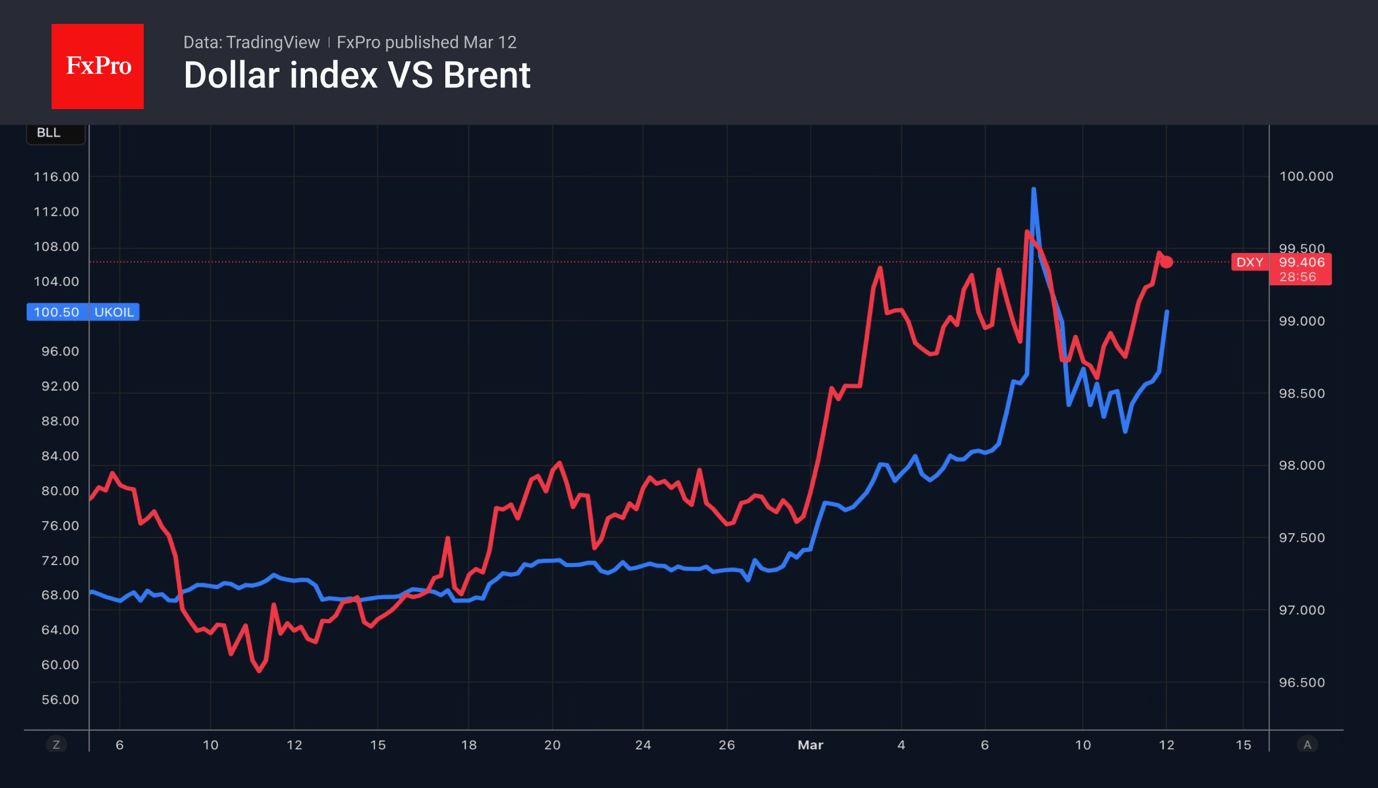
The Brent rally is becoming the main catalyst for the US dollar’s strengthening. The United States’ status as a net energy exporter makes it more isolated from the conflict in the Middle East than other countries. At the same time, demand for the greenback as a currency for oil-related transactions is increasing.
As USDJPY rises, the chance that Japan will step in to support the yen increases. Analysts at National Australia Bank say Japan previously set 158-159 as a warning level. Now they think the new danger level is around 162, at which point the government and the Bank of Japan may start buying yen. However, JP Morgan believes the pair is rising mainly because the US dollar is strong, so Japan may find it hard to justify large intervention and may wait until levels around 164 before intervening.
The FxPro Analyst Team