- The US is offering Iran negotiations.
- Without dialogue, we must be prepared for an escalation.
The oil market is nearing a mutually agreed conclusion, but the lack of mutual trust between the parties is significantly complicating the situation. The US has provided Iran with a list of 15 points, the completion of which would resolve the conflict in the Middle East. Previously, there were reports that Iran had presented its own conditions. These have not been officially confirmed, but we have heard on numerous occasions of demands for non-aggression guarantees and reparations for damage already inflicted.
At stake is the reopening of traffic through the Strait of Hormuz, through which around 15 million barrels of crude oil and 5 million barrels of refined fuel previously passed. According to JP Morgan estimates, the current shortfall is approximately 16 million barrels per day. This figure will decrease as barrels from the strategic reserves of IEA member countries are released into the market and as Gulf states explore alternative routes, such as the Red Sea. Nonetheless, the global economy faces the threat of a long-term deficit of 10 million barrels per day, which increases the risk of stagflation and recession.

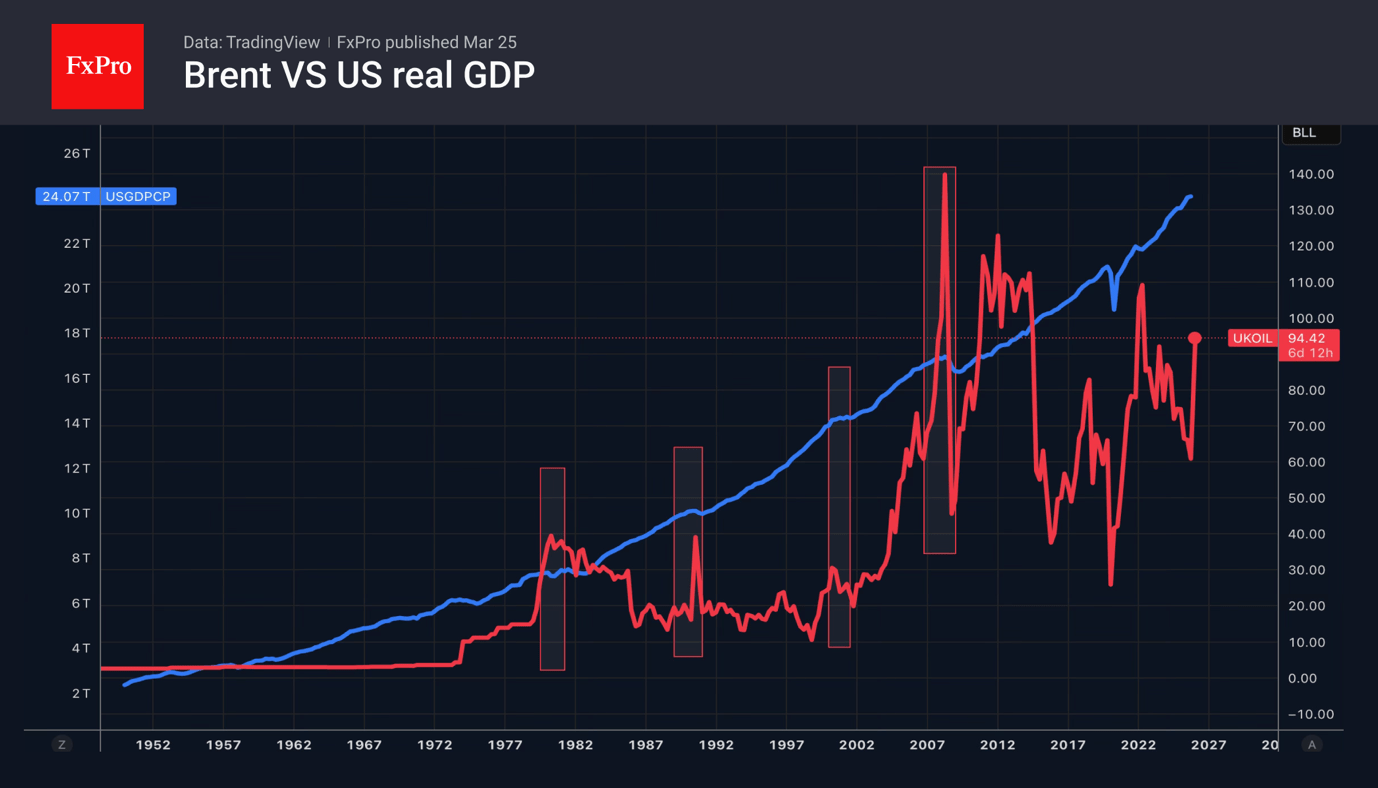
According to estimates by Oxford Economics, without a deal between Washington and Tehran, the Strait of Hormuz will only regain 50% of its pre-war capacity by May. Iran is gradually softening its stance, permitting tankers from countries not involved in the conflict to pass through while charging them a $2 million fee.
According to Israeli television reports, the US is seeking a one-month ceasefire to discuss a plan that includes dismantling Iran’s nuclear programme, ending support for terrorist groups, and reopening the Strait of Hormuz.
Even in the most optimistic scenario, it will take months for Gulf countries to restore pre-war production levels. Coupled with difficulties in replenishing onshore stocks, this casts doubt on a quick fall in Brent prices. Most likely, North Sea crude will remain above $65–70 per barrel by the end of 2026.
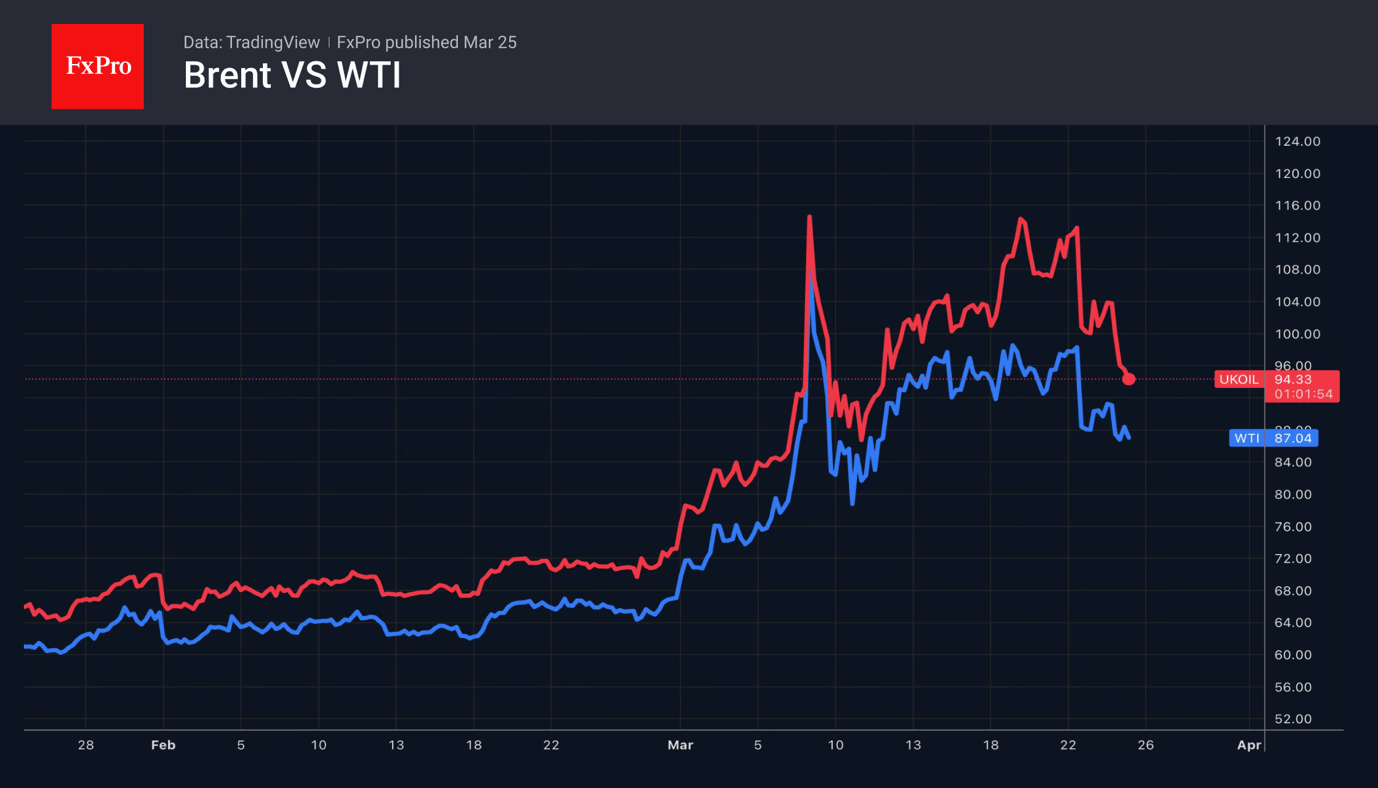
The absence of constructive dialogue between the US and Iran could lead to further escalation, including other regional countries joining the US-Israeli coalition and possibly a ground operation by Washington. In such a scenario, Brent may rise to $160 a barrel. This is the price that some countries are already paying for oil from the Middle East that bypasses the Strait of Hormuz.
The FxPro Analyst Team