- The US has no intention of reopening the Strait of Hormuz and is demanding that Iran sign an agreement.
- The narrowing of the spread between the spot and futures markets is a positive sign, but it is not enough.
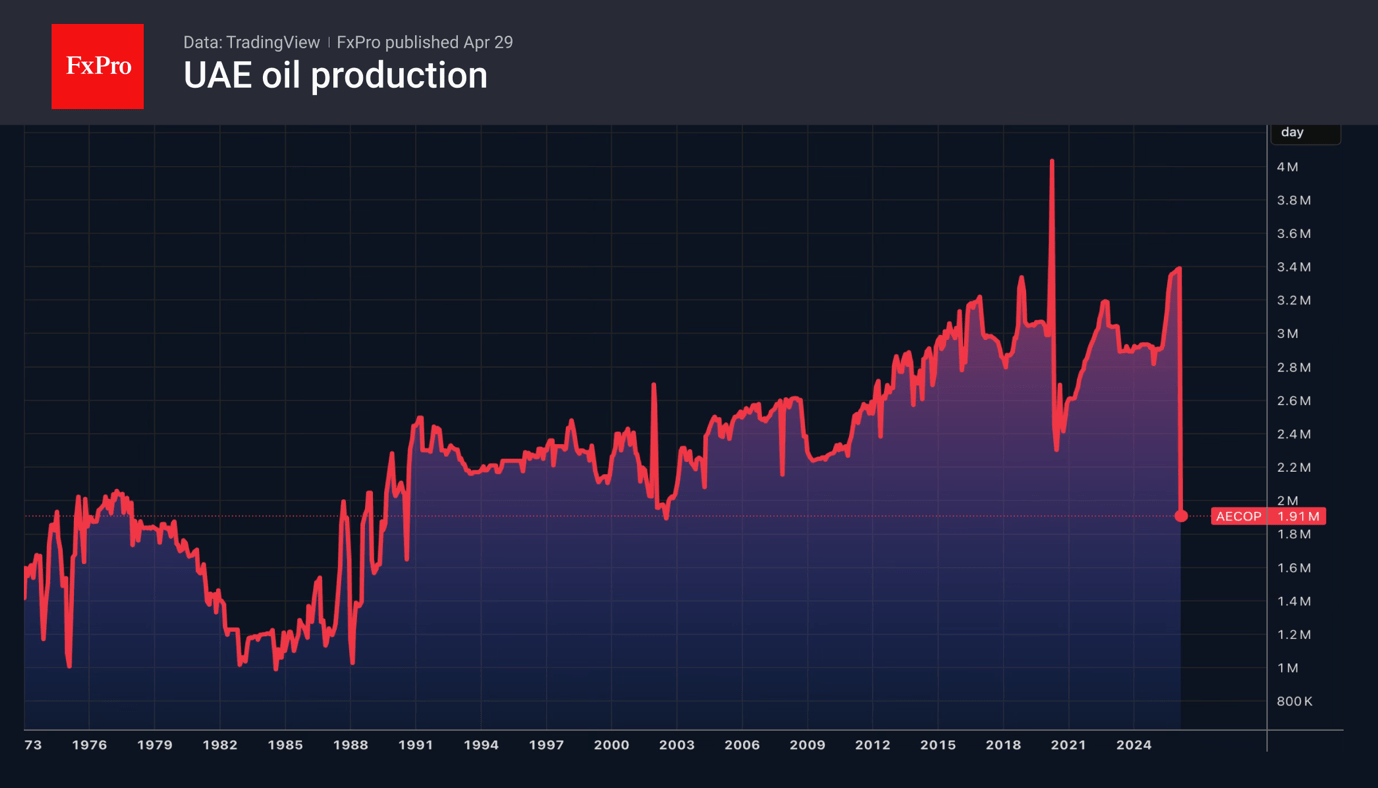
The UAE’s decision to withdraw from OPEC and OPEC+ came as a surprise but did not send shockwaves through the oil market. This move could undermine the cartel’s position and increase the UAE’s production capacity from its current quota of 3.4 million bpd to a technically feasible 4.8 million bpd. However, we did not see an immediate market reaction in the form of a decline in Brent and WTI prices, despite the Strait of Hormuz blockade, which has reduced production to just 1.8 million bpd.

North Sea crude has been rising for 7 of the last 8 days, as Donald Trump threatens to prolong the blockade of the key oil artery indefinitely and appeals to Iran’s reason. Tehran must abandon its plans to develop nuclear weapons and sign the deal. Any resistance will keep the Strait of Hormuz closed. Ongoing supply disruptions and fears that the situation will worsen are driving Brent and WTI prices ever higher.
US politicians are doing everything they can to mitigate the negative impact. Trump intends to meet with American oil producers, is temporarily lifting sanctions on Russia, and welcomes the UAE’s intention to leave OPEC. Abu Dhabi is beginning to offer its customers barrels from Fujairah, outside the Persian Gulf. The United Arab Emirates accounted for around 13% of the cartel’s production capacity. The breakdown in relations will damage the organisation’s ability to manage the black gold market and risks increasing the number of defectors dissatisfied with Saudi Arabia’s actions.
It should be noted that the premium between spot oil and futures is narrowing. They reached $30 per barrel in early April; however, this is due in no small part to the rise in futures prices as the expected timeline for the normalisation of supplies has been pushed back. Spot prices are also under pressure from reduced demand from oil refineries, their drawdown of previously held reserves, and large-scale sales of commercial stocks by China’s Sinopec and PetroChina.
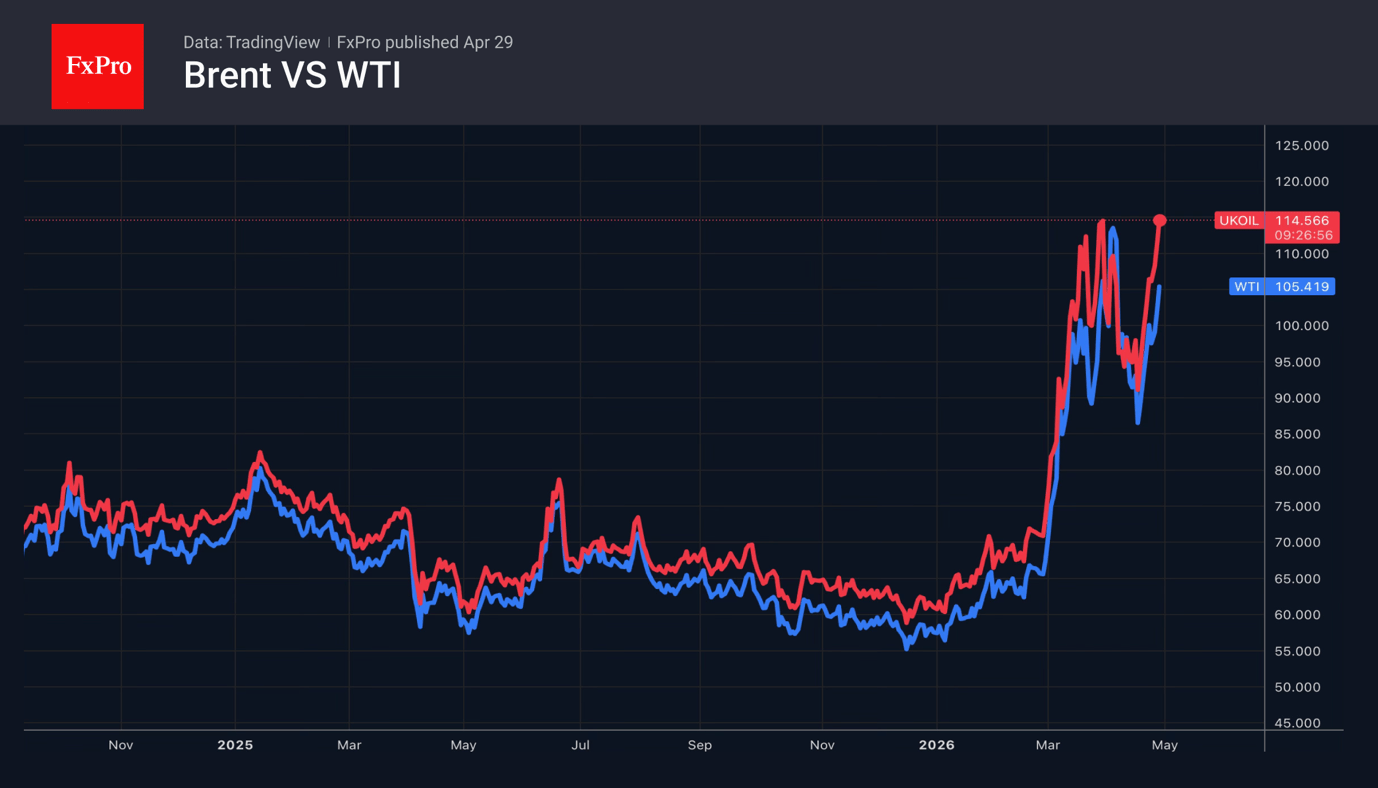
There is some good news, but the situation on the oil market remains tense. The World Bank notes that, due to supply disruptions, commodity prices are set to soar to their highest levels in four years. The organisation has raised its forecast for the average Brent price in 2026 from $60 per barrel in January to $86.
The FxPro Analyst Team