- Marine Le Pen’s calls for the ECB to cut interest rates and for a reduction in EU transfers are fuelling panic.
- The combination of a strong economy and attractive assets is driving the US dollar higher.
The US dollar has resumed its upward trend alongside oil prices and Treasury bond yields. US Treasury auctions are drawing capital from the secondary market to the primary market, fuelling a rise in yields. At the same time, escalating rhetoric surrounding the Middle East has sent oil prices back up, despite reports of a recovery in export volumes from the region.
The debt crisis is putting pressure on the euro. The volume of scheduled redemptions of French bonds in 2027 will rise from €60.2 billion to €187.4 billion. By 2029, this figure will increase to €283.7 billion. Paris is in desperate need of cash, forcing the government to increase the volume of bond issues and fuelling panic amongst investors. Meanwhile, statements by leading presidential candidate, Marine Le Pen, regarding cuts to EU transfers and the need for the ECB to lower interest rates risk putting France at odds with both the European Union and the European Central Bank.

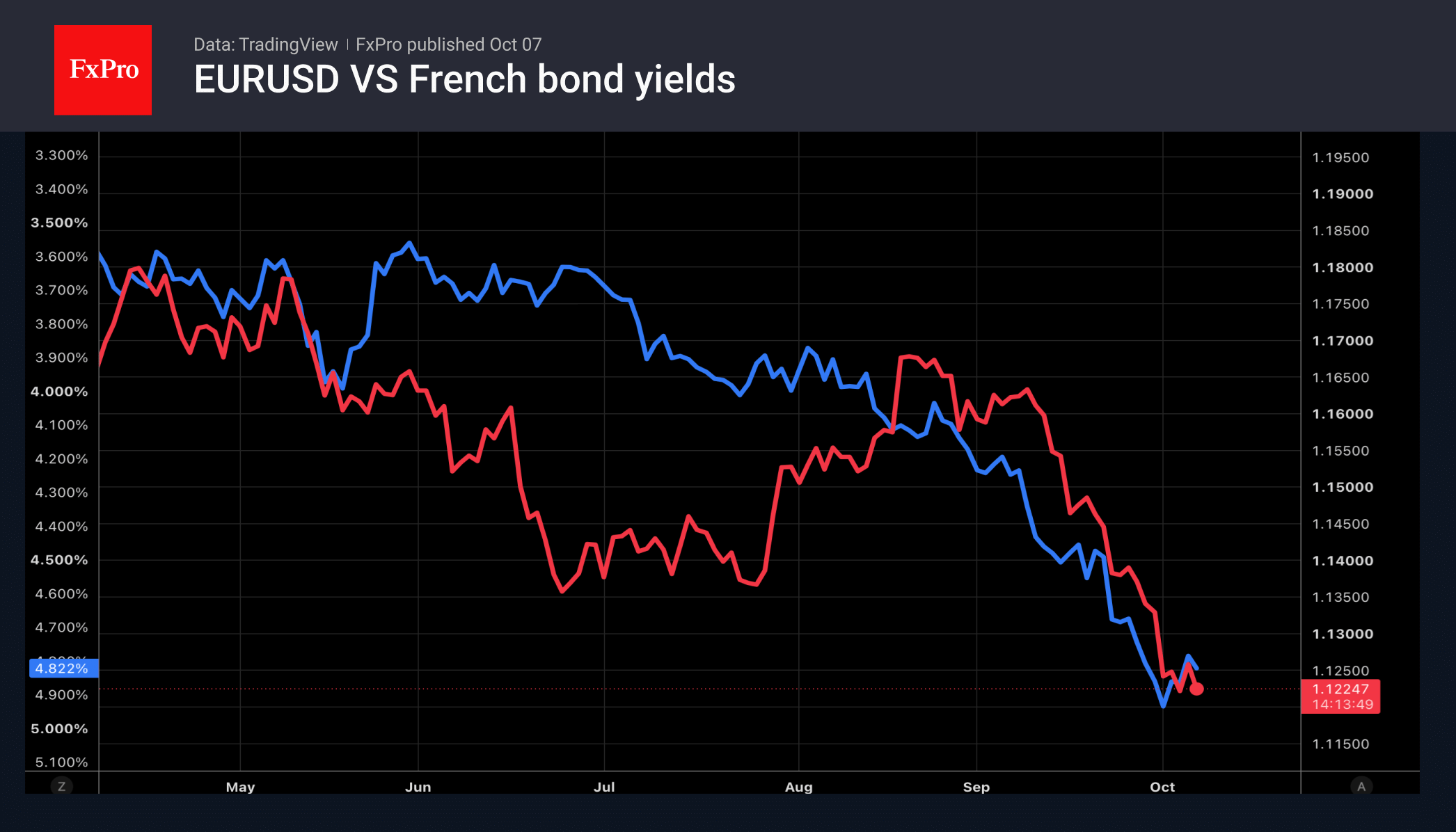
Foreign bondholders are incurring losses due to both falling prices and the decline of the EURUSD exchange rate. These trends have coincided since the second half of August, creating a vicious circle from which it is difficult to escape.
The rise of US stock indices to record highs is not helping; on the contrary, it is creating headwinds for EURUSD. The dollar is acting as a safe-haven currency against European risks. At the same time, investors are channelling dollar-denominated capital into the stock market to a far greater extent than before. Consequently, we do not expect a significant decline in yields on US bonds. This means the S&P 500’s historic highs are proving detrimental to the main currency pair, reigniting talk of American exceptionalism.
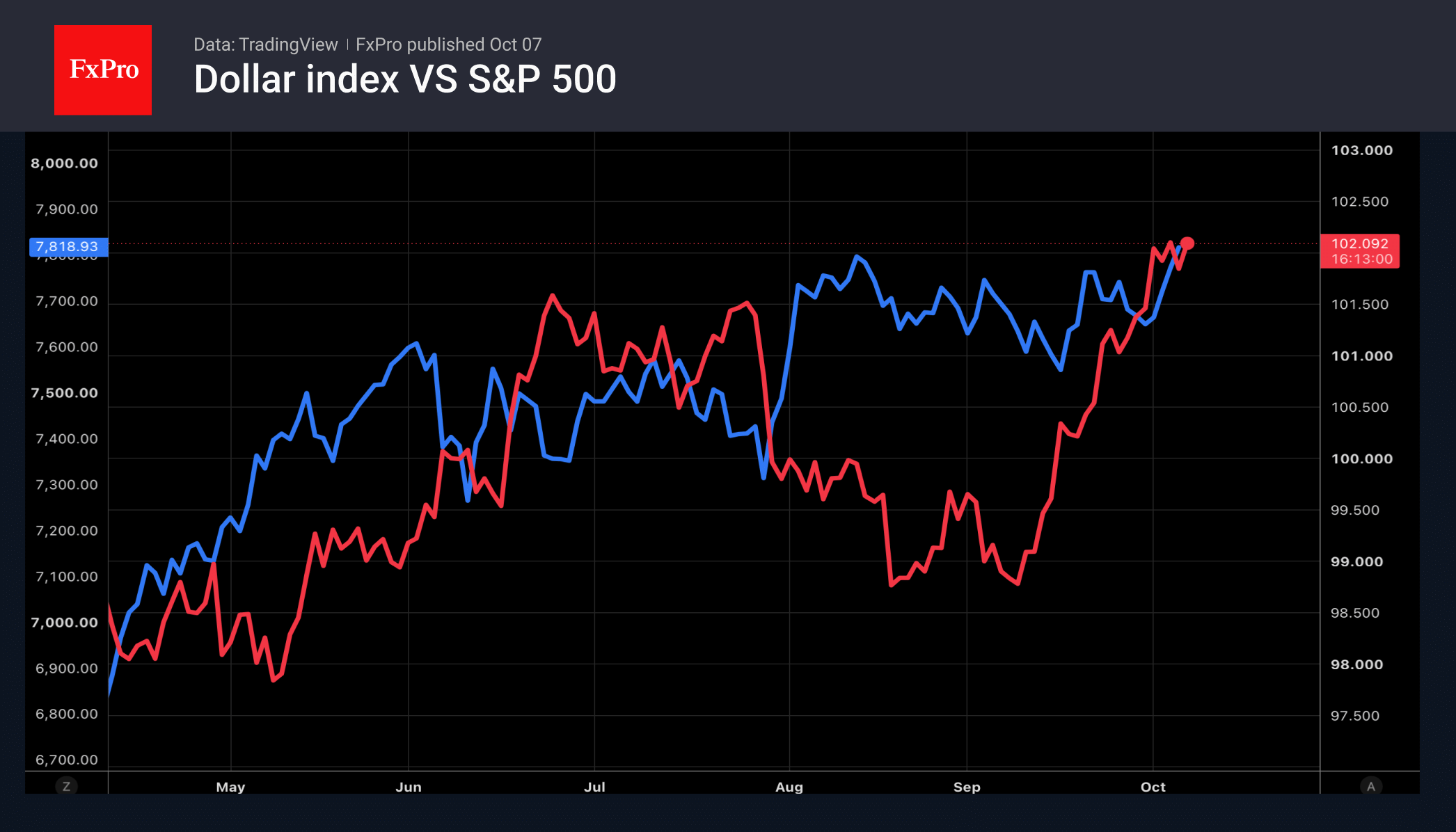
Indeed, the combination of attractive assets and a strong economy explains why the dollar is not falling, even as the chances of the Fed tightening monetary policy in October have fallen to 19%. Meanwhile, the probability of an ECB rate rise at the end of October has fallen to 10% due to the crisis in France and deteriorating trade conditions, which threaten to slow the economy.
American exceptionalism helps explain why USDJPY is rising, despite the Fed and the Bank of Japan being expected to raise rates at roughly the same pace. The wide yield spread in the debt markets and the S&P 500’s record highs are playing into the dollar’s favour.
The FxPro Analyst Team