- The ECB’s confidence and Alphabet’s sell-off pulled the euro back from the brink.
- The US dollar’s weakness due to the midterm elections is short-lived.
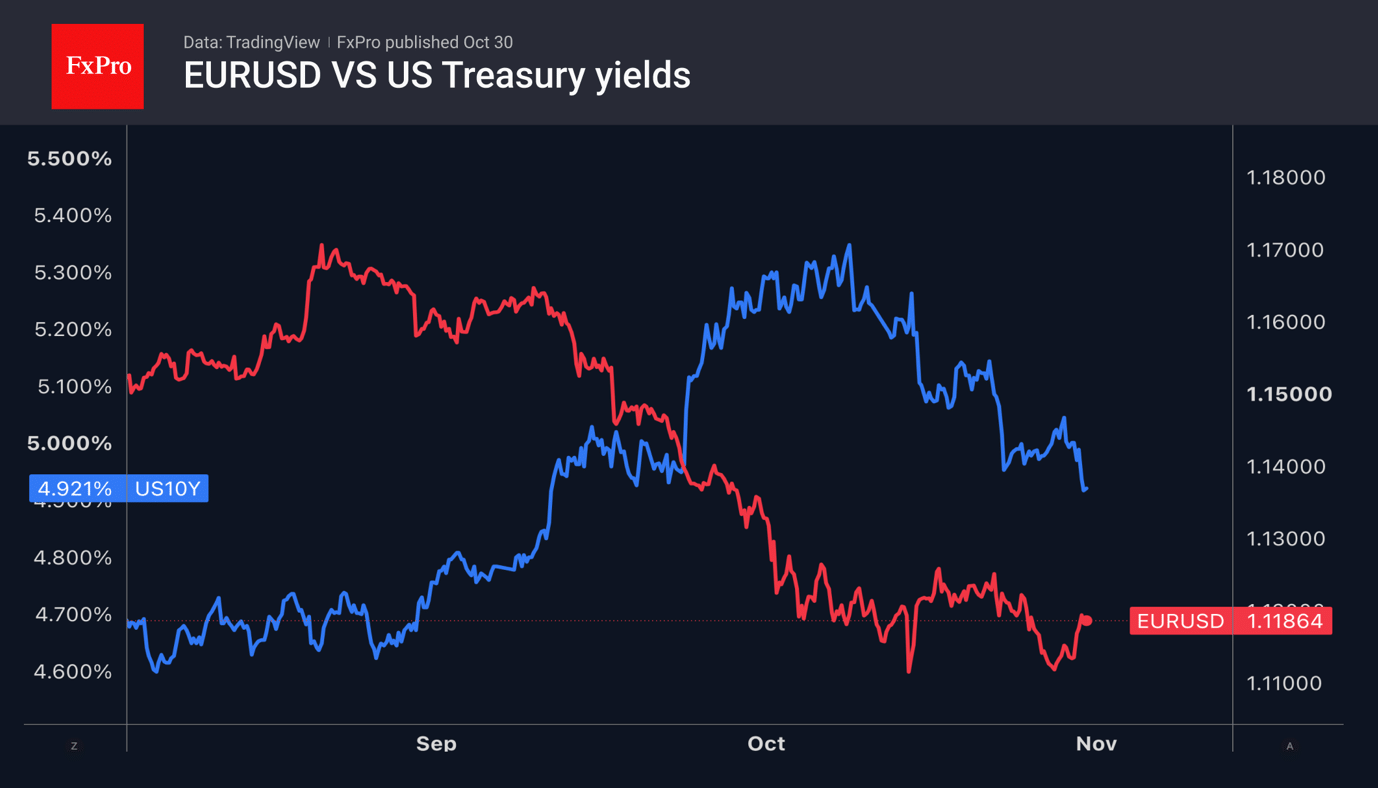
The greenback turned lower in the second half of the day on Thursday, following signals from the ECB about a rate rise in December and a decline in Treasury yields amid sell-offs in mega-caps. As a result, EURUSD returned to 1.12 by Friday morning, forming a double bottom. The DXY has been losing ground for the third day in a row, retreating from the region above 102, as it did earlier this month.

The US economy recorded its strongest growth in the third quarter at 3.4% y/y, while the growth rate of the PCE price index, the Fed’s preferred inflation gauge, impressed investors.
As expected, the ECB did not raise interest rates, and Christine Lagarde noted that there is no clear evidence that high energy prices are driving up core inflation. On the other hand, the direction of the deposit rate appears clear. This comment prompted the futures market to raise its estimate of the probability of a rate rise in December from 80% to 88%, reversing the bearish sentiment on the euro that had intensified over the past week. As a result, EURUSD managed to find its footing and rise by 0.7% from intraday lows near 1.11, once again attempting to climb above 1.12.
The US dollar took a hit from a sell-off in Alphabet shares following a disappointing set of corporate results. The shares slumped by almost 13%, and the loss of market capitalisation of around $500 billion was the largest in the company’s history. Investors rushed to safe-haven assets, benefiting the low-yielding euro and the yen, although the Swiss franc, which proved to be a safe haven, strengthened much more sharply.
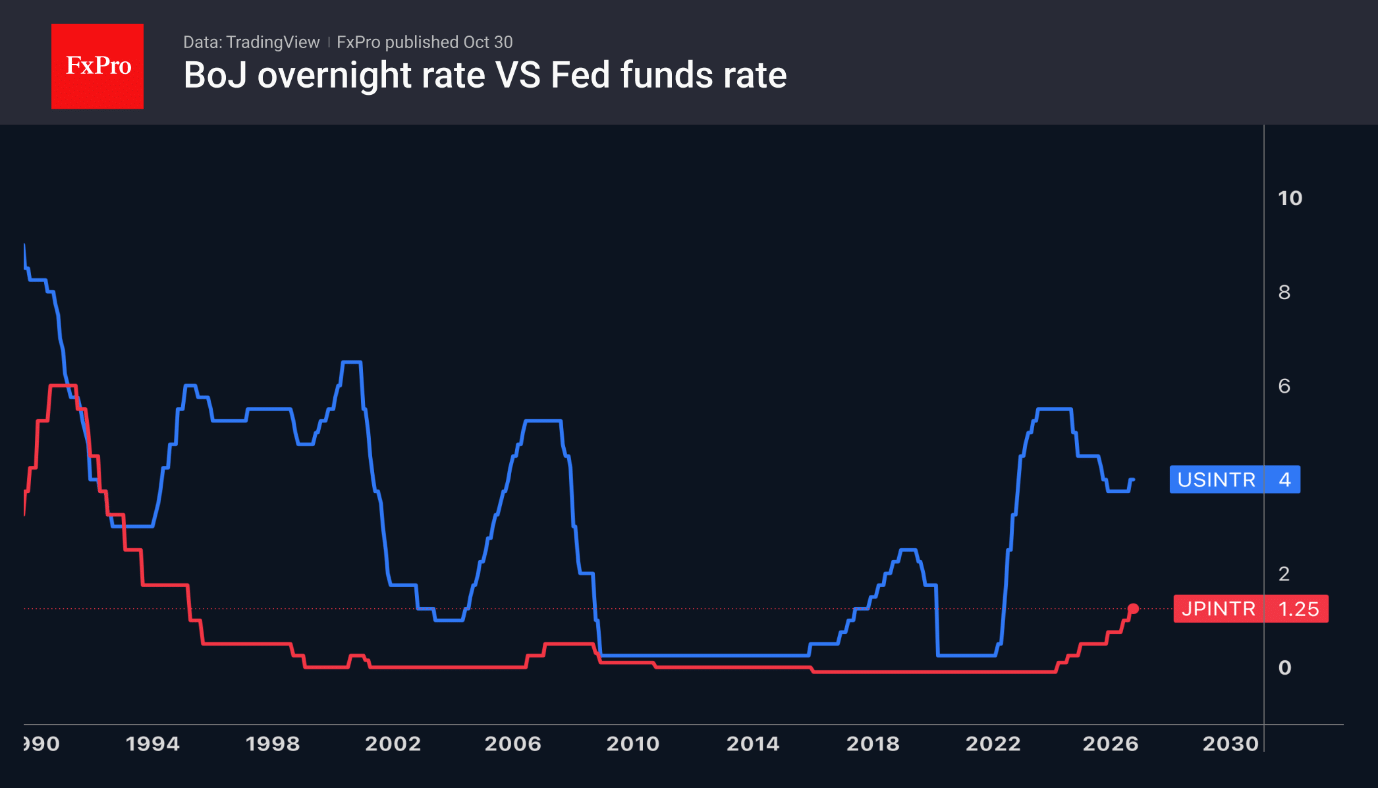
The approaching US midterm elections also contributed to the decline in the USD index. As expected, the Bank of Japan left its overnight rate at 1.25% and announced that core inflation had reached its 2% target. Around 80% of experts believe the BoJ will raise rates in December, while Bloomberg reports that rates will reach 2% by July 2027.
Citigroup notes that, historically, the US dollar has weakened in the run-up to midterm elections when a divided Congress was expected, which is consistent with the current situation. Nevertheless, the bank believes that any declines in the USD index will be bought, given the impending Fed rate hikes.
The FxPro Analyst Team