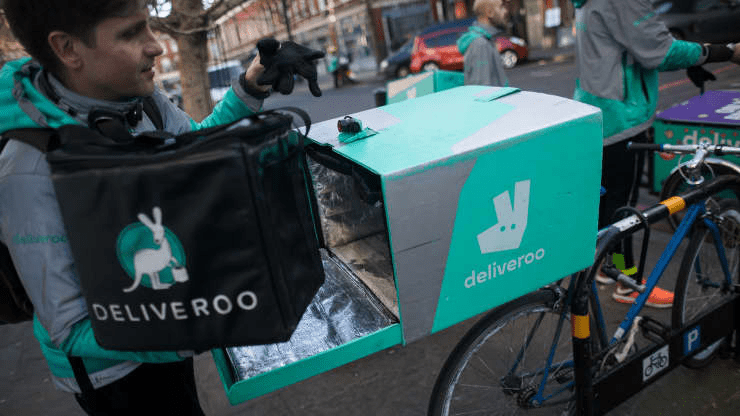
In its stock market debut, British food delivery firm Deliveroo saw its share price tank around 30% as questions materialized over workers’ rights for its riders. In the days running up to the listing, the company revised its share price as some investors opted to avoid the IPO over these concerns. Deliveroo is just one example of a wider “gig economy” that is coming under increasing scrutiny. In recent weeks, the industry has been rocked by a slew of court rulings and regulatory moves around Europe that could ultimately upend the business model.
Uber’s loss in the U.K. Supreme Court last month forced the company to reclassify 70,000 of its British drivers as workers, giving them a minimum wage, paid vacation time and pension plans as a result. In Spain, legislators have introduced a raft of measures that would recategorize gig workers as employees with formal contracts and benefits.
All the while, the European Commission, the EU’s executive arm, is thrashing out plans for some kind of regional reform on gig economy workers, their status and their rights.
Other companies are preparing for change in some form, whether instigated by regulation or on their own volition in advance. Just Eat Takeaway, Europe’s biggest online food delivery firm, is moving its Just Eat delivery riders to employment contracts. Prior to the companies’ merger, the riders of the original firm called Takeaway.com were on such contracts. “As part of this model, couriers are entitled to an hourly salary, they are paid above minimum wage, provided with employment insurance and social security, in line with local legislation,” a spokesperson said, adding that couriers are provided with equipment like bikes.
John Ryan of U.K.-based start-up Gigable, which connects restaurants and other businesses with freelancers, said consumers could end up feeling the brunt with price increases. “But I think people are comfortable enough with increases in pricing if they know it’s going to the drivers or there’s public support for the move but that remains to be seen,” Ryan said. He added that the flexible model may work for some workers and others will prefer traditional employment. “We’ll see how hard it is for people to commit to the obligations.”
Europe could be seeing the decline of its gig economy. And new rules could mean higher prices, CNBC, Apr 13