- Japan is exploring options for intervening in the oil market.
- The OECD considers the risks of stagflation in the eurozone to be higher than in the US.
Christine Lagarde’s statement that the ECB is ready to raise interest rates should, in theory, support the euro. However, a tightening of monetary policy could shock the eurozone. The surge in energy prices raises short-term inflation risks but deteriorates the medium-term growth outlook, potentially forcing the ECB to shift towards policy easing.

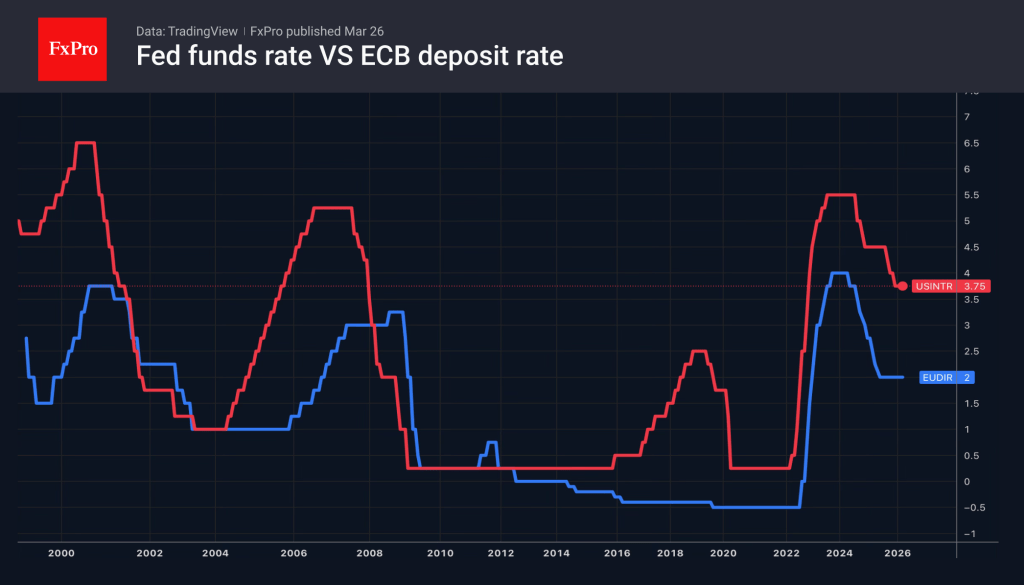
The OECD sees a higher risk of stagflation in the eurozone than in the US. The Paris-based organisation has revised its GDP forecast for the United States this year upwards from 1.7% to 2% and lowered its forecast for the eurozone from 1.2% to 0.8%. Inflation estimates have been increased by 1.2 percentage points and 0.7 percentage points, respectively. They also suggest that the market’s expectations of 2-3 ECB rate hikes this year are overstated, whilst investors are justified in expecting more from the Fed than merely pausing the rate-cut cycle.
According to Federal Reserve Vice-Chair Philip Jefferson, the duration of the conflict in the Middle East and its impact on energy prices will be decisive for the central bank’s future decisions. His FOMC colleague, Lisa Cook, believes that the war in Iran and the associated oil market shock make fighting inflation the Fed’s top priority, requiring rates to remain on hold for longer.
Meanwhile, markets have raised the probability of a Fed rate hike in 2026 from 20% to 45%, signalling confidence in the US economy’s resilience. Alongside the OECD’s revised forecasts and geopolitical tensions in the Middle East, this is contributing to downward pressure on EURUSD.

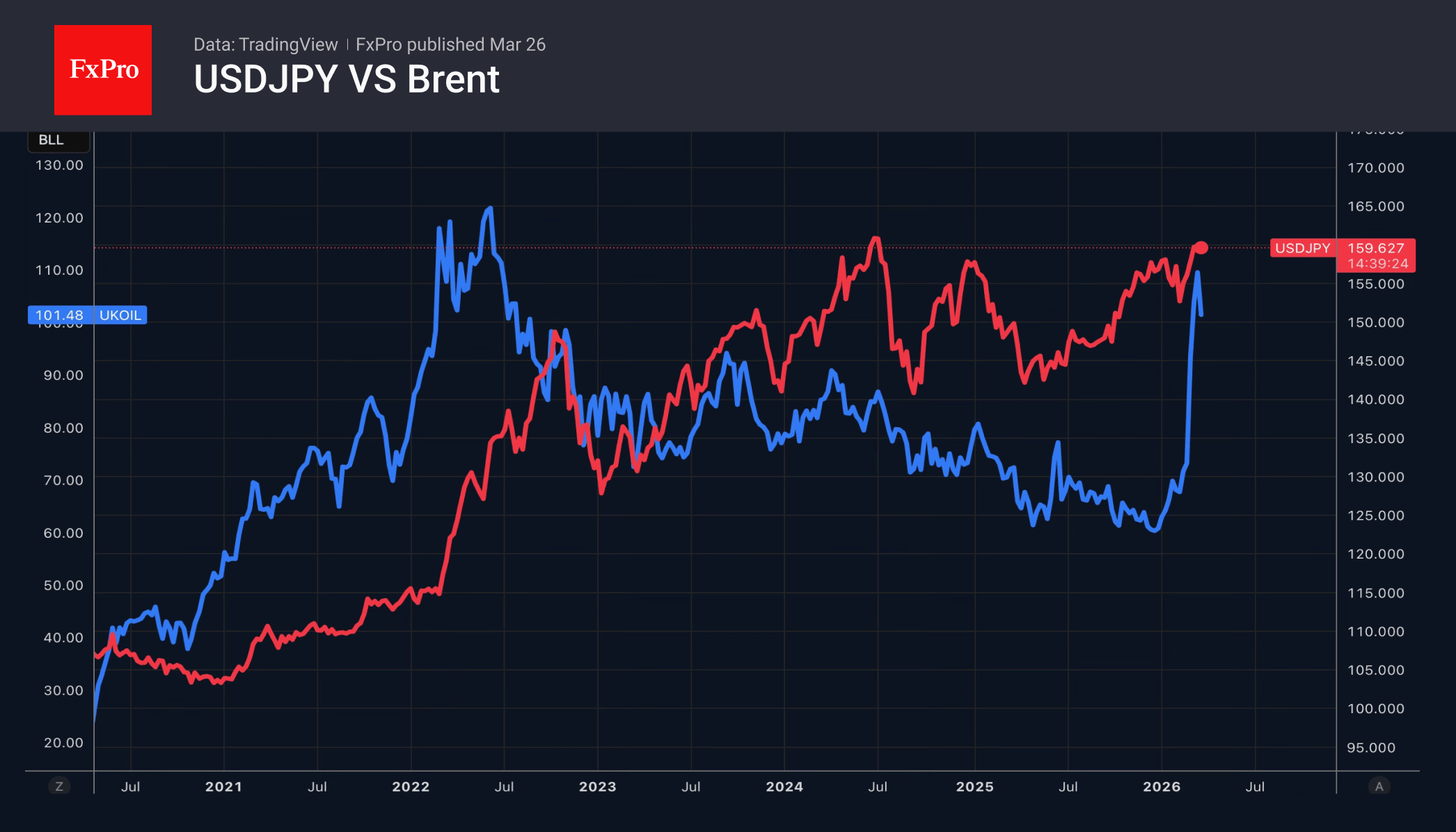
The approach of USDJPY to the psychologically significant 160 level is prompting the Japanese government to intensify its verbal interventions. According to Finance Minister Satsuki Katayama, the time has come for bold action. In 2024, Tokyo intervened in the forex market near current levels. However, this time, the US dollar’s strength may act as a limiting factor.
The rise in the USD is supported by the surge in Brent. Rumours are circulating that Japan has decided to address the root cause of the USDJPY rally. Using $1.4 trillion in reserves to intervene in the oil futures market could help ease pressure on both the economy and financial markets by lowering prices.
The FxPro Analyst Team