A significant event has occurred in the US stock market. For the first time in history, the Dow Jones Industrial Average has surpassed the psychologically significant 50,000 mark. Since its creation, it took almost a century to reach the 2,500 mark, yet it doubled in value over just the last 8 years.
In previous years, the DJIA consistently underperformed both the Nasdaq and the S&P500 due to the rally in technology companies. As a result, a new generation of traders viewed it as no more relevant than a stock ticker or a paper certificate. However, in 2026, the industrial index proved its significance. Since the beginning of the year, it has grown by 4%, while the S&P500 has added less than 2%, and the Nasdaq Composite has remained stagnant.

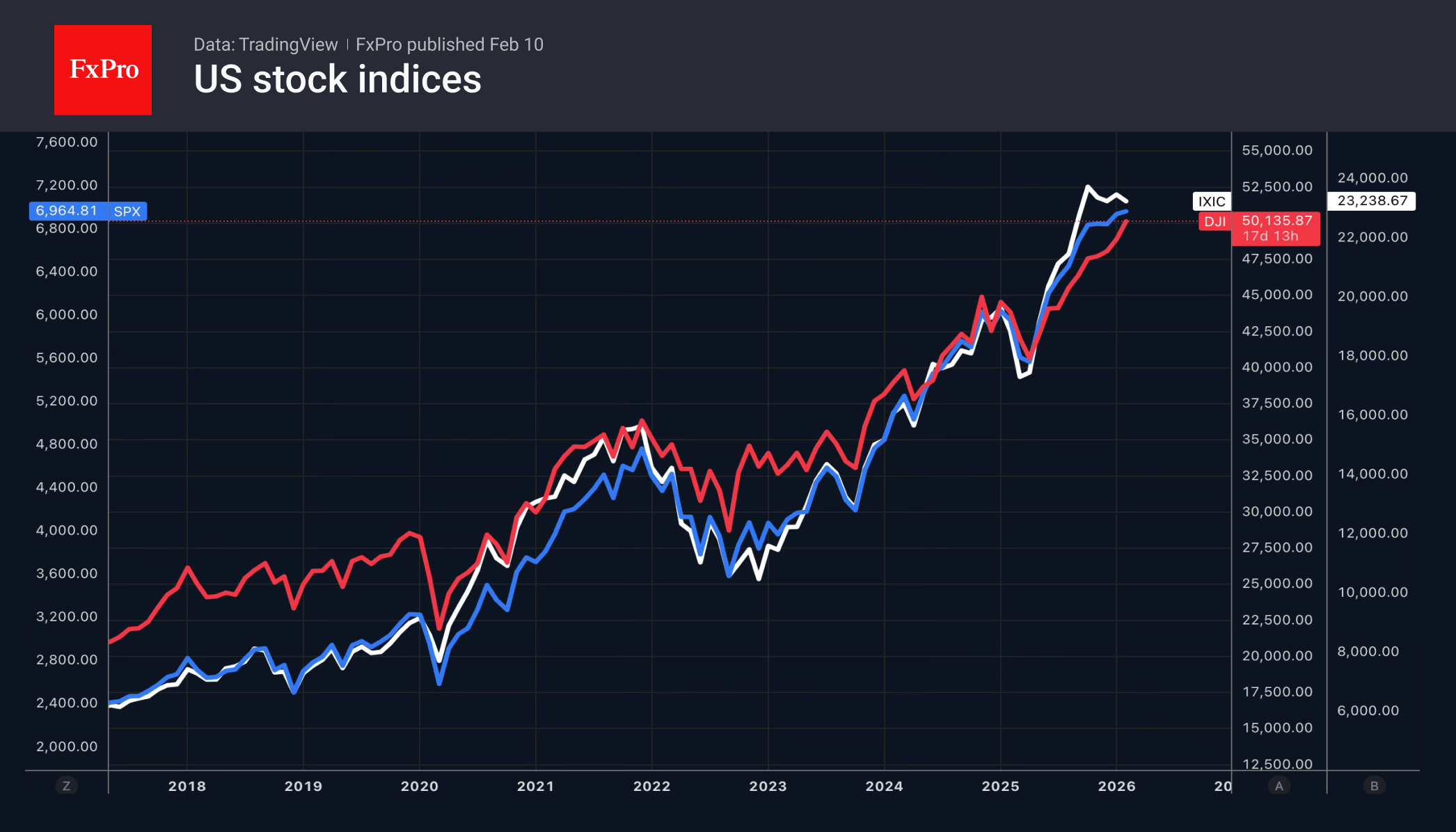
The main reason for the Dow Jones index’s success was rotation. Investors fear that tech giants will not be able to generate adequate returns on the huge amounts of money invested in them. In addition, the development of artificial intelligence may force some companies out of the market. Primarily, this applies to software manufacturers.
As a result, yesterday’s leaders are giving way to companies that are sensitive to the state of the American economy. Especially since Donald Trump promises that if Congress appoints Kevin Warsh as Fed chair, US GDP will grow by 15%. The Dow Jones index and the Russell 2000 small-cap index are benefiting from this.
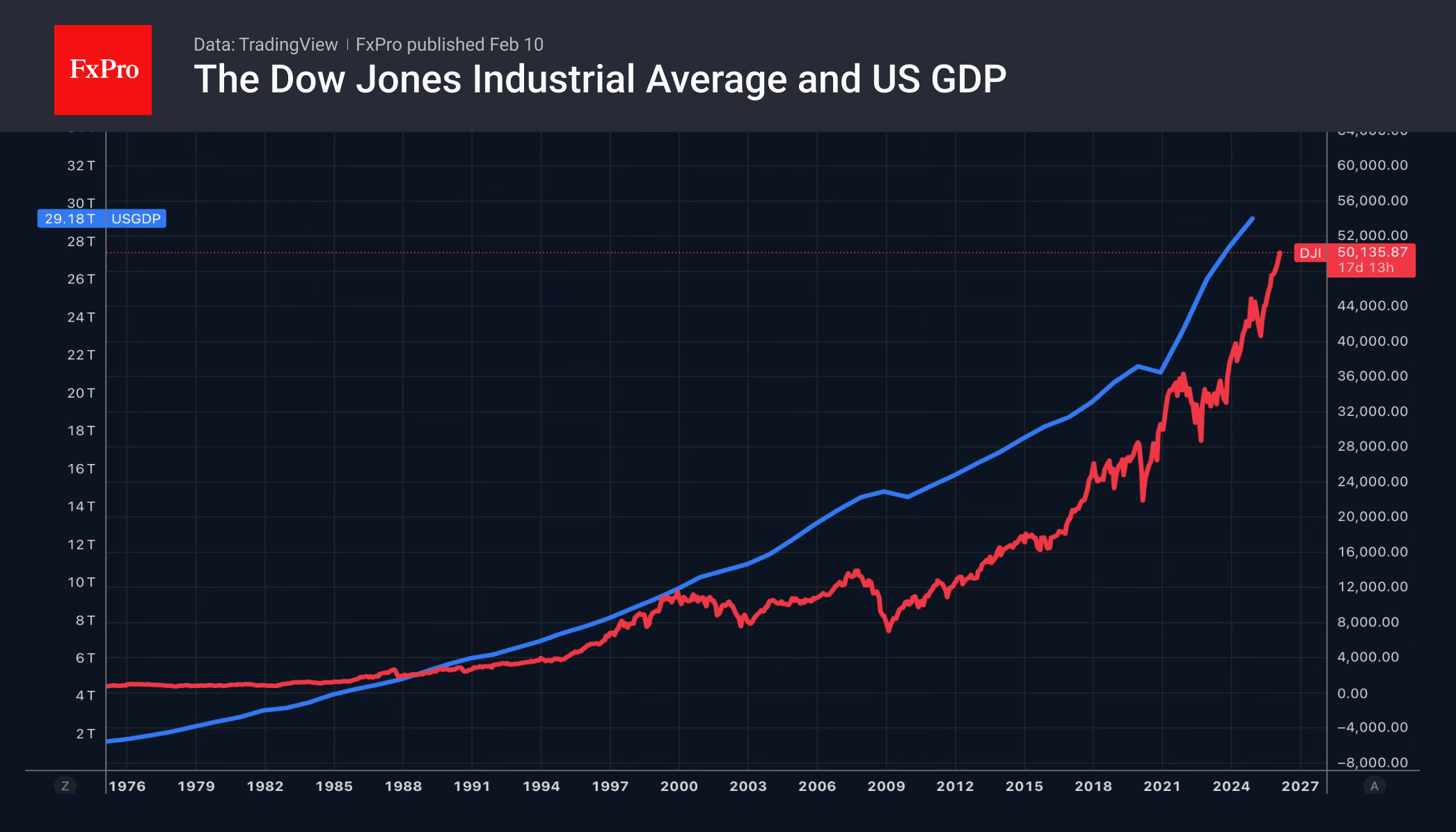
The US stock market is supported by seasonal factors and lower fundamental valuations. The price-to-forward earnings ratio for issuers in the industrial index has fallen from its January peak of 23.5 to the current 22. For the G7, the Price to Earnings ratio has fallen to 29, which is slightly below the five-year average. Morgan Stanley believes that the departure of fundamental valuations from extreme levels and high corporate profits will allow the US stock market to continue its rally.
Historical data suggests that when the S&P 500 breaks above its December high in the first quarter, the index has tended to produce strong gains through year-end. When it does not do so, returns on average have been slightly negative.
The FxPro Analyst Team