- The ECB and the BoE are signalling rate rises.
- Japan has resumed currency intervention.
The US dollar ended April with its worst performance in 10 months. A decline in demand for safe-haven assets, the intention of rival central banks to raise rates amid caution from the Fed, and active selling of the greenback by Japan towards the end of the month acted as catalysts for a 1.7% fall in the USD index. This was even more so as, towards the end of the month, oil was also rapidly losing ground after touching four-year highs.

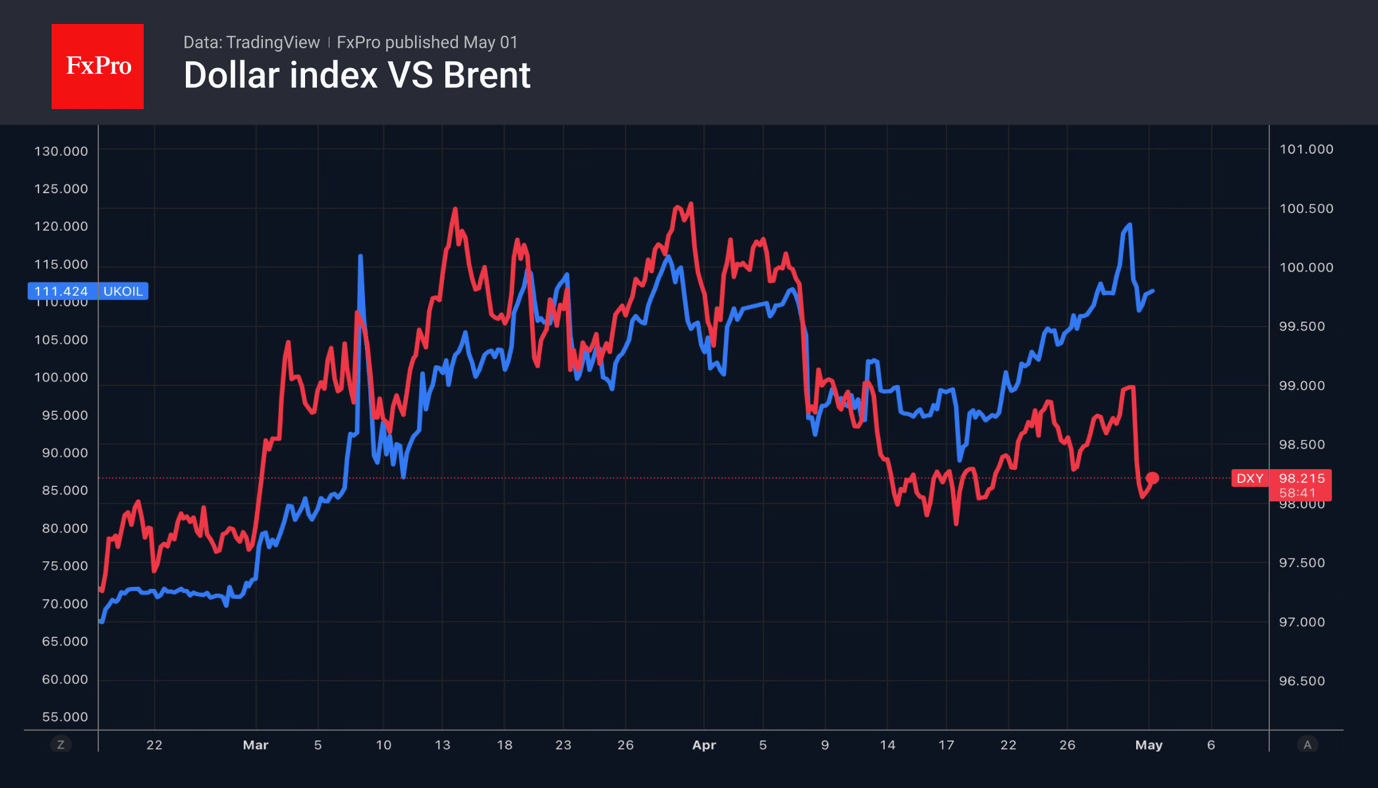
Unlike the divided Fed, the ECB has no doubts about what its next monetary policy move will be. Christine Lagarde stated that rates were kept unchanged because insufficient information was available. However, the Governing Council discussed the possibility of raising them at length. Bloomberg claims that if the Middle East conflict persists and oil prices do not fall, the European Central Bank will raise rates as early as June.
The rise in EURUSD to 1.1740 was not solely due to diverging monetary policies. The single currency is also being supported by a direct correlation with the S&P 500, which set a record on the back of positive corporate earnings reports from tech giants. Oil has retreated from four-year highs, while Japan has been selling the dollar to push USDJPY back below 160, a government source told Bloomberg.
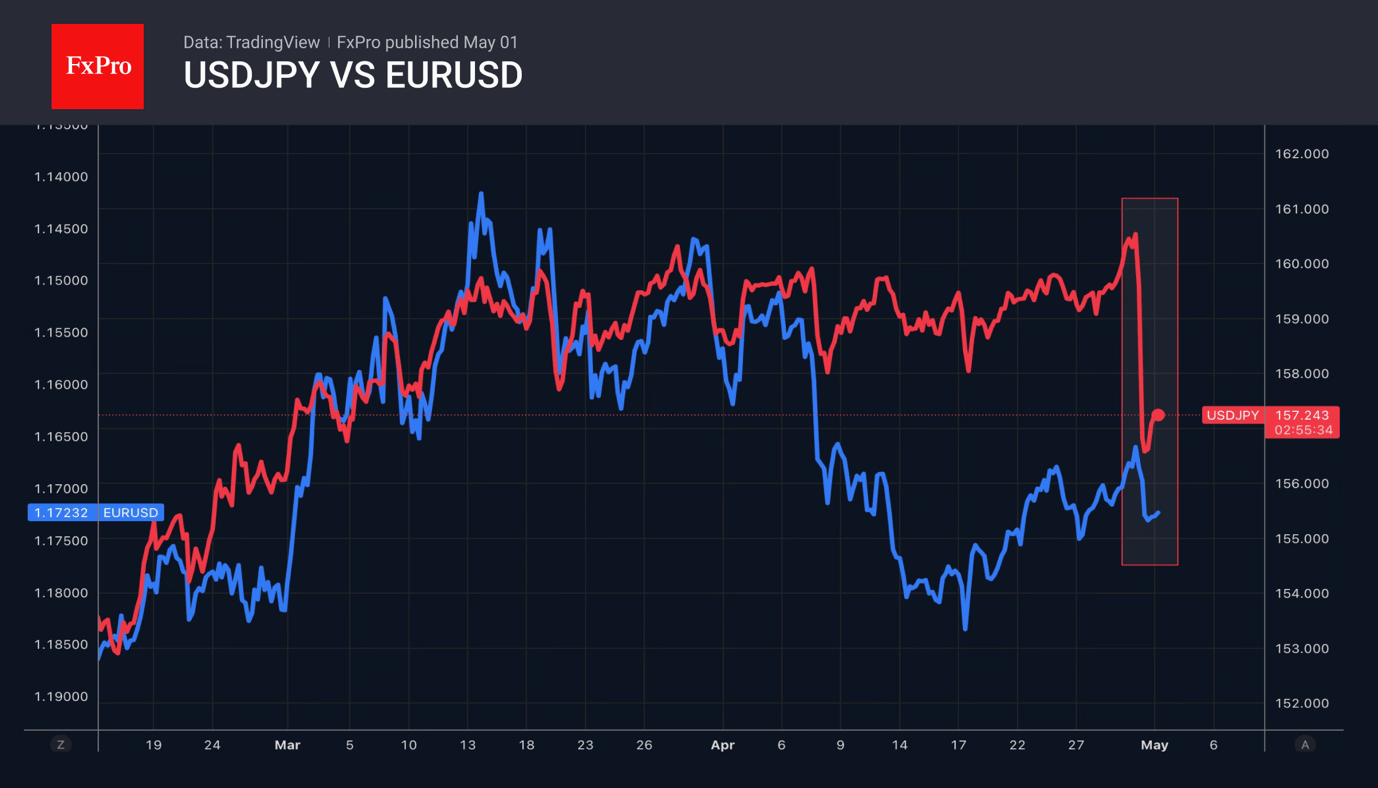
The day before, Finance Minister Satsuki Katayama stated that the authorities were ready to take decisive action, while her deputy for international affairs, Atsushi Mimura, issued a final warning to speculators.
The dollar’s weakness allowed GBPUSD to surge to its highest level since February, above 1.3600. The Bank of England, by a vote of eight to one, kept interest rates at 3.75% and presented the public with several scenarios for future developments. Should an unfavourable turn of events occur, such as Brent crude rising to $130 per barrel, the BoE will have to tighten monetary policy by 50–150 basis points.
The US dollar’s retreat allowed gold to recover. Nevertheless, the precious metal remains under pressure, having lost an important trump card – the debasement trade. When central banks tighten monetary policy, the appeal of fiat currencies increases.
The FxPro Analyst Team